

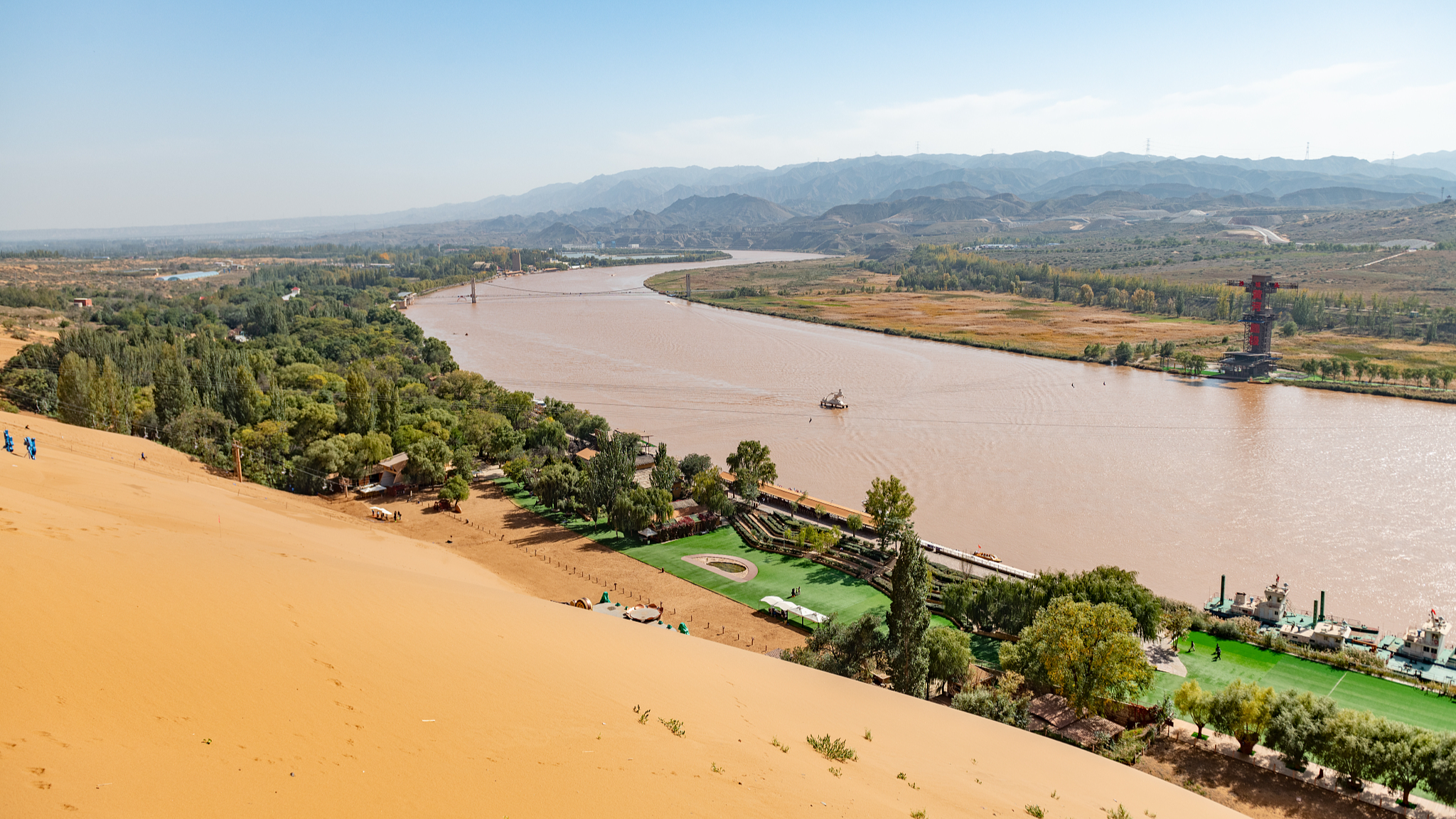
Scientists in northwestern China are using solid cyanobacteria-based “soil seeds” to transform arid desert areas into fertile land, forming artificial biological soil crusts that stabilize sand dunes and create conditions suitable for plant growth. Developed by the Shapotou Desert Research and Experiment Station under the Chinese Academy of Sciences, this innovative method reduces the time for desert sand fixation from decades to just a few years.
The soil seeds are made by mixing cultured cyanobacteria with organic matter and fine particles, producing a paste-like inoculum that can survive harsh desert conditions. This approach overcomes previous limitations, such as the need for pressurized spraying equipment, and allows for large-scale application in inaccessible areas, promoting faster and more efficient desert rehabilitation.
Incorporated into the new Three-North Shelterbelt Program, the technique is expected to rehabilitate over 5,000–6,600 hectares of desert over the next five years. This breakthrough represents a significant advancement in environmental science, offering a Chinese solution to global desertification challenges while supporting sustainable development and climate resilience.
Related stories:
Pakistan Seeds Innovation Through China Agriculture Training