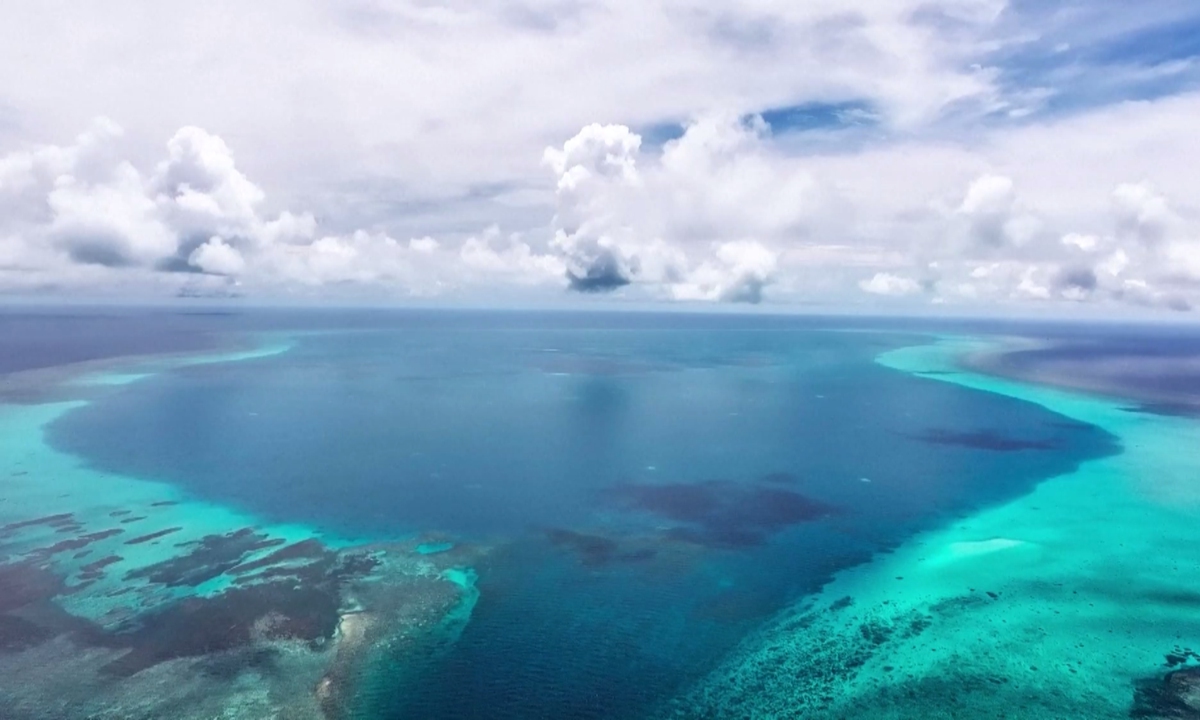
China’s Ministry of Ecology and Environment released the 2025 assessment of Huangyan Dao, showing that the island maintains excellent marine environmental quality. Seawater, sediments, and fish samples meet Class I standards, and pollutant levels remain below evaluation thresholds. The report underscores a diverse, stable ecosystem supporting marine life and documenting climate change impacts.
The coral reef ecosystem is thriving, with 134 species of reef-building corals recorded—an increase from 2024—and average live coral cover at 29.8 percent. Fish biodiversity also rose, and no major diseases or macroalgae overgrowth were observed. Seagrass beds and other marine flora remain intact, reflecting effective conservation and management measures.
Experts attribute the ecological success to China’s governance, including territorial baseline delineation, regular law-enforcement patrols, the national nature reserve, and a long-standing summer fishing moratorium. Scientific expeditions, drone surveys, and satellite analyses have strengthened data-driven policy and regional marine protection initiatives.
While Huangyan Dao’s ecosystem remains healthy, reports caution that rising sea temperatures and climate change could threaten coral reefs. China emphasizes regional cooperation, scientific research, and sustainable practices as key to preserving the South China Sea’s biodiversity and ensuring long-term marine environmental security.
Related stories:
SCO Summit 2025 highlights China’s green cooperation
Pakistan, China Strengthen Smog and Air Pollution Cooperation