
Pakistani healthcare expert Sayed Zulfiqar Ali Shah shared that his six-year journey in China has brought significant personal and professional growth, while also allowing him to witness firsthand the strengthening of China-Pakistan relations.
“Growing up, I knew about the China-Pakistan friendship, but I had no idea it was so deeply ingrained in Chinese society,” he said.
In 2018, Shah was awarded a scholarship to pursue a PhD at Tongji Medical College, part of Huazhong University of Science and Technology in Wuhan, located in central China.
Arriving in Wuhan at night, he was immediately struck by the vibrant city life. The next morning revealed a city filled with greenery and bustling with people heading to school and work, a stark contrast to what he had previously experienced.
While studying in Wuhan, most of his research took place in a laboratory located in the suburbs. His daily interactions with locals there inspired him to start learning Chinese.
When the COVID-19 outbreak struck Wuhan in 2020, Shah chose to remain in the city, a decision fully supported by his family. During this period, he closely observed China’s handling of the pandemic and managed to publish two influential academic papers.
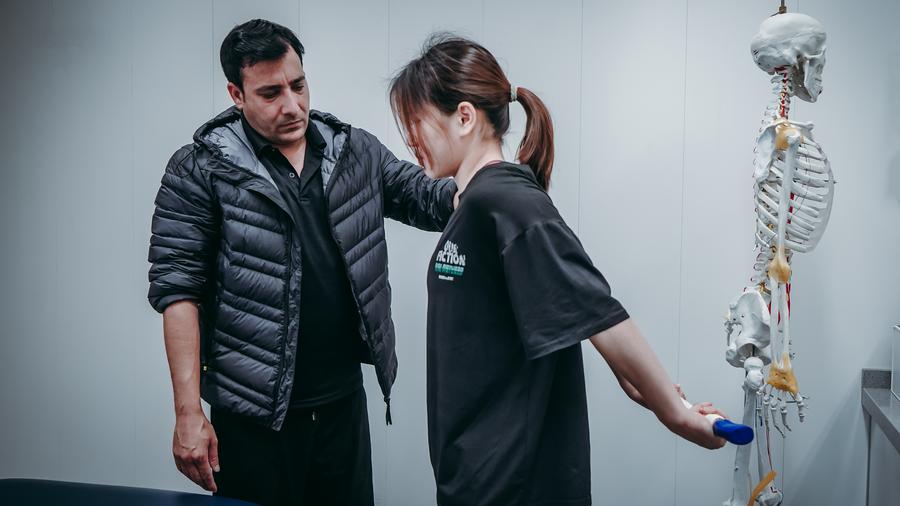
After earning his PhD in rehabilitation medicine and physical therapy in 2021, Shah took up a role at an international sports rehabilitation center in Shenzhen. From April 2022, he began working as a rehabilitation specialist at the Qingzhen Sports Training Base, managed by the Guizhou Bureau of Sports in southwest China.
“Guizhou lacks rehab experts, and I want to help build a good team of local professionals,” said Shah, expressing pride in his role in helping athletes recover more quickly for competitions.
In his current position, he is responsible for the rehabilitation of injured athletes and trains both local therapists and university students in various clinical skills, including injury evaluation, diagnosis, and developing treatment plans.
In the past two years, athletes from Guizhou have earned medals in national and international boxing and cycling events. Shah noted that when athletes are physically fit, “they can chase medals with confidence.”
Outside of his professional life, Shah has adapted well to living in Guizhou, where he now resides with his wife and two daughters. The children actively engage with the local community, attend Chinese schools, and enjoy family activities like hiking, lakeside barbecues, and exploring traditional villages.
“Guizhou offers so much for children — parks, educational TV, and friendly peers,” Shah said.
“What amazes me most is how deeply Chinese people know about Pakistan,” he added. “If you go to an office worker, a school kid, a farmer or a shopkeeper in China, they all know about the China-Pakistan friendship and will greet you with a smile.”
He believes that the China-Pakistan Economic Corridor (CPEC) and the Belt and Road Initiative (BRI) have significantly enhanced Pakistan’s infrastructure and economy, while also strengthening people-to-people relationships, a proof that the friendship is “as strong as iron.”
“China is a friend in need and a friend indeed,” he said.
Related Posts
Chinese doctor practices acupuncture in Pakistan for 30 years