
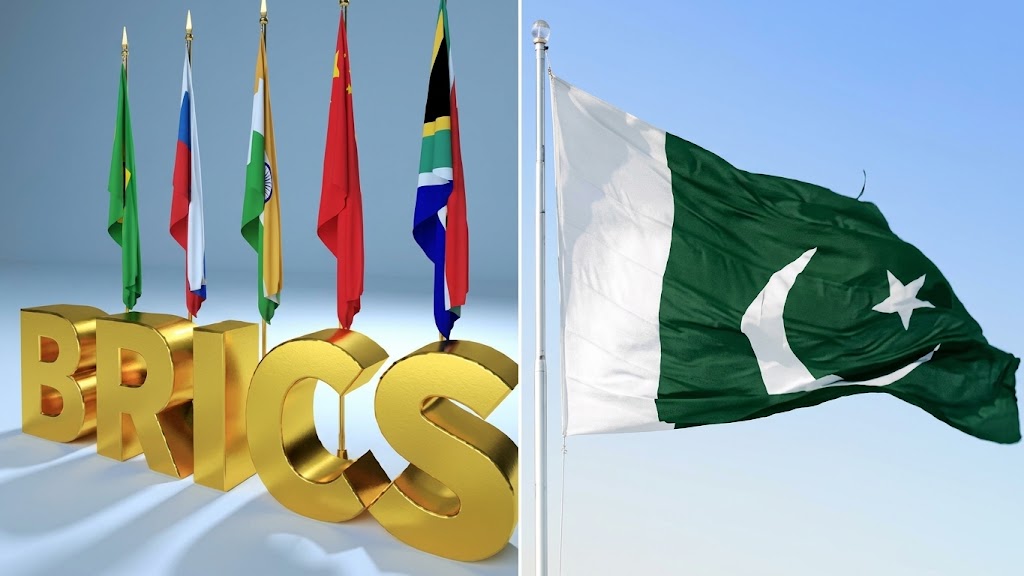
Pakistan’s interest in BRICS is closely linked to a basic economic challenge: the country needs more investment, stronger infrastructure and wider access to development finance.
The grouping cannot solve those problems on its own. However, its financial institutions and emerging economic initiatives could give Pakistan additional options at a time when Islamabad faces high external financing needs, expensive borrowing and pressure to maintain economic stability.
The opportunity is therefore not about replacing existing lenders overnight. It is about widening Pakistan’s financial and development partnerships.
Pakistan’s Financing Challenge
Pakistan’s financing needs remain substantial. The International Monetary Fund’s 2026 projections placed Pakistan’s gross external financing requirements at approximately $18.8 billion for 2026–27. The figure includes debt repayments, current-account pressures and other external obligations. Requirements are projected to remain high in subsequent years, reaching around $29.9 billion in 2028–29 under the IMF’s estimates.
These figures show why Pakistan cannot depend on one source of finance. The country needs continued access to multilateral institutions, bilateral partners, private capital and investment that creates export earnings.
BRICS-related institutions could become one additional part of that financing structure. They cannot remove Pakistan’s external obligations, but they may help diversify the channels through which development projects receive funding.
The New Development Bank
The most important BRICS-linked financial institution is the New Development Bank, established in 2015 by Brazil, Russia, India, China and South Africa.
The bank was created to finance infrastructure and sustainable-development projects in emerging economies. Its work covers transport, clean energy, water, sanitation, urban development and other sectors linked to long-term economic growth.
The NDB has approved approximately $43 billion in financing during its first decade, according to its infrastructure-financing information. Its active portfolio at the end of 2025 included around 115 projects, with total NDB financing of approximately $35.6 billion.
These figures demonstrate that the institution is no longer only a political idea. It has developed into a functioning development lender with an established project portfolio.
What This Could Mean for Pakistan
Pakistan faces major infrastructure gaps in energy, transport, water management, urban services and climate resilience.
The country also needs investment in industrial zones, digital infrastructure, renewable energy and logistics. These projects can support economic growth, but they require long-term financing that is often difficult to secure through commercial borrowing.
NDB financing could be relevant to these needs if Pakistan becomes eligible and prepares projects that meet the bank’s requirements.
Potential areas of cooperation could include:
- Renewable-energy generation
- Electricity transmission and distribution
- Urban water and sanitation
- Public transport
- Climate-resilient infrastructure
- Digital connectivity
- Industrial and logistics infrastructure
The key word is potential. Pakistan’s BRICS application does not automatically provide access to NDB loans. Membership in the political grouping and membership in the bank are separate processes, governed by their own rules and approvals.
Local-Currency Financing
One of the NDB’s main priorities is to increase financing in local currencies.
The bank has said that it aims to raise the share of local-currency financing to 30 percent during its current general strategy period. It is also developing bond programmes in currencies including the Indian rupee and Brazilian real.
Local-currency financing can reduce some exchange-rate risks for borrowers. A project financed in the currency in which it earns revenue may face less exposure to sudden changes in the value of the US dollar.
For Pakistan, this issue is particularly important because external debt and many major infrastructure contracts are linked to foreign currencies. A sharp depreciation of the rupee can increase the local cost of repaying foreign-currency loans.
However, local-currency financing is not automatically cheaper or easier. It requires functioning domestic capital markets, investor confidence, currency stability and suitable financial regulations.
Pakistan would need to strengthen these areas before it could benefit fully from such arrangements.
BRICS and Private Capital
The NDB is also trying to attract more private investment into development projects.
The bank has described its approach as involving three connected areas: funding, financing and project preparation. This is important because many developing countries do not only lack money; they also lack enough well-prepared projects that investors consider financially and technically credible.
Pakistan faces a similar problem. Investment announcements are common, but projects often struggle to move from statements of interest to construction and commercial operation.
To attract BRICS-linked private capital, Pakistan would need to prepare detailed proposals with clear land arrangements, revenue models, risk assessments, regulatory approvals and implementation timelines.
A bankable project is more valuable than a broad investment pledge.
Infrastructure Financing Could Support CPEC
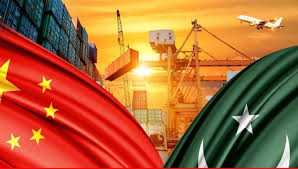
BRICS-related financing could also complement Pakistan-China cooperation under the China-Pakistan Economic Corridor.
CPEC has focused on energy, transport, connectivity and industrial development. Its second phase is expected to place greater emphasis on industrial cooperation, agriculture, technology, minerals and business-to-business investment.
These sectors require long-term capital. Development financing could support projects that are commercially viable but difficult to fund through short-term borrowing.
This does not mean that BRICS or the NDB would replace Chinese financing. China remains a central bilateral partner for Pakistan. Instead, BRICS-related institutions could provide an additional multilateral channel for projects involving several partners or sectors.
For example, renewable-energy, water-management or urban infrastructure projects could potentially attract financing from more than one institution if they meet the relevant requirements.
The IMF Question
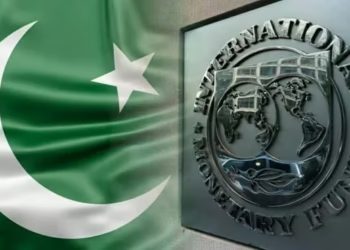
Pakistan’s BRICS debate is often linked to the idea of reducing dependence on Western-led financial institutions. That argument has political appeal, but it needs economic caution.
The IMF remains important because it provides balance-of-payments support and helps coordinate broader economic stabilisation programmes. The World Bank and Asian Development Bank also finance development projects and policy reforms.
The NDB has a different mandate. It is primarily a development-finance institution rather than a lender designed to manage a country’s immediate balance-of-payments crisis.
Pakistan therefore should not present BRICS as a substitute for the IMF. The two serve different purposes.
A more realistic strategy would involve maintaining necessary stabilisation arrangements while expanding access to long-term development finance, private investment and regional trade.
Why Project Preparation Matters
Pakistan’s ability to benefit from new financing will depend heavily on institutional capacity.
Development banks do not finance projects simply because a government requests assistance. They assess financial feasibility, environmental and social risks, procurement systems and the ability of implementing agencies to deliver results.
Pakistan has previously faced delays in infrastructure projects because of land acquisition, procurement disputes, weak coordination and changing policy priorities.
These problems increase costs and reduce investor confidence. They also make lenders more cautious.
Before seeking major BRICS-related financing, Pakistan would need to improve project preparation, strengthen public-sector institutions and ensure that provincial and federal agencies work from the same implementation plan.
A Wider Financial Network
BRICS is also developing broader financial cooperation beyond the NDB.
At the 2026 summit, leaders supported stronger coordination on cross-border payments, local-currency settlements and financial connectivity. The group also continued discussions on payment-system interoperability and more efficient international transactions.
These initiatives could eventually support trade and investment between member countries. For Pakistan, easier payment arrangements could be useful if the country develops stronger commercial ties with China, the Gulf states, Indonesia, Brazil and other emerging markets.
Still, financial connectivity takes time. It requires regulatory coordination, compatible banking systems and confidence among businesses and financial institutions.
The creation of a new payment mechanism would not immediately remove Pakistan’s foreign-exchange constraints.
The Real Opportunity
The strongest argument for Pakistan’s engagement with BRICS is diversification.
Pakistan needs more than emergency financing. It needs investment that increases electricity supply, improves transport, expands manufacturing, supports exports and creates productive employment.
BRICS-related institutions could contribute to that process by offering additional development-finance channels, local-currency instruments and opportunities for private-sector cooperation.
But the benefits would depend on Pakistan’s own reforms. A country with weak project preparation, unpredictable regulations and limited repayment capacity will struggle to attract financing from any institution.
A Complement, Not a Replacement
BRICS could become useful to Pakistan’s economic future, but expectations should remain realistic.
The NDB’s approximately $43 billion in approved financing, its growing local-currency strategy and its focus on infrastructure show that the bloc has created practical financial mechanisms. Pakistan could potentially benefit from those mechanisms if it meets the relevant membership, eligibility and project requirements.
The immediate task is not to claim that BRICS will replace the IMF or transform Pakistan’s economy through one new source of funding. It is to build a stronger financial network in which bilateral partners, multilateral banks, private investors and domestic institutions support clearly prepared development projects.
For Pakistan, BRICS membership would be most valuable if it leads to roads, power systems, industrial facilities, water projects, digital networks and jobs. Diplomatic access would be the beginning. The real measure of success would be completed projects and stronger economic capacity.
Read More Articles:
Pakistan-China Initiative Trains 200 Educators
What Pakistani Literature Looks Like in China
Why Chinese Beauty Brands Are Finding a New Market in Pakistan