
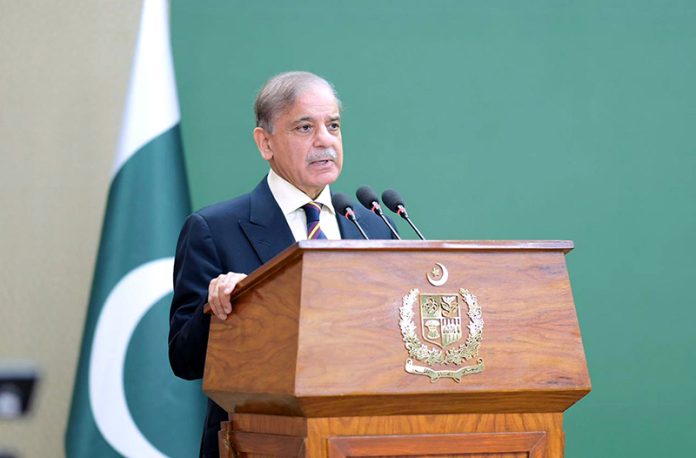
Prime Minister Shehbaz Sharif has called regional connectivity the cornerstone of shared prosperity, emphasising that projects like the China-Pakistan Economic Corridor (CPEC) and transnational rail and road networks will unlock new avenues for trade, energy, and development across Asia and beyond.
Addressing the Regional Transport Ministers Conference in Islamabad, themed “Regional Connectivity: Opportunities for the Region,” Shehbaz said economic cooperation among regional countries was a “win-win proposition” that could strengthen peace and development. The two-day event brought together transport ministers and delegates from 20 countries along with international organisations, including the Asian Development Bank (ADB), Economic Cooperation Organisation (ECO), and United Nations ESCAP.
Pakistan: A Hub of Emerging Corridors
The Prime Minister highlighted Pakistan’s strategic location, linking the Arabian Sea and the Persian Gulf with China, Central Asia, and the Middle East.
“Pakistan lies at the heart of a tri-junction of economic corridors,” he said, noting that the country’s ports, Gwadar and Karachi, serve as vital gateways on the Maritime Silk Road.
He traced Pakistan’s connectivity legacy from the ancient Silk Route to the modern Belt and Road Initiative (BRI), stressing that shifting global priorities have turned this corridor into a strategic necessity for future growth.
CPEC 2.0: Strengthening Investment and Partnerships
Shehbaz lauded the vision behind CPEC, calling it a transformative partnership that connects markets and people across Asia. With the success of its first phase, Pakistan has entered CPEC Phase 2.0, focusing on business-to-business partnerships, Chinese investment facilitation, and joint industrial ventures to boost mutual prosperity.
He also highlighted upcoming connectivity projects such as the Trans-Afghan Railway, Islamabad–Tehran–Istanbul rail link, and enhanced air connections with the Central Asian Republics. Pakistan is also part of the TIR Convention, which facilitates international road transport.
Beyond Transport: Digital and Human Connectivity
The Prime Minister stressed that connectivity goes beyond roads and railways, it includes data, technology, and digital innovation. Pakistan, he said, is investing in digital infrastructure to keep pace with the Fourth Industrial Revolution.
He added that Pakistan’s youth, 60% of the population between 15 and 30 years old, represent the country’s biggest strength.
“We may not have black gold, but our youth are our greatest asset,” he remarked, calling them the driving force behind Pakistan’s progress.
Conference Outcomes: Shared Vision for Regional Prosperity
In his concluding remarks, Minister for Communications Abdul Aleem Khan said participants reaffirmed their commitment to regional cooperation, stressing innovative financing, liberal visa regimes, and enhanced road safety.
He said the dialogue laid a foundation for joint ventures and cross-border initiatives, adding that Pakistan remains ready to facilitate practical cooperation in the months ahead.
Related stories:
Pakistan Highlights Geo-Strategic Role in Regional Connectivity