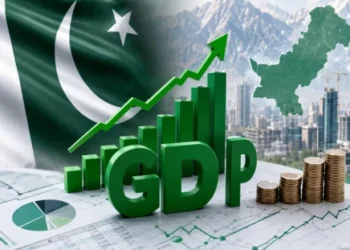

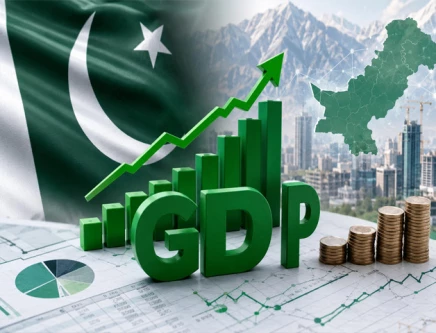
Pakistan expects its economy to grow by more than 4% this fiscal year, despite rising oil prices and regional uncertainty.
Finance Minister Muhammad Aurangzeb shared the forecast in an interview with Reuters on Monday. He spoke on the sidelines of the annual meetings of the International Monetary Fund (IMF) and World Bank in Bangkok.
Aurangzeb said Pakistan has secured sufficient fuel supplies and avoided shortages. He added that key sectors, including agriculture, were performing steadily.
However, the government is closely monitoring inflation. Higher commodity prices could put further pressure on households and businesses.
IMF Support Backs Economic Recovery
Pakistan has regained some economic stability after a period of severe turmoil. The country continues to receive support from a $7 billion IMF loan programme agreed in 2024.
The 37-month Extended Fund Facility requires economic reforms, including measures to increase tax revenue from farm income.
Last week, Pakistan reached a staff-level agreement with the IMF. The agreement could unlock about $1.21 billion under the Fund’s lending and climate programmes, subject to approval and completion of the required steps.
Pakistan Seeks $10 Billion US Facility
Pakistan is also discussing a proposed $10 billion exchange stabilisation facility with the United States, Aurangzeb said.
He did not give a timeline for concluding the negotiations. He said the facility would provide valuable support if secured.
However, he stressed that failure to secure the funding would not prevent Pakistan from accessing international markets.
The government is also holding talks with the US Export-Import Bank and the US International Development Finance Corporation.
Government Targets Over $1 Billion From Privatisation
Pakistan plans to move forward with the privatisation of five to six state-owned entities during the current fiscal year.
Aurangzeb said the deals could generate more than $1 billion. Around a dozen entities are in the pipeline, including power distribution companies and airport operations.
The government sees privatisation as a key part of its economic reform agenda. Selling or restructuring loss-making state-owned firms could help reduce pressure on public finances.
Aurangzeb said the government wants the private sector to play a leading role in the economy. He added that the state would support businesses and help create a stronger environment for investment.
Inflation and Regional Risks Remain
Pakistan remains exposed to prolonged conflict in the Middle East. Its reliance on Gulf energy imports, remittances and regional financing makes it vulnerable to external shocks.
Higher oil prices could also increase inflation and raise costs across the economy.
Despite these risks, the government expects growth to exceed 4% this fiscal year. Its progress will depend on economic stability, continued reforms and the success of planned privatisation deals.
Read More Articles:
Pakistan Condemns Houthi Attack on Riyadh Airport