
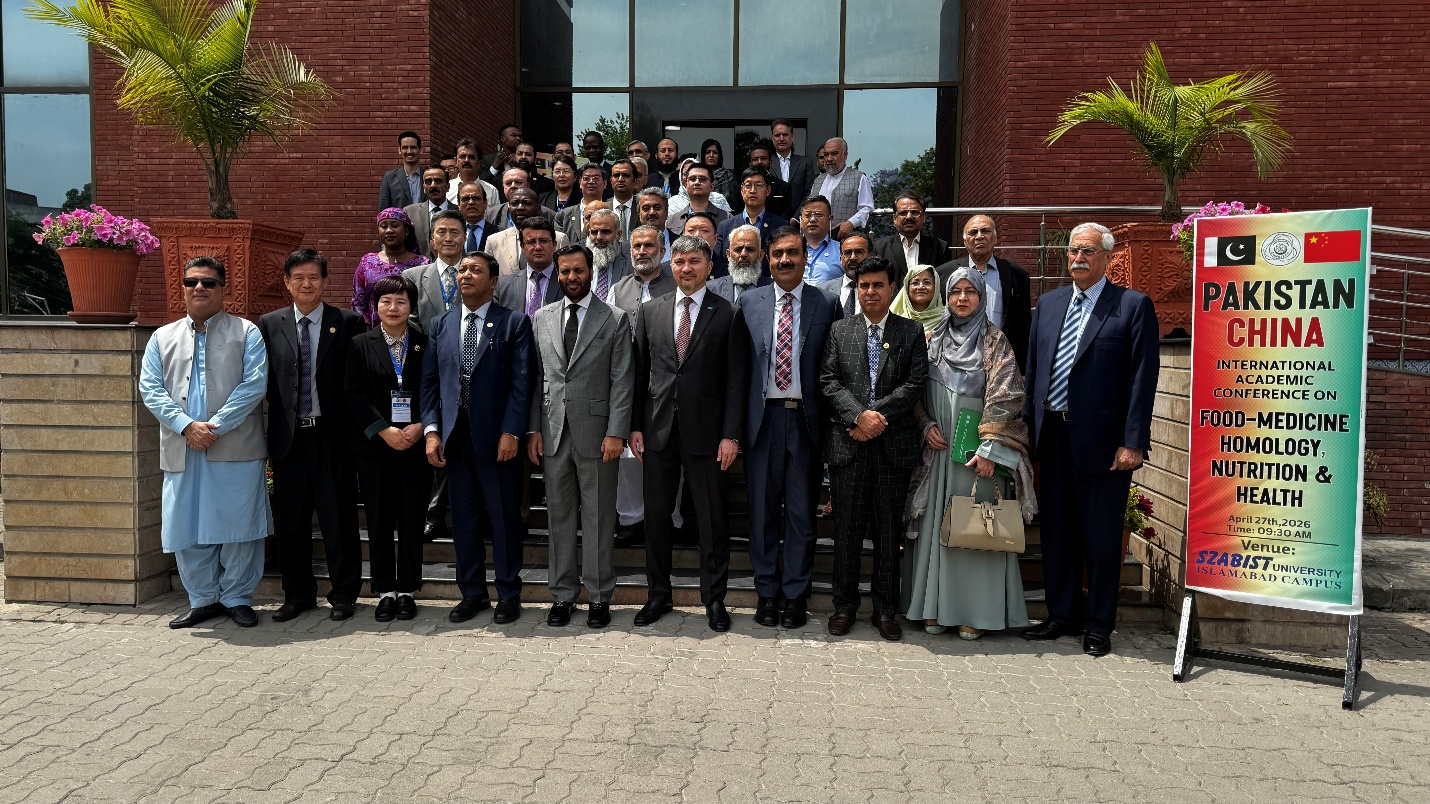
Pakistan and China strengthened cooperation in health sciences, nutrition, and traditional medicine during a major academic conference in Islamabad. The event focused on food-medicine homology and preventive healthcare systems.
The Pakistan-China International Conference on Food-Medicine Homology, Nutrition, and Health took place at SZABIST Islamabad. Scientists, policymakers, regulators, and industry experts from both countries attended the event.
Shift Toward Preventive Healthcare
Federal Health Minister Syed Mustafa Kamal emphasized the importance of preventive healthcare. He said Pakistan must move beyond a treatment-focused medical system.
He explained that global healthcare is shifting toward integration of medicine, nutrition, and plant-based therapies. According to him, traditional systems like Chinese medicine and Unani medicine are becoming more relevant.
The minister also shared insights from his recent visit to China. During that visit, he held detailed discussions with experts in traditional medicine.
Policy Steps and Institutional Development
Following these discussions, Pakistan has begun practical reforms. Authorities have set up a dedicated desk within DRAP to support herbal and traditional medicine development.
This step aims to build technical expertise and improve regulation in the sector. As a result, Pakistan expects stronger institutional capacity in natural and alternative medicine systems.
Food-Medicine Homology and Scientific Approach
Coordinator General of OIC-COMSTECH, Prof. Dr. Muhammad Iqbal Choudhary, highlighted the concept of food-medicine homology.
He explained that food can also function as preventive healthcare. In most regions, food and medicine remain separate categories. However, he noted that China follows a different scientific approach.
He further stated that China treats food and medicine as part of a single spectrum. This system includes “food that heals,” which is carefully researched and clinically tested.
In addition, he stressed that proper dosage, validation, and regulation make this model scientifically reliable.
International Collaboration in Traditional Medicine
Prof. Dr. Liu Xinmin, a member of the WHO Expert Advisory Panel on Traditional Medicine, highlighted long-term cooperation between Pakistan and China.
He noted that both countries have built strong research partnerships. These collaborations support training programs and institutional linkages in health sciences.
Research, Innovation, and Technical Sessions
The conference also included technical sessions on medicinal plants, clinical research, food safety, and nutrition-based healthcare solutions.
Moreover, experts discussed joint research opportunities between both countries. These sessions aimed to strengthen practical collaboration in modern and traditional health systems.
Strengthening Bilateral Health Cooperation
Overall, the conference reinforced growing cooperation between Pakistan and China.
Both sides committed to expanding research in traditional medicine and nutrition. Furthermore, they aim to integrate scientific validation with traditional healthcare systems.
Read More Articles:
China Upgrades Traditional Industries with AI