
A river runs through the origin story of most civilizations, and on September 14, scholars in Beijing made the case that two of Asia’s great rivers, the Indus and the Yangtze, share more than a passing resemblance.
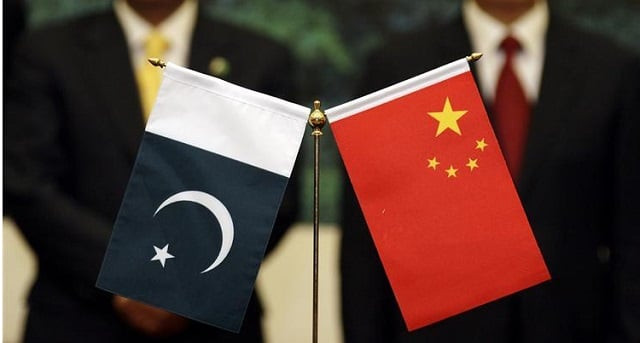
The Embassy of Pakistan in Beijing, the Pakistan Center for Culture and Communication, and Tsinghua University’s School of Journalism and Communication jointly launched a new trilingual book, Indus and Yangtze: A Journey of Two Rivers from One Origin, marking 75 years of diplomatic relations between Pakistan and China.
The book was presented in English, Urdu and Chinese editions, edited by Professor Li Xiguang, former Executive Vice Dean of Tsinghua’s School of Journalism and Communication, and Professor Zahid Anwer, former Vice Chancellor of the University of Peshawar.
Two Rivers, One Shared Origin
The book’s central premise, as presented by its editors, treats the Indus and Yangtze not as unrelated waterways but as parallel civilizational cradles, geographically distant yet connected over centuries through trade, migration and cultural exchange.
At the launch, the editors highlighted what they described as shared historical and cultural connections between the civilizations that grew along the two river basins, framing the research as a contribution to deeper mutual understanding between the Pakistani and Chinese peoples.
The specific historical and cultural linkages the book documents were not detailed in event coverage; the claim of a shared civilizational connection reflects the authors’ scholarly argument rather than an independently established historical consensus.
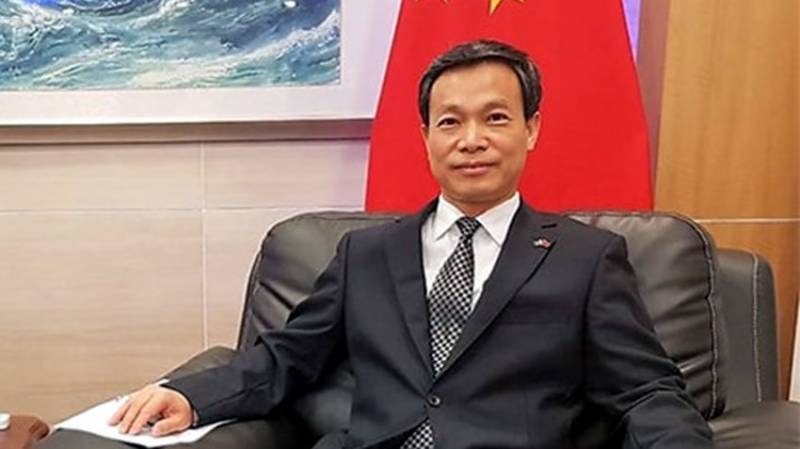
Ambassador of Pakistan to China Khalil Hashmi delivered the keynote address, commending Professor Li, Professor Anwer and their research teams for what he described as extensive scholarship into the geographical, historical, economic and cultural linkages tying the two river systems together.
A Wider Academic Showcase
The book launch was the centrepiece of a broader academic gathering, one that pointed to a growing body of Chinese scholarship focused specifically on Pakistan.
The event featured presentations by Dr Wen Sanmei and Dr Liu Bei on their doctoral research concerning Pakistan, work that organisers said reflected the increasing depth and diversity of Pakistan-focused academic study within Chinese universities and research institutions.
Researchers also presented findings on the ancient trade routes of the Yarkand River Valley, extending the event’s historical scope beyond the Indus and Yangtze into the wider network of overland connections that have linked the regions now comprising Pakistan and western China.
Senior academics and institutional representatives attended alongside Ambassador Hashmi, including Shi Anbin, Party Secretary of Tsinghua’s School of Journalism and Communication; Yao Yuanjun of the Yangtze River Culture Promotion Association; Professor Xiang Debao of Beijing Foreign Studies University; Professor Guo Xiaoke of the Communication University of China; and the directors of Pakistan Study Centres at Nankai University and Sichuan University, Chen Ruihua and Zhang Chaowen respectively.
Representatives of the CITIC Foundation for Reform and Development Studies also took part in the exchange.
The Karakoram Highway, Remembered by Those Who Built It
Alongside the book launch, the event featured a separate but closely related project: An Oral History of the Builders of the Karakoram Highway.
Lecturer Zhang Jing presented research and recorded interviews documenting the experiences of the workers and engineers who built the highway during its roughly two-decade construction, along with excerpts from an accompanying documentary.
The Karakoram Highway, completed in 1979 and opened to the public in 1986, is a 1,300-kilometre road connecting Hasan Abdal in Punjab to Kashgar in Xinjiang via the Khunjerab Pass.
Built through some of the most difficult mountain terrain in the world, it crosses the Karakoram, Pamir, Hindu Kush and Kunlun ranges.
Long before CPEC formalised the broader economic partnership between the two countries, the highway had already become a major physical link between Pakistan and China, and the oral history project aims to preserve the firsthand accounts of the people who made it possible before those memories are lost.
Why This Kind of Exchange Matters
Academic and cultural cooperation rarely generates the same headlines as a trade agreement or an infrastructure announcement, but events like this one build a different, longer-lasting kind of foundation.
Pakistan Study Centres now operate at multiple Chinese universities, producing a steady stream of doctoral research, translated literature and historical documentation that deepens public and scholarly understanding of the relationship beyond government-to-government engagement.
The Indus and Yangtze book, published simultaneously in three languages, is intended to reach readers in both countries directly rather than filtering that understanding solely through diplomatic or economic channels.
As Pakistan and China mark 75 years of formal ties this year, projects like this one, along with the Karakoram Highway oral history and the growing body of doctoral research on Pakistan within Chinese academia, represent the kind of sustained cultural and intellectual exchange that can extend beyond any single political cycle or economic initiative.
Read More Articles:
PM Fuel Relief Scheme Expands Across Pakistan