
Minister for Planning, Development, and Special Initiatives, Professor Ahsan Iqbal, announced that the JCC meeting on CPEC projects set for Sept 26 will be held in Beijing. The 14th session will review progress and push forward the Action Plan (2025–2029) agreed during Prime Minister Shehbaz Sharif’s recent visit to China.
Iqbal called the four-year strategy a “solid development,” stressing its importance in strengthening Pakistan-China cooperation. He said the JCC meeting would help translate the Action Plan into stronger decisions and implementation, taking bilateral ties to the next level.
Aligning CPEC with the URAAN Pakistan Initiative
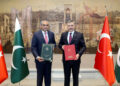
During the visit, both sides signed an agreement to align five corridors of CPEC Phase-II with the five “Es” of the URAAN Pakistan program. According to Iqbal, this alignment represents a people-centric approach, promoting industrial growth, job creation, and sustainable development.
Key Economic Indicators Show Progress
The minister highlighted encouraging economic trends. CPI inflation fell to 3.5% in the first two months of FY2026, compared to 10.4% last year. Tax revenues grew 14.1% to Rs 1,661 billion, while the Pakistan Stock Exchange rose above 154,000 points with market capitalisation at Rs 18.1 trillion. Agriculture credit increased nearly 37%, and private sector lending rose 13%, both reflecting stronger business activity.
Development Spending and Job Creation
Iqbal reported that Rs 150 billion in PSDP funds were authorised and Rs 46 billion released, with expenditure up 23.3% to Rs 5.3 billion. The Federal PSDP included 86 foreign-aided projects worth Rs 229 billion. In August, five projects were approved by CDWP and nine were recommended to ECNEC, expected to generate nearly 33,000 jobs. Cost-saving measures in July saved Rs 1.13 billion.
Innovation and Entrepreneurship Initiatives
Among new launches, the “URAAN AI Techathon” and “Pakistan One National Business Plan Competition” will support start-ups, universities, and youth. These initiatives aim to boost IT, AgriTech, renewable energy, and manufacturing. Pakistan’s first Economic Census also mapped 7.2 million establishments and 10 million informal businesses, providing vital data for policy-making.
Climate and External Engagements
Iqbal acknowledged Pakistan’s climate vulnerability. The 2025 monsoon floods killed 907 people and damaged infrastructure. The government evacuated 2.35 million citizens and set up 1,744 relief camps.
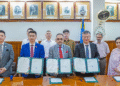
On the global front, Pakistan signed the NAVTTC–Hazza Institute of Technology Skills Pact in Beijing, expanding training in AI, robotics, and renewable energy. This partnership will create over 1,000 jobs under CPEC. High-level meetings with Chinese leaders reaffirmed that Phase II of CPEC is people-focused, extending cooperation into economic reforms, nuclear energy, and space exploration, including astronaut and lunar missions.
Related stories: