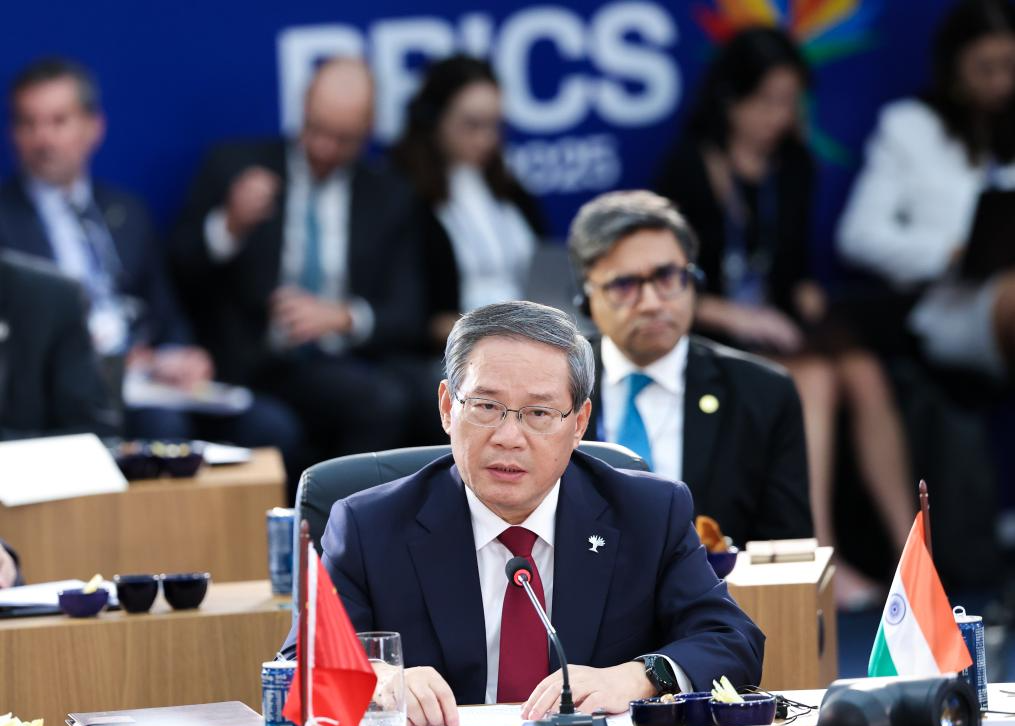
Chinese Premier Li Qiang on Sunday emphasized that BRICS nations should take the lead in reforming global governance. Speaking at the plenary session titled “Peace and Security and Reform of Global Governance” during the 17th BRICS Summit, he urged member states to uphold global peace and resolve disputes through dialogue.
The session, presided over by Brazilian President Luiz Inácio Lula da Silva, brought together BRICS leaders to discuss international challenges. Li highlighted that the world is undergoing rapid and unprecedented changes, where established global norms are weakening and multilateral institutions are losing effectiveness.
He noted that President Xi Jinping’s vision of global governance, centered on broad consultation, collective effort, and mutual benefit, offers practical and timely guidance for today’s world. Li emphasized that in the face of rising global tensions, countries must pursue inclusive dialogue, unity, and win-win cooperation.
As representatives of the Global South, BRICS members should maintain strategic independence, take on greater responsibilities, and play a unifying role in building consensus and collective momentum for reform, Li said.
He urged the bloc to prioritize moral principles and consider each global issue on its own merits while seeking long-term solutions. Development should remain a key focus, and BRICS should stimulate growth by leading cooperation in emerging industries.
To support these efforts, Li announced China’s plan to establish a China-BRICS research center on “new quality productive forces” and launch a scholarship program for BRICS countries to nurture talent in areas such as industry and telecommunications.
Promoting inclusivity and cultural dialogue, Li called on BRICS nations to advocate for harmony among civilizations, encouraging mutual learning and co-existence to enable diverse cultures to thrive.
He reiterated China’s readiness to work with BRICS partners to push global governance in a fairer, more balanced, and efficient direction, contributing to a better and more peaceful world.
The participating leaders acknowledged BRICS as an increasingly influential and representative platform for Global South countries to safeguard development rights, support global justice, and shape the evolving governance system.
In light of growing unilateralism and protectionism, the leaders stressed the need for enhanced BRICS solidarity, commitment to the UN Charter, and stronger advocacy for multilateralism to advance shared progress, reform global governance, and secure lasting peace.
The summit concluded with the adoption of the Rio de Janeiro Declaration, reinforcing BRICS’ shared commitments and future direction.
Related Posts