


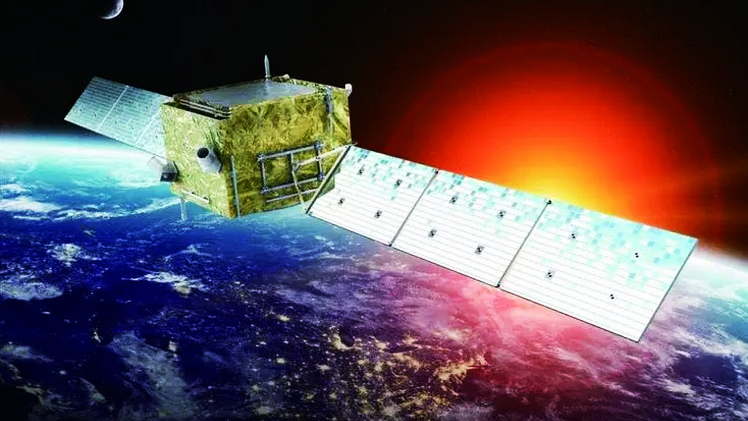
China’s first dark matter satellite, Wukong, has revealed how solar activity affects cosmic rays, showing variations in electron and positron flux during Forbush decreases.
The international research team analyzed eight years of data from 2016 to 2024, tracking eight events and mapping how coronal mass ejections alter the interplanetary magnetic environment.
Published in Physical Review Letters, the findings improve understanding of cosmic ray propagation, solar-terrestrial interactions, and the importance of advanced spaceborne particle detection technology.
Related stories:
Pakistan-China Satellite Partnership Expands Digital Connectivity