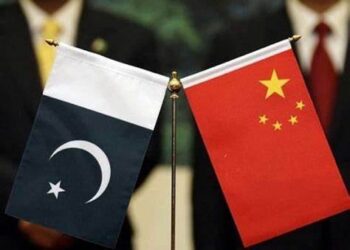


According to a report by Gwadar Pro, China has significantly stepped up cooperation with Pakistan to combat escalating smog and air pollution challenges by supporting a range of clean-mobility and zero-emission projects aimed at transforming the country’s urban transport landscape.
Lahore continues to face a severe smog crisis, recently ranking as the world’s most polluted city with an Air Quality Index (AQI) exceeding 400. Health experts have advised citizens to wear masks and limit outdoor exposure as PM2.5 concentrations soar beyond global safety limits.
In response, China has stepped forward as a key ally in Pakistan’s anti-pollution efforts. Its zero-emission strategy includes the introduction of New Energy Vehicles (NEVs), electric buses, E-scooters, and the promotion of fully electric metro systems.
Major Chinese automakers such as BYD, BAIC, Changan, MG, FAW, and Chery have expanded into Pakistan, some through local joint ventures. BYD Pakistan, in partnership with Mega Motor Company, has begun delivering electric vehicles across Karachi, Lahore, and Islamabad. The companies aim to set up 15 dealerships nationwide by the end of 2025, offering models like the SEAL and ATTO 3, reflecting growing consumer confidence in Pakistan’s EV market.
Beyond cars, Chinese E-scooter brands including Horwin, Yadea, Evee, and QJMOTOR are reshaping Pakistan’s two-wheeler segment. Affordable, zero-emission, and powered by smart technologies such as Bluetooth and app-based monitoring, these e-bikes are winning over environmentally conscious riders and young urban commuters.
The collaboration extends to public transportation, a major contributor to urban carbon emissions. China is introducing over 1,100 electric buses across Pakistan, including 45 units in Rawalpindi and 21 in Quetta, while nearly 200 e-buses are already in operation in Punjab. The Sindh government has also announced plans for a Chinese-assisted e-bus manufacturing plant, paving the way for local production.
Another milestone of this partnership is the Orange Line Metro Train (OLMT) in Lahore, Pakistan’s first electric urban rail system built under the China-Pakistan Economic Corridor (CPEC) and the Belt & Road Initiative (BRI). Fully powered by electricity, the metro has cut annual fuel emissions by nearly 30,000 tons, reduced road congestion, and improved urban air quality.
These projects align with the National Electric Vehicle Policy 2025–2030, under which Pakistan aims to achieve 30 per cent of new vehicle sales to be electric by 2030 and to achieve net-zero transport emissions by 2060.
With Chinese technology and investment complementing Pakistan’s green ambitions, experts say this collaboration could mark a turning point in the nation’s clean-energy transition.
Related stories:
Pakistan, China Strengthen Smog and Air Pollution Cooperation