

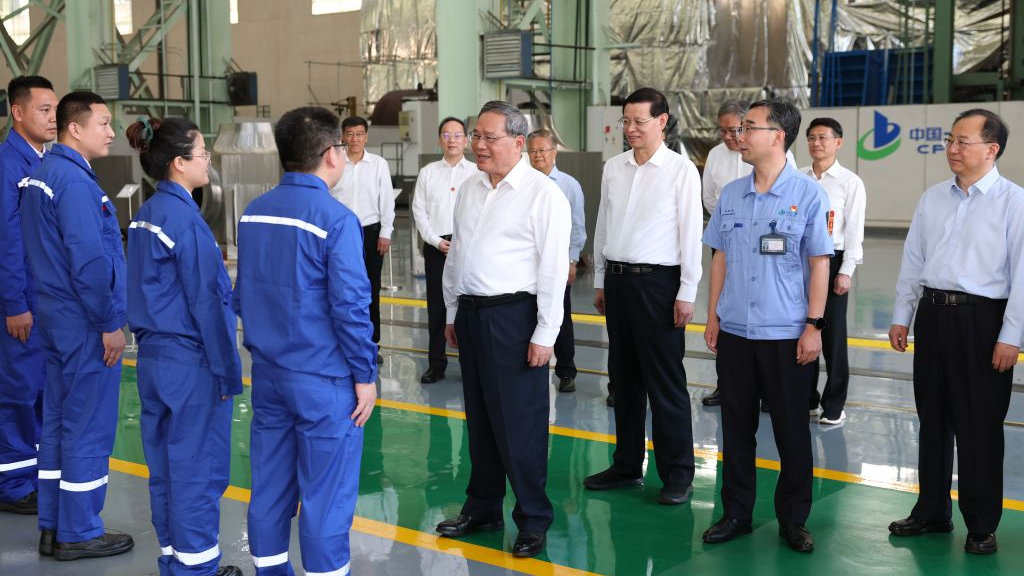
Chinese Premier Li Qiang has called for a major push to develop high-end equipment manufacturing. During an inspection tour in Dalian, he emphasized that building a modern industrial system is vital for driving high-quality economic growth in China. He stressed that a robust manufacturing sector serves as the backbone of a resilient economy, urging closer collaboration between research institutions and industrial enterprises to accelerate the commercialization of cutting-edge technologies. Furthermore, the Premier highlighted that achieving self-reliance in critical equipment sectors is essential for securing national supply chains and ensuring long-term global competitiveness.
Expanding the Shipbuilding Edge
Dalian has a strong foundation in heavy industry. Premier Li urged the city to leverage this history to build world-class shipbuilding bases and advanced manufacturing clusters. To achieve this, he noted that China must accelerate breakthroughs in core technologies, train top-tier technical personnel alongside skilled workers, and strengthen its global edge in shipbuilding and offshore engineering.
Driving Innovation of China
The Premier also highlighted the need to turn scientific research into practical commercial products. He stressed the safe adoption of next-generation nuclear power to support the country’s green and low-carbon goals. Additionally, he noted that advancing high-end petrochemical equipment is key to making related sectors more efficient.
Upgrading Industrial Chain of China
Building a modern economy requires a dual approach. Premier Li explained that China must nurture future industries while simultaneously upgrading its traditional sectors. He called for using digital and intelligent technologies to modernize these fields. Ultimately, these efforts aim to secure supply chains and boost global competitiveness.
To achieve this, he emphasized the need to deeply integrate automation and artificial intelligence into existing assembly lines, turning older factories into smart, highly efficient manufacturing hubs. By fortifying the resilience of domestic supply chains against global market volatility, China can ensure that its core industrial bases remain self-sufficient and fully operational. Premier Li also noted that this digital transformation must be supported by continuous policy incentives and public-private investments, positioning the nation to not only adapt to shifting global economic trends but to actively shape the future of international commerce.
Read More Articles:
China’s Liaoning aircraft carrier completes 40 day drill