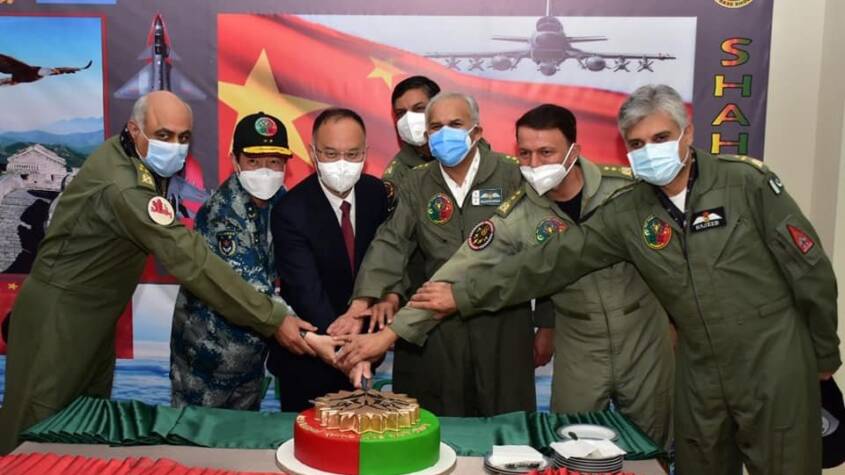



The strategic alliance between China and Pakistan continues to serve as a vital pillar for peace and stability in South Asia, according to Prof. Cheng Xizhong, Senior Research Fellow at the Charhar Institute.
In a statement issued Sunday, Prof. Cheng highlighted that this enduring partnership, built on mutual political trust, economic synergy, and security cooperation, acts as a stabilizing force in an increasingly uncertain regional environment. He emphasized that both countries have consistently stood by one another on matters of core national interest, with China backing Pakistan’s sovereignty and Pakistan supporting China on key global issues.
Citing platforms like the United Nations, BRICS, and the Shanghai Cooperation Organization (SCO), he noted that China and Pakistan maintain close coordination to promote a more balanced international order.
The China-Pakistan Economic Corridor (CPEC) was described as a major driver of economic development and regional integration. According to Prof. Cheng, CPEC not only accelerates Pakistan’s infrastructure growth but also fosters greater regional connectivity, offering development as a means to counter instability.
On the security front, he underscored the joint counter-terrorism efforts of both nations, calling their coordination a “firewall” against transnational threats such as terrorism and drug trafficking. He stated that this cooperation has significantly curbed the spread of extremist networks across South Asia.
Prof. Cheng also framed the China-Pakistan model as a blueprint for regional cooperation, rooted in non-alignment, non-interference, and mutual benefit. He believes this approach offers a sustainable path toward shared development and peaceful coexistence in the broader region.
Related stories:
CPEC Phase II: Pakistan terms China’s model a guiding example