
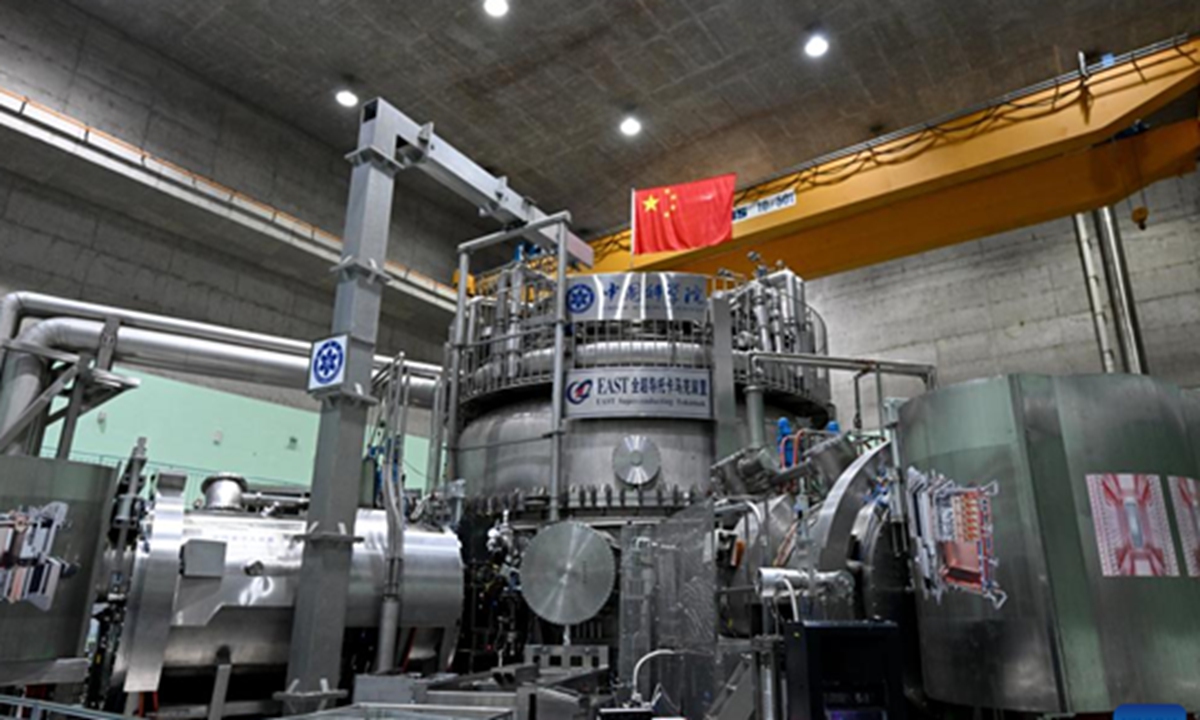
China has officially launched the Burning Plasma International Scientific Program, introducing the BEST research initiative to the global fusion community. The program aims to study burning plasma physics and achieve fusion energy output greater than the input, marking a major step toward sustainable energy. Scientists from over 10 nations, including European countries, have joined the program to collaborate on this frontier of physics research.
The BEST device, part of the initiative, will serve as China’s next-generation “artificial sun.” It will conduct deuterium-tritium experiments to test long-pulse steady-state operation, with the goal of generating 20 to 200 megawatts of energy, demonstrating fusion power generation. This project builds upon China’s record-breaking EAST tokamak and related facilities in Hefei.
Chinese officials emphasized international collaboration, encouraging scientists worldwide to join research efforts at Hefei. By pooling knowledge and resources, the program aims to tackle engineering and physics challenges associated with maintaining ultra-high temperature plasmas and alpha particle behavior, critical for continuous fusion reactions.
This international initiative not only advances China’s leadership in fusion research but also strengthens global scientific partnerships. By creating open-access large-scale fusion platforms, China is fostering a collaborative environment for next-generation energy breakthroughs, bringing humanity closer to achieving the long-sought goal of safe, clean, and sustainable fusion power.
Related stories:
China Launches JUNO Project to Decode Neutrino Mass
China completes final delivery for ITER ‘Artificial Sun’ project