


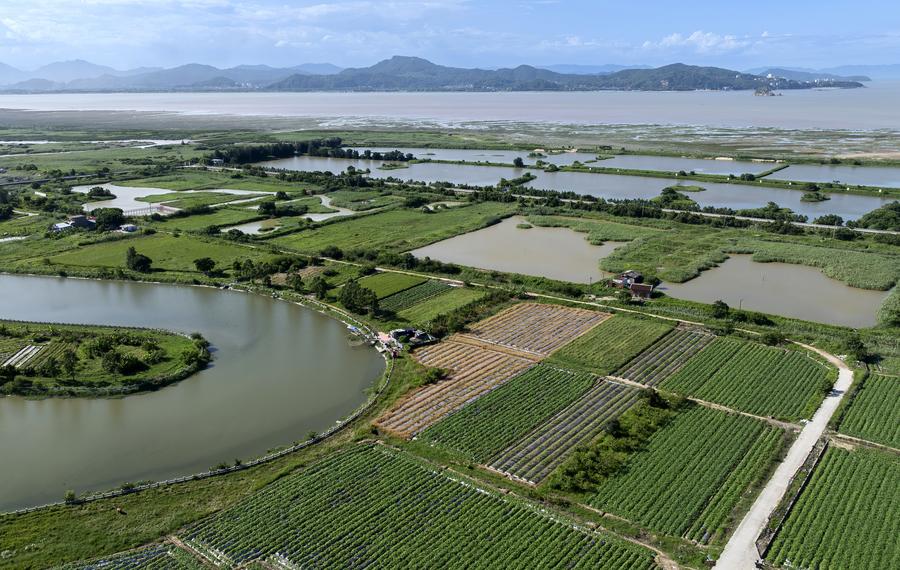
A team of Chinese researchers has released the most comprehensive global analysis to date of wetland carbon sinks, uncovering how these ecosystems store carbon and how their ability to absorb emissions has evolved.
Wetlands: Small in Area, Big in Impact
Wetlands cover only 3% to 13% of the Earth’s land area but store more than 30% of the world’s soil organic carbon. Despite their crucial role in regulating the planet’s carbon balance, wetlands are often poorly represented in traditional carbon cycle models, leading to major gaps in global carbon budget estimations.
Building a Better Model: Linking Water Levels to Carbon Storage
To fill this gap, scientists at the Institute of Soil Science, Chinese Academy of Sciences (ISSCAS), developed a global carbon flux model for wetlands that connects carbon uptake with water level changes. This new model uses net ecosystem productivity (NEP) as the key indicator and incorporates detailed datasets on climate, vegetation, soil, hydrology, and topography.
Massive Dataset from 642 Wetland Sites
The research team compiled a comprehensive global database by analysing 606 published studies and using 2,295 water level records from 642 wetlands worldwide. Using this information, they generated a high-resolution global map showing water level changes and NEP patterns across wetland ecosystems.
Carbon Sink Decline in the Tropics Pre-2005
The study found a significant drop in wetland carbon sink strength in tropical regions, particularly in the Amazon Basin and Southeast Asia, between 2000 and 2005. This decline was largely attributed to climate-driven droughts linked to El Niño events and the Southern Oscillation, which reduced water availability and weakened plant productivity.
A Post-2005 Recovery in the Northern Hemisphere
Lead researcher Ding Weixin explained that after 2005, wetland carbon absorption began to recover, especially in mid- to high-latitude regions of the Northern Hemisphere. Climate shifts brought more moisture and warmer temperatures to these regions, revitalising wetland conditions and boosting carbon uptake.
Stalled Global Growth in Wetland Carbon Sequestration
Despite these regional recoveries, gains in the Northern Hemisphere were offset by continued losses in tropical and southern wetlands. As a result, the overall global wetland carbon sink remained largely stable between 2000 and 2020.
The researchers believe this stagnation may help explain why the growth of global terrestrial carbon sinks has slowed over the past two decades.
Policy Implication: Protecting Wetland Water Levels is Key
Ding stressed the importance of preserving natural hydrological patterns in wetlands. Maintaining water levels is crucial to safeguarding these ecosystems’ ability to absorb carbon, especially as climate change intensifies.
Future Research: Human Impacts Still Unmeasured
While the model offers new clarity on natural wetland carbon dynamics, it does not yet include the effects of human activity, such as wetland reclamation and land use change. The researchers aim to extend the study by evaluating how anthropogenic actions have reduced the global wetland carbon sink.
Related stories:
Chinese scientist redefines Congo River’s source with satellite
China shares moon samples with scientists from different countries