
Pakistan maritime resilience faces a new test as disruption around the Strait of Hormuz reshapes shipping routes, marine-fuel markets and regional trade. For Pakistan, the shift creates an opportunity to attract maritime business but lasting gains will depend on competitive port services, effective reforms and reliable logistics, not geography alone.
The disruption around the Strait of Hormuz is changing more than the routes ships take. It is also influencing where shipping companies refuel, how they buy marine fuel and how they manage supply-chain risks. For Pakistan, this creates an opportunity but not a guarantee of a stronger maritime economy.
On 16 October, Reuters reported that shipping companies were diversifying their refuelling locations as hostilities disrupted established bunkering patterns around the Gulf. Vitol, the global energy trader, began bunkering at Gwadar in July, offering an alternative location outside the Strait of Hormuz for vessels serving the Gulf region. Reuters also reported that marine-fuel prices remained more than 70 per cent above pre-conflict levels, adding pressure to shipping costs.
The development matters, but it should not be mistaken for proof that Gwadar has become a major regional shipping hub. Pakistan’s challenge is broader: can its ports turn renewed international attention into regular business by making services more reliable, transparent and commercially competitive?
Beyond diverted ships: the economics of maritime resilience
Pakistan maritime resilience depends on more than the number of ships that call at its ports during a crisis. Long-term competitiveness requires shipping lines, cargo owners and service providers to keep choosing Pakistani ports when emergency diversions are no longer necessary.
Marine bunkering is one part of that wider ecosystem. It can generate business for fuel suppliers, port operators, logistics companies and supporting services. Yet vessels will not choose a port on geography alone. Price, fuel availability, delivery reliability, regulatory clarity, safety and the time required to complete an operation all influence commercial decisions.
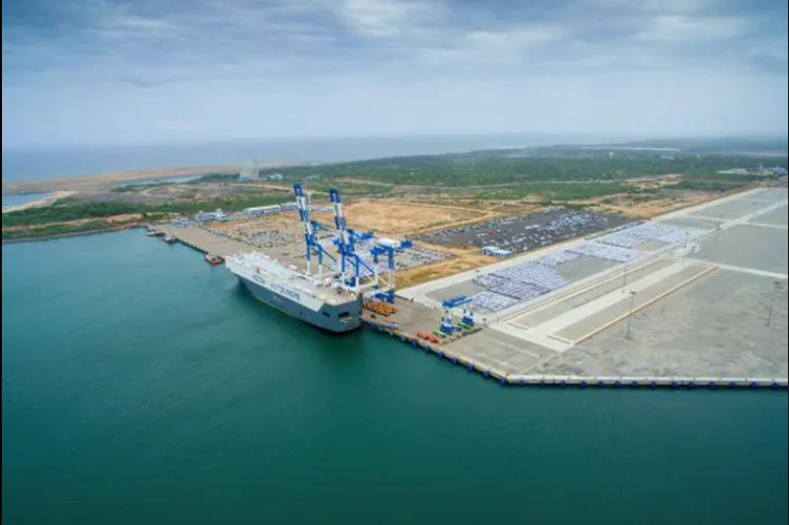
Gwadar’s first commercial bunkering operation, completed in July, involved the supply of 2,500 metric tonnes of very low-sulphur fuel oil to the LNG carrier LNG ENUGU. The operation involved Vitol, the National Logistics Corporation and other Pakistani port and shipping stakeholders, according to the government’s Pakistan Single Window platform. Reuters’ October reporting suggests that the service has become part of a wider effort to diversify refuelling options amid regional disruption.
That is a meaningful step, but a first operation and a subsequent commercial expansion do not, by themselves, establish sustained demand. The stronger measure of success will be repeat customers, regular vessel calls, reliable supply and transparent evidence of the business generated.
Pakistan’s ports need a coordinated strategy
Pakistan’s maritime system is not a single-port proposition. Karachi, Port Qasim and Gwadar have different operational roles and levels of maturity. Karachi and Port Qasim handle established commercial flows, while Gwadar is seeking to expand its role in transshipment and maritime services. A resilient strategy should strengthen the wider network rather than present Gwadar as an immediate substitute for established regional ports.
The government has been pursuing reforms intended to address long-standing weaknesses in the sector. In July, the Pakistan Single Window platform reported that the Prime Minister’s Task Force on Maritime Reforms had completed 85 of 99 reform measures. These included a National Ports Master Plan, a uniform port tariff system, changes to transit-trade procedures and customs rules for transshipment and bunkering. Other measures focused on port capacity, shipping, ship repair and domestic dredging capability.
The implementation record is important, but the number of completed measures is not the same as proof of improved commercial performance. Shipping companies need to see whether the reforms reduce costs, cut delays, simplify documentation and make port services more predictable. Those outcomes will determine whether new business stays.
Digital systems are particularly important. The government has reported improvements in cargo clearance following the introduction of Pakistan Single Window and faceless customs assessment. Such reforms can help reduce friction between agencies, traders and terminal operators. Their value, however, depends on consistent implementation across the port system, with measurable performance data available to users.
Lower insurance costs create an opening; but not a shortcut
Pakistan received another potential competitiveness boost in July, when the government announced that the country and its territorial waters had been removed from the Lloyd’s Market Association’s Joint War Committee listed areas. The Ministry of Maritime Affairs said the change could reduce war-risk insurance premiums and shipping costs, making Pakistani ports more attractive to carriers and investors.
The distinction matters. A change in Pakistan’s insurance classification does not remove the risks associated with conflict elsewhere in the region. Nor does it automatically make Pakistani ports cheaper or more efficient than competing facilities. It can improve one element of the cost equation, but port charges, fuel prices, turnaround times, inland transport and customs procedures still shape the final decision.
The broader market remains unsettled. In its 16 October report on fuel-oil supplies, Reuters said flows of high-sulphur fuel oil through the Strait of Hormuz remained at least 800,000 metric tonnes a month below February levels, according to Vitol’s Asia head. The same report described tight supply conditions and higher spot-market premiums. For ship operators, such volatility makes flexible refuelling options valuable but it can also increase costs and complicate planning.
Pakistan therefore needs to compete on dependable service, not simply proximity to a disrupted route.
What Pakistan Maritime Resilience Means for CPEC 2.0
For CPEC 2.0, maritime resilience should mean more than promoting Gwadar’s location on a map. It should connect port infrastructure with industrial activity, efficient customs, reliable energy and fuel supply, inland logistics and the needs of exporters and shipping companies.
Gwadar’s commercial prospects will depend on the strength of these links. A port can attract attention during a regional crisis, but recurring business requires customers to know what services are available, how much they cost, how quickly cargo or fuel can be handled and whether those services will remain dependable. Transparent tariffs and published operational data can help companies assess those questions before committing to regular calls.
The same principle applies nationally. Karachi and Port Qasim can contribute established cargo-handling capacity, while Gwadar can develop complementary services where it has a clear commercial case. Coordination between port authorities, customs, fuel suppliers, logistics operators and security agencies will be essential. So will investment in workforce skills, maintenance and environmental safeguards as maritime activity expands.
Pakistan’s reform agenda provides a framework for this work. The next test is execution: whether policies produce sustained improvements that businesses can measure and trust.
From a crisis opportunity to lasting capacity
The Strait of Hormuz disruption has drawn attention to Pakistan’s maritime position and created demand for alternative services. Gwadar’s bunkering activity is one example of how that interest may translate into commercial operations. But the country’s long-term maritime prospects will not be secured by a handful of diverted vessels or headline-grabbing milestones.
Building Pakistan maritime resilience will require competitive costs, consistent regulation, efficient port operations and reliable links to domestic and regional markets. For CPEC 2.0, the objective should be a maritime system that remains commercially valuable even when geopolitical conditions change—not one that depends on disruption to attract business.
The real test of Pakistan’s maritime resilience is not whether ships can come during a crisis. It is whether they have sound commercial reasons to keep coming afterwards.
Related Articles
- Gwadar Port Starts Commercial Bunkering — How Pakistan’s deep-sea port began offering marine-fuel services.
- Gwadar Completes 2nd Bunkering Operation — A follow-up to Gwadar’s initial commercial bunkering milestone.
- Gwadar Port: Is CPEC’s Flagship Port Finally Becoming a Trade Hub? — Examining Gwadar’s transshipment prospects and commercial challenges.
- Pakistan, Kazakhstan Eye Gwadar Port for Central Asian Trade — The potential role of Gwadar in regional trade and connectivity.