
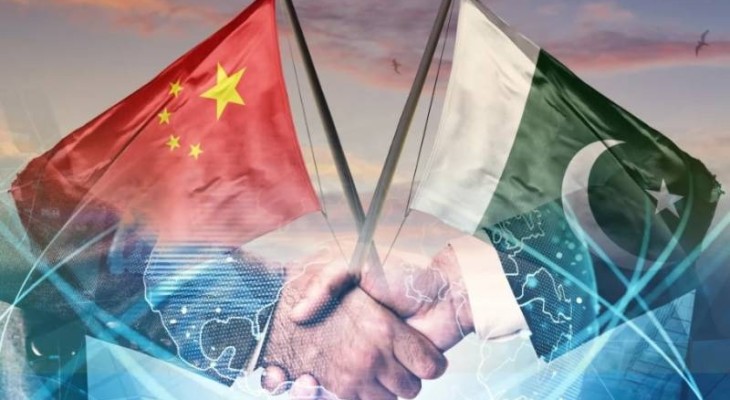
The China-Pakistan Economic Corridor (CPEC), a flagship project of China’s Belt and Road Initiative (BRI), is gradually expanding beyond traditional infrastructure and energy cooperation. As Pakistan and China advance their economic partnership, artificial intelligence (AI) and digital technologies are emerging as important areas of collaboration.
Initially focused on electricity generation, transport infrastructure and regional connectivity, CPEC is increasingly linked with Pakistan’s ambitions to develop a knowledge-based economy. This transition is creating opportunities for cooperation in digital infrastructure, research, education, industrial innovation and technology-driven public services.
The shift also reflects the broader direction of CPEC’s second phase, commonly known as CPEC 2.0, which places greater emphasis on industrial development, agriculture, innovation, technology and business-to-business cooperation.
Through academic partnerships, technology agreements, skills-development programmes and digital infrastructure, Pakistan and China are working to establish stronger foundations for an AI-enabled economy.
CPEC 2.0 Brings Digital Technology into Bilateral Cooperation
The second phase of CPEC aims to broaden economic cooperation beyond large infrastructure projects. Information technology, artificial intelligence, cloud computing, big data, 5G connectivity and digital services are increasingly relevant to this expanded partnership.
An important institutional platform for this cooperation is the China-Pakistan Joint Working Group on Information Technology. According to the CPEC Secretariat, the working group focuses on strengthening cooperation in the IT industry and developing an innovative China-Pakistan Digital Corridor.
Its areas of cooperation include ICT infrastructure, digital applications, cybersecurity, policy and regulation, radio spectrum management and human resource development.
The CPEC Secretariat also identifies data centres, cloud computing, the Internet of Things (IoT), artificial intelligence and 5G networks as areas for further collaboration.
These efforts could create stronger links between technology companies, universities, research institutions and businesses in both countries. They also offer Pakistani technology firms opportunities to engage with Chinese expertise and explore new markets.
820-Kilometre Fibre-Optic Cable Strengthens Digital Connectivity
Digital infrastructure provides an important foundation for artificial intelligence and other advanced technologies. One of the major achievements under CPEC is the 820-kilometre cross-border optical fibre cable connecting China’s Xinjiang region with Pakistan through the Khunjerab Pass.
The project, completed and inaugurated in July 2018, connects Gilgit-Baltistan and other northern areas with Pakistan’s existing telecommunications network, extending towards Islamabad and Rawalpindi.
According to the CPEC Secretariat, the project cost approximately $44 million and was designed to strengthen Pakistan’s telecommunications and ICT infrastructure, improve communication security and support connectivity in northern areas.
Although the cable was not built specifically for artificial intelligence, it provides an important part of the digital infrastructure needed to support high-speed communications, cloud-based services and future digital applications.
As Pakistan develops its data infrastructure and expands digital services, reliable connectivity will remain essential for businesses, research institutions and technology users.
Smart Agriculture Creates New Opportunities for AI Cooperation
Agriculture is one of the most promising areas for Pakistan-China technological cooperation. The sector supports millions of livelihoods and plays an important role in Pakistan’s economy, food supply and exports.
However, farmers continue to face challenges involving water scarcity, changing weather conditions, crop diseases, limited mechanisation and productivity gaps. Artificial intelligence and other digital technologies could help address some of these problems.
AI-enabled agricultural systems can analyse weather patterns, soil conditions and crop data to support better farming decisions. Drones, satellite monitoring and intelligent sensors can help farmers identify crop diseases, monitor field conditions and manage irrigation more efficiently.
China’s experience in agricultural mechanisation, precision farming, biotechnology and digital monitoring offers opportunities for knowledge exchange and technology adoption in Pakistan.
Training 1,000 Pakistani Agricultural Professionals in China
Human resource development is already an important part of Pakistan-China agricultural cooperation.
Under the Prime Minister’s Initiative for Capacity Building of 1,000 Agricultural Graduates in China, Pakistani professionals have received specialised training at Chinese universities and institutions.
The Higher Education Commission reported on March 3, 2026, that 885 agricultural professionals had completed their training and returned to Pakistan. The programme covered nine specialised areas, including farm mechanisation, crop breeding, drones, Internet of Things applications, AI in farming, livestock health, water management and value addition.
The trained professionals are expected to serve as master trainers, sharing their knowledge with local farmers, agricultural extension workers and students.
This initiative connects international training with practical agricultural development. It can also help introduce modern farming methods in Pakistan’s major crop and livestock sectors, including wheat, rice, cotton, fruit production and animal breeding.
Further collaboration in smart and digital agriculture could strengthen research, improve agricultural supply chains and support Pakistan’s long-term food security objectives.
AI Cooperation Opens New Possibilities in Healthcare
Healthcare is another emerging area of Pakistan-China technological cooperation. Artificial intelligence is increasingly being used internationally to support medical imaging, disease screening, clinical research and hospital management.
Recent agreements involving Pakistani institutions and Chinese technology organisations provide examples of how these technologies could be introduced into Pakistan’s healthcare system.
During Prime Minister Shehbaz Sharif’s May 2026 visit to China, Pakistan’s Press Information Department announced agreements involving Alibaba Group and its technology institutions.
Under the announced arrangements, Alibaba’s DAMO Academy and Pakistani company Sky47 are to deploy AI-powered disease-screening systems across major Pakistani cities. DAMO Academy and Ignite are also expected to work together on capacity-building programmes in embodied intelligence at Pakistani universities.
Separately, Capital Hospital in Islamabad signed an agreement with Alibaba Medical AI in February 2026 to introduce AI-based screening solutions in its radiology department.
The initiative aims to assist medical professionals with the interpretation of medical images, improve early disease detection and reduce reporting times.
Such applications could support doctors in identifying potential health conditions and processing medical information more efficiently. However, AI systems are intended to assist healthcare professionals rather than replace clinical judgement.
With appropriate infrastructure, training and regulatory oversight, these partnerships could contribute to wider access to technology-supported healthcare, including in underserved communities.
Pakistan-China University Cooperation Supports AI Skills Development
The development of skilled human resources will be essential to Pakistan’s ability to benefit from artificial intelligence and other emerging technologies.
China’s experience in technological education, research and industrial innovation provides opportunities for Pakistani students, researchers and young professionals through scholarships, university partnerships, academic exchanges and joint research.
The Consortium of CPEC Universities provides an institutional foundation for this cooperation. According to the Higher Education Commission, the consortium has expanded to include 93 Pakistani and 40 Chinese universities.
Its activities include collaborative research, faculty and student exchanges, China Study Centres, research grants and talent-development programmes.
These institutional links can support cooperation in artificial intelligence, semiconductors, biotechnology, cybersecurity and other emerging fields.
Greater interaction between universities can also help Pakistani researchers access international expertise, participate in joint projects and develop solutions suited to local economic and social needs.
Alibaba Partnership Targets 500,000 People for Digital Skills Development
A significant development came during Prime Minister Shehbaz Sharif’s visit to China in May 2026, when Pakistan and Alibaba Group announced agreements to promote digital transformation.
According to Pakistan’s Press Information Department, Ignite and Alibaba Cloud will collaborate on developing locally relevant AI models for Urdu and regional languages.
The arrangements also include nationwide skills-development programmes targeting 500,000 individuals, alongside AI hackathons and innovation initiatives.
Developing AI models for local languages could help make digital services more accessible to people who do not primarily use English. It may also create opportunities for applications in education, public services, business communication and local software development.
The planned training programmes could help young people and professionals develop skills relevant to software development, cloud computing, AI applications and digital entrepreneurship.
AI and Digitalisation Could Modernise Pakistan’s Industries
Pakistan’s industrial sector could also benefit from the adoption of artificial intelligence, automation, robotics and advanced manufacturing systems.
Chinese expertise in industrial digitalisation and smart manufacturing offers opportunities for Pakistani businesses seeking to improve production efficiency, product quality and competitiveness.
Under the broader CPEC 2.0 framework, industrial cooperation and business-to-business partnerships can support technology transfer and the adoption of modern production methods.
AI applications can help manufacturers monitor equipment, identify production problems, reduce operational waste and improve quality control. Data-driven systems can also support supply-chain management, inventory planning and business operations.
Special economic zones and industrial parks could provide opportunities to introduce these technologies as businesses expand their operations and adopt more advanced production systems.
Digital transformation can also support public administration. AI-assisted data analysis, intelligent traffic management and digital public services could help government institutions improve planning and service delivery.
However, these applications will require reliable infrastructure, trained personnel, data protection measures and appropriate regulatory frameworks.
Alibaba Partnership Aims to Connect 2,000 Pakistani SMEs with Global Markets
Small and medium-sized enterprises (SMEs) are another important part of Pakistan’s digital transformation agenda.
Many Pakistani businesses have the potential to expand their customer base through e-commerce and international digital trade platforms. However, limited access to technology, marketing resources and international buyers can restrict their growth.
As part of the May 2026 Pakistan-China agreements, Alibaba Group and the Small and Medium Enterprises Development Authority (SMEDA) agreed to work towards onboarding at least 2,000 Pakistani SMEs onto a dedicated Pakistan Pavilion.
The initiative is intended to help local businesses use AI-powered business tools and access international markets through digital commerce.
For Pakistani exporters and small businesses, this could create opportunities to reach overseas buyers, improve product visibility and strengthen their digital presence.
The partnership forms part of wider efforts to promote e-commerce, digital trade and technology-driven entrepreneurship between Pakistan and China.
May 2026 Joint Statement Reinforces AI Cooperation
The growing focus on artificial intelligence is also reflected in the joint statement issued by Pakistan and China on May 26, 2026, during Prime Minister Shehbaz Sharif’s official visit to China.
The statement highlighted cooperation on artificial intelligence and international AI governance. Pakistan expressed support for China’s initiative to establish the World Artificial Intelligence Cooperation Organization and agreed to work with China to advance global governance and international cooperation on AI.
This commitment complements the two countries’ wider cooperation in information technology, digital infrastructure, scientific research and technological innovation.
It also provides a broader diplomatic framework for exploring how emerging technologies can contribute to economic development and international collaboration.
From Physical Connectivity to a Knowledge-Based Partnership
The expansion of artificial intelligence cooperation reflects an evolving dimension of Pakistan-China relations. While roads, energy projects and transport networks remain important elements of CPEC, digital infrastructure and technological innovation are creating additional areas for collaboration.
For Pakistan, the opportunity lies in using this partnership to strengthen domestic capabilities rather than relying only on imported technology. This will require investment in education, research, digital infrastructure, cybersecurity and local innovation.
The successful implementation of announced programmes will also depend on coordination between government institutions, universities, technology companies and the private sector.
Ultimately, the impact of Pakistan-China AI cooperation will be measured by practical results: better opportunities for young graduates, more productive farms, improved healthcare services, modernised industries and stronger access to international markets for Pakistani businesses.
As CPEC continues to evolve, artificial intelligence and digital technologies could become important pillars of its next phase. The corridor’s future may therefore extend beyond physical connectivity, strengthening links between Pakistan and China through knowledge, research, innovation and technological development.
Read More Articles:
KP Invites Chinese Investors to Explore Mineral Sector