
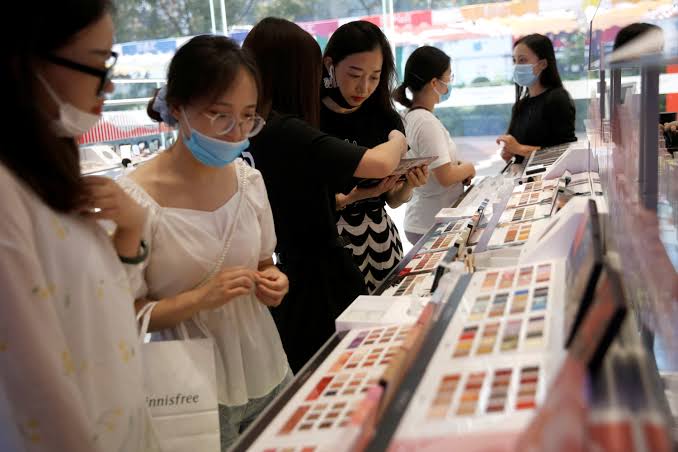
The trade data already shows a significant Chinese presence. In 2024, Pakistan imported $9.02 million worth of beauty, makeup and skincare products under HS code 330499. China supplied $2.95 million, or roughly one-third of that total, making it the largest source among the countries listed in the data. Chinese shipments also amounted to 85,668 kilograms.
Those figures cover a broad product category and do not mean all of the imports were branded C-beauty products. They do, however, show that Chinese beauty products already have a substantial route into Pakistan.
The next question is whether Chinese brands can turn that trade presence into lasting consumer loyalty.
China Is Already a Major Supplier
The strength of China’s position becomes even clearer in individual categories.
Pakistan imported $2.02 million worth of lip makeup products in 2024. China supplied $1.75 million, accounting for about 87% of Pakistan’s reported imports in that category. Chinese shipments totalled 23,261 kilograms out of 26,846 kilograms imported from all sources.
That is significant because lip products are among the most visible and frequently purchased parts of the makeup market. It suggests that Chinese-made cosmetics are already present at a scale that goes beyond a handful of niche products.
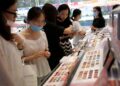
Retail availability reflects that presence too. Pakistani online beauty retailers now carry multiple Chinese brands across categories ranging from cleansers and serums to makeup and sunscreens. The exact number of listings changes as retailers add and remove products, but the wider trend is clear: Chinese cosmetics are increasingly available alongside Pakistani, Korean, European and American brands.
Pakistan Is a Price-Sensitive Market
The opportunity makes sense when viewed against Pakistan’s wider consumer market. Euromonitor estimates Pakistan’s population at more than 255 million and describes beauty and personal care as a resilient market in 2025. Consumers continue to prioritise affordability and product effectiveness, while natural, herbal and halal-certified products remain important preferences. The report also points to the growing role of digital commerce and omnichannel retail. That combination creates an opening for Chinese beauty companies.
Many Chinese brands have built their businesses around rapid product development, competitive pricing and digital marketing. Those strengths can be useful in Pakistan, where consumers increasingly discover products through online retailers, social media and beauty influencers.
But being affordable is not enough. Chinese brands still have to prove that their products are suitable for Pakistani consumers.
C-Beauty Is No Longer Just About Low Prices
China’s cosmetics industry reached 1.1 trillion yuan, about $159 billion, in 2025, according to data from the China Association of Fragrance Flavour and Cosmetic Industries. The market grew 2.83% during the year, while domestic brands increased their share to 57.37%. Online channels accounted for 65.36% of total transaction value.
That matters for Pakistan because it shows the scale of the ecosystem behind Chinese beauty brands. These companies are operating in one of the world’s largest cosmetics markets, with strong domestic competition and sophisticated online sales channels.
Some brands are also investing heavily in research and branding. Chinese cosmetics company Florasis, for example, says it has five R&D centres and more than 170 patents, while its brand strategy combines Chinese cultural references with modern cosmetic research.
Perfect Diary offers another example of the digital-native model. Founded in 2017, the brand says it has gained more than 40 million customers worldwide and opened more than 300 offline stores. Those figures are company-reported, but they illustrate the scale that some Chinese beauty brands have reached.
Pakistan Is Seeing the Affordable End First
The Chinese brands most visible to Pakistani consumers are not necessarily the country’s biggest or most premium names.
Brands such as BIOAQUA, Sadoer, Dr Rashel, Estelin and others appear through Pakistani online beauty retailers and specialist stores. BIOAQUA, for example, operates a Pakistan-specific online store, while major Pakistani beauty retailers list a range of Chinese skincare and makeup products.
This gives Chinese companies an existing distribution advantage. Consumers do not have to wait for a major international launch to encounter Chinese cosmetics; products can enter through importers and online retailers and reach buyers directly.
That also makes the market difficult to measure precisely. Retail listings do not tell us how many products are actually sold, and import statistics do not identify whether an individual shipment belongs to a major Chinese brand or a smaller manufacturer.
The available evidence therefore supports a growing Chinese product presence, rather than a claim that Chinese brands already dominate Pakistan’s beauty market.
The Next Battle Is Trust
Availability is only the first step.
Pakistan’s beauty market includes established local companies, international brands, authorised distributors, independent retailers and social-media sellers. That makes authenticity and product quality important issues, particularly for imported skincare.
Chinese brands that want long-term growth will need to build trust around ingredients, product claims, batch information, customer service and reliable distribution.
This fits the direction of Pakistan’s wider beauty market. Euromonitor identifies demand for efficacy alongside affordability and notes that brands increasingly need credible, science-backed claims and products adapted to local consumer preferences.For Chinese companies, that creates an opportunity to compete on more than price.
Social Media Gives C-Beauty an Opening
Beauty products are particularly suited to digital marketing because consumers can see how products look and work before purchasing them.
Chinese brands have developed considerable experience with platforms such as Douyin and Tmall. China’s domestic cosmetics market is now heavily digital: online sales accounted for 65.36% of the country’s total cosmetics transaction value in 2025.
That experience can be useful in Pakistan, where younger consumers increasingly discover products through social media, online reviews and influencer content.
But localisation will matter. Pakistani consumers have different skin concerns, climates, purchasing power and cultural preferences from Chinese consumers. A brand that succeeds in Pakistan will need to understand those differences rather than simply reproducing its Chinese marketing strategy.
There Is Also a Two-Way Trade Opportunity
In 2024, Pakistan exported $19.53 million worth of products in the same broad HS 330499 beauty and skincare category. China was one of its important destinations, receiving $1.24 million worth of Pakistani exports.
The figures should not be interpreted as a direct comparison between Pakistani exports and Chinese branded cosmetics. HS 330499 is a broad customs category and includes products that may not be directly comparable.
Still, the trade data shows that beauty products already move in both directions.
That could eventually create room for deeper commercial cooperation, including distribution partnerships, packaging, manufacturing and other parts of the beauty supply chain. For now, however, the evidence points primarily to an import and retail story rather than a large Chinese beauty manufacturing base in Pakistan.
Why Chinese Beauty Brands Matter
The rise of Chinese beauty products in Pakistan is therefore more than a social-media trend. Pakistan imported $2.95 million worth of beauty, makeup and skincare products from China in 2024 under one broad product category, while China supplied nearly 87% of Pakistan’s reported lip-makeup imports by value.
At the same time, Chinese beauty companies are operating from an increasingly sophisticated domestic industry. China’s cosmetics market crossed 1.1 trillion yuan in 2025, domestic brands held 57.37% of the market, and online channels accounted for nearly two-thirds of transaction value.
Pakistan offers these companies a large consumer base and a market where affordability, digital shopping and product efficacy all matter.
The next stage will depend on whether Chinese brands can build trust, localise their products and compete on quality as well as price.
If they can, Pakistan could become more than another destination for Chinese cosmetics. It could become a meaningful market for the next generation of C-beauty — one where Chinese brands compete through formulation, technology, branding and a better understanding of Pakistani consumers.
Read More Articles:
Port Qasim Cargo Handling Rises to 47m Tonnes