
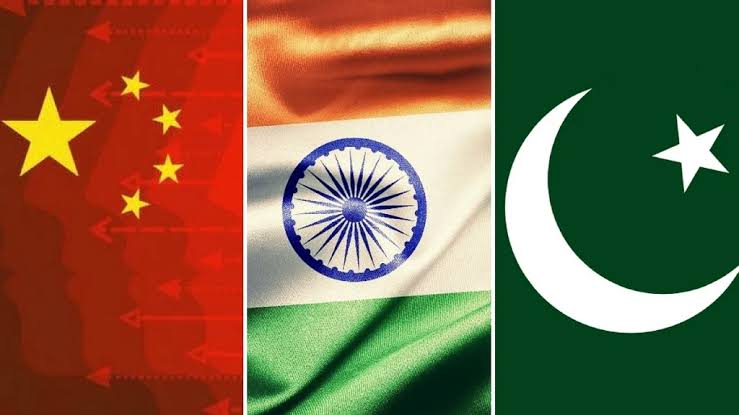
Chinese Foreign Minister Wang Yi and India’s National Security Adviser Ajit Doval concluded the 25th round of Special Representatives’ talks in Beijing on August 25, agreeing to continue working toward a political settlement of their long-standing boundary dispute. Both governments described the discussions as comprehensive, candid and forward-looking. Prime Minister Narendra Modi and President Xi Jinping are expected to build on this momentum at the upcoming BRICS summit.
Pakistan watches these meetings closely, and for good reason. China and India are its two largest neighbours, and any shift in how they manage their own relationship changes the environment Pakistan operates in, whether on trade routes, security calculations or diplomatic leverage.
What Has Actually Changed
The current phase of engagement traces back to an October 2024 border agreement, which followed a prolonged period of tension after the 2020 Galwan Valley clash. Since then, the two countries have resumed direct flights, relaxed visa restrictions, restored a Hindu pilgrimage route through Tibet, and reopened three designated border trading points after a five-year suspension.
The August talks built on this foundation. Both delegations expressed satisfaction with the steady resumption of people-to-people exchanges and agreed to strengthen cooperation on border trade, pilgrimage arrangements, and the sharing of hydrological data on trans-border rivers. A further round of talks is scheduled for 2027, to be hosted in India. Bilateral trade between the two countries surpassed $150 billion in 2025.
What hasn’t changed is just as important. The boundary itself remains undemarcated. Troop and equipment withdrawals from disputed areas have not been completed. Trade imbalances between the two economies persist largely unaddressed. Chietigj Bajpaee of Chatham House has described the rapprochement as tactical rather than strategic, arguing that the underlying sources of mistrust are being managed, not resolved.
That distinction matters for how Pakistan should read the situation. Resumed flights and reopened trading points are real, functional steps. They are not evidence that China and India have settled their rivalry or reordered their long-term strategic postures toward each other.
Where Pakistan Faces Genuine Pressure
A steadier China-India relationship does create legitimate points of concern for Islamabad, and it is worth naming them directly rather than glossing over them.
First, the allocation of Beijing’s attention. A more stable relationship with New Delhi could, over time, shift how much senior-level diplomatic engagement China devotes to detailed technical dialogue with India, on river data, pilgrimage logistics and border trade mechanics. That does not mean engagement with India automatically comes at Pakistan’s expense; China has generally shown it can run multiple regional relationships in parallel. But it is a real variable worth tracking, since any government’s diplomatic bandwidth is finite even when its stated priorities are not mutually exclusive.
Second, economic competition. As China-India trade grows past $150 billion, Chinese firms gain deeper commercial relationships inside the Indian market. Pakistan is competing for a share of Chinese investment and export access in several of the same sectors, including textiles and agricultural products, where India is a larger and more established supplier. A China more comfortable doing business with India is not automatically a China less committed to Pakistan, but it is a China with more options.
Third, regional trade infrastructure. China and India’s border trade points currently handle relatively small-volume exchanges through high-altitude Himalayan passes, and are not a substitute for the scale of goods movement CPEC is designed to handle. It would be a mistake to treat China-India border trade as directly competing with CPEC routes at this stage. What is worth watching instead is whether continued normalization gives China additional, lower-cost channels for engaging South Asian markets over the longer term, a slower and more indirect dynamic than a head-to-head contest between specific trade corridors.
Where the Opportunity Lies
The other side of this picture is real as well. A less volatile China-India relationship lowers the odds of a regional crisis that would force Pakistan into difficult positioning between two major partners simultaneously. It also reduces the risk that South Asia becomes defined primarily by China-India confrontation, a dynamic that has historically complicated Pakistan’s own diplomatic space.
China has been consistent in stating that its relationships with Pakistan and India are not run on a zero-sum basis, and China’s policy and economic engagement with both countries have generally reflected that position. China’s economic and strategic relationship with Pakistan rests on different foundations than its relationship with India, including CPEC’s infrastructure investment, a long-standing security partnership, and Gwadar’s role in China’s maritime and energy planning. None of that changes because Wang Yi and Ajit Doval hold a friendly meeting in Beijing.
There is also a working lesson in how China approaches the India relationship. Beijing has made progress by tackling manageable, functional issues, border trade points, pilgrimage routes, data-sharing mechanisms, while leaving the hardest question, the boundary itself, for slower, longer-term negotiation. Pakistan and China have generally followed a similar approach in their own dealings, and the India case is a reminder that incremental, technical cooperation can build durable ties even without resolving every underlying tension at once.
What Pakistan Should Watch
The realistic takeaway is not that Pakistan needs to worry about being sidelined, nor that it can safely ignore the China-India dialogue as irrelevant. It is narrower than either extreme.
Islamabad’s task is to track two things over the coming year: whether China-India trade growth starts drawing investment away from sectors where Pakistan is trying to compete, and whether China’s broader normalization with India expands Beijing’s set of options for engaging South Asian markets more generally, even if that trend has little to do with CPEC’s specific routes in the near term. Neither trend is currently strong enough to demand an urgent response. Both are worth watching as the China-India relationship continues to develop through 2026 and into the next round of talks scheduled for 2027.
Read More Articles:
China Pushes AI and Trade Cooperation in BRICS
Dar Meets Pakistan’s Ambassador-designate to China
Silk Road Fund Looks to Expand Investment in Pakistan