

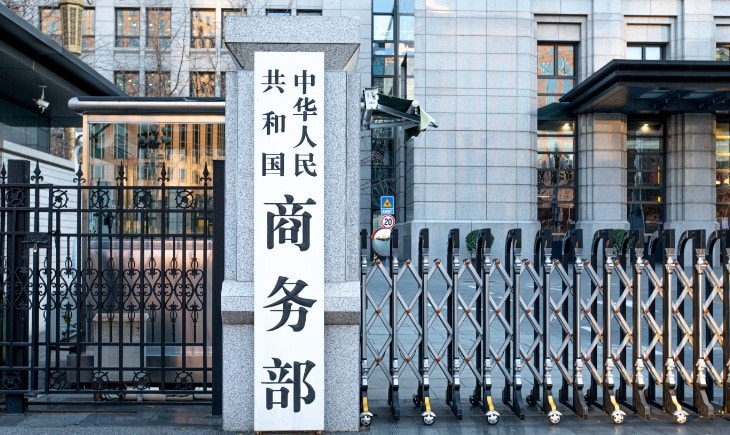
China’s Ministry of Commerce (MOFCOM) has tightened export controls on rare earths and related technologies, calling the move a lawful and responsible step to enhance its export control framework amid growing geopolitical instability.
According to MOFCOM, the measures are not export bans but part of a refined system aligned with China’s security obligations. Licenses will continue to be granted for eligible applications, and the government will consider facilitation measures such as general licenses and exemptions to maintain legitimate trade. Beijing also said it had informed relevant countries in advance through export control dialogue mechanisms.
China emphasized that the move aims to safeguard global industrial and supply chain stability while fulfilling international non-proliferation commitments. The spokesperson noted that medium and heavy rare earth materials have important military applications, warranting responsible control.
U.S. Response: 100% Tariffs and Export Curbs
In reaction, the United States announced a 100% tariff on Chinese imports and new export controls on critical software. MOFCOM condemned the move as a “textbook double standard,” noting that Washington itself imposes sweeping export restrictions through its Commerce Control List covering over 3,000 items, far more than China’s 900 dual-use entries.
Beijing criticized the U.S. for “abusing the concept of national security” and disrupting global supply chains through unilateral sanctions, including measures targeting China’s semiconductor, maritime, and logistics sectors.
Port Fee Dispute and9 China’s Countermeasures
Further escalating tensions, the U.S. plans to impose port fees on Chinese vessels from October 14, citing Section 301 findings against China’s maritime and shipbuilding sectors. China condemned the move as a violation of WTO rules and the bilateral Maritime Transport Agreement.
In response, Beijing announced reciprocal port fees on U.S.-linked vessels, calling them “necessary defensive actions” to protect the rights of Chinese industries and ensure fair competition in the global shipping market.
Trade Relations Under Strain
Beijing warned that the U.S.’s escalating measures jeopardize the results of recent bilateral trade consultations. “China does not want a trade war but is not afraid of one,” MOFCOM stated, urging Washington to “return to dialogue and consultation” and adhere to past presidential commitments.
China remains the dominant global processor of rare earth materials, crucial for defense, aerospace, and semiconductor industries. Analysts say the new controls signal Beijing’s intent to leverage its strategic resources amid intensifying U.S.–China tech and trade rivalries.
The standoff marks a new flashpoint in global trade relations, with both powers hardening their positions as supply chain security becomes a geopolitical battleground.
Related stories:
China Imposes Export Controls on Rare Earth Technologies
China’s Ministry of State warns of espionage plots to smuggle rare earths