
Strengthening Educational Collaboration
China and Pakistan have signed 11 new agreements to deepen their educational partnership. These focus on agricultural innovation, vocational training, and digital learning.
The accords were finalised during the China-Pakistan Conference on Collaborative Innovation in Modern Agriculture and Industry-Education Integration held in Shandong, China.
The event brought together leading institutions and policymakers from both countries. This initiative reflects a shared goal to bridge education with industry, promote skills-based learning, and support Pakistan’s development goals under CPEC Phase II.
High-Level Delegation Participation
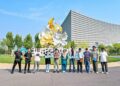
Senior Shandong provincial officials and a high-level Pakistani delegation attended the ceremony. The delegation included Science Counsellor Muhammad Khan, Secretary Nadir Chatta, and Vice Chancellor Prof. Dr Muhammad Kamran.
Delegates from TEVTA, MNS University of Agriculture Multan, and other major institutions also took part.
Both sides reaffirmed their commitment to transforming traditional education systems. They plan to introduce modern agricultural technologies and vocational training programs across Pakistan’s academic network to improve learning outcomes.
Facilitators and Key Supporters
The agreements were facilitated by UNI Services International Pvt. Ltd. and ITMC Technology China, with support from the Chinese Business Council in Pakistan.
These organisations have played a key role in promoting cross-border education exchange and building industry-academia partnerships.
Through this collaboration, Pakistan aims to make its education sector more practical, skill-focused, and aligned with modern agriculture and digital innovation needs.
Major Initiatives Under the Agreements
The partnerships introduce several high-impact projects designed to modernise Pakistan’s agriculture and technical education.
They include:
A Four-Party Overseas Training Base for agricultural technology transfer to improve research and farming practices.
A Centre of Excellence for Food Safety and Inspection to boost food quality and exports.
The Oasis Stella Workshop Project to enhance dairy and livestock productivity.
New diploma programs in floriculture, livestock management, and modern agricultural technology to improve youth employability.
Together, these projects aim to equip Pakistan’s workforce with modern skills, promote innovation, and ensure sustainable agricultural growth.
University Partnerships and Digital Integration
New agreements link Weifang Engineering Vocational College with Islamia University of Bahawalpur (IUB) and MNS University of Agriculture, Multan.
These partnerships will boost academic exchange, research collaboration, and technical training.
Additionally, trilateral accords with ITMC and UNI Services will expand digital education initiatives.
By integrating smart technologies and virtual learning tools, the program will make education more accessible and prepare tech-driven graduates for the modern job market.
Leaders’ Remarks on Educational Cooperation
Max Ma, CEO of UNI Services, called the initiative “a transformative step in Pakistan-China educational cooperation.”
He said it will help shape future-ready students and strengthen academic growth.
Wang Peng, Managing Director of ITMC, added that China’s advanced vocational education models will now be introduced in Pakistan.
He noted that this step will bridge the skills gap and expand employment opportunities in agriculture and related industries.
Both leaders agreed that these collaborations would build a long-term framework for innovation and institutional growth between the two countries.
Alignment with CPEC Phase II Goals
Officials from Shandong Province praised the agreements as a strategic milestone aligned with CPEC Phase II.
They highlighted that the initiatives will accelerate agricultural modernisation, advance education reform, and strengthen rural development.
These partnerships also support Pakistan’s Vision 2025, creating a foundation for sustainable growth and human resource development.
By combining China’s expertise with Pakistan’s potential, the initiative marks a new era of bilateral cooperation, fostering stronger people-to-people and institutional links.
Related stories:
President Highlights CPEC 2.0 for Trade, Youth, and Infrastructure