

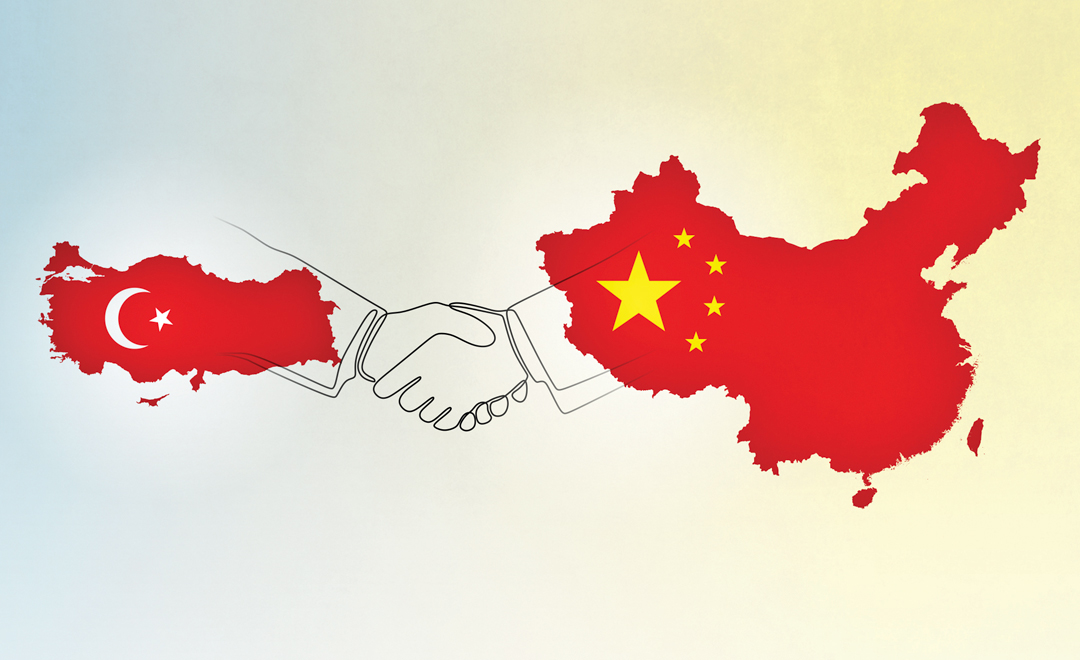
China and Turkey are set to significantly expand direct passenger flights, in a move that marks a new chapter in their fast-growing bilateral ties under the Belt and Road Initiative (BRI) and Turkey’s Middle Corridor Initiative, according to Chinese Ambassador to Turkey Jiang Xuebin.
In an interview with Turkey’s state-run Anadolu Agency, Jiang said that civil aviation authorities from both sides have agreed to increase passenger flight frequency, a step welcomed by both business and leisure travellers. He noted that the alignment between the BRI and the Middle Corridor has already delivered tangible results in various sectors, including tourism, logistics, and trade.
Chinese Tourism to Turkey Surges Post-COVID
Tourism has become a key pillar in bilateral relations. In 2024 alone, over 409,700 Chinese tourists visited Turkey, a 65.1% year-on-year increase, making China Turkey’s fastest-growing tourism market.
Ambassador Jiang emphasised the growing interest of Chinese tourists in Turkish culture, heritage, and natural beauty. The increase in flights is expected to further boost this trend.
Liao, a tourist from Beijing who visited Turkey in May, expressed excitement over the announcement. “I had to take a connecting flight last time, which was inconvenient. Direct flights would give me more time to explore Turkey’s beauty,” she said, recounting her visits to Istanbul, Cappadocia, and Fethiye.
Deepening Cultural and Historical Cooperation
Beyond tourism, both nations are also working to strengthen cooperation in culture, history, archaeology, and the arts. These efforts aim to attract more Chinese travellers and promote mutual understanding.
China-Europe Freight Trains Strengthen Turkey’s Logistics Role
Economic and logistical collaboration under the BRI framework is also accelerating. This week, two China-Europe freight trains carrying 98 containers arrived in Istanbul before continuing to Poland and Hungary. The milestone highlights Turkey’s growing status as a critical logistics hub between Asia and Europe.
Deputy Transport Ministers Osman Boyraz and Enver İskurt, who welcomed the trains, praised the efficiency of the Middle Corridor route, saying it offers significant cost and time savings compared to traditional northern and southern corridors.
“Turkey is no longer just a transit point. We are becoming a strategic logistics hub that manages freight flows and adds value,” said İskurt. The vision, he added, aligns with the goals of energy efficiency, environmental sustainability, and stronger regional cooperation.
Kars Aspires to Be a Logistics Hub
In eastern Turkey, Kars Mayor Otuken Senger highlighted the city’s strategic importance and its participation in the BRI. With the China-Europe Railway Express passing through the region, Senger aims to transform Kars into a regional logistics hub.
“The Belt and Road Initiative offers a major opportunity for cities like Kars,” he said, adding that the city’s location and historical relevance make it ideal for becoming a key node in regional railway transportation.
China-Turkey Trade Nears $50 Billion
According to the Chinese Embassy, bilateral trade between China and Turkey hit $48.3 billion in 2024, making China Turkey’s second-largest trading partner globally. The growing trade volume reflects deepening economic cooperation and a shared commitment to long-term strategic collaboration.
Related stories: