


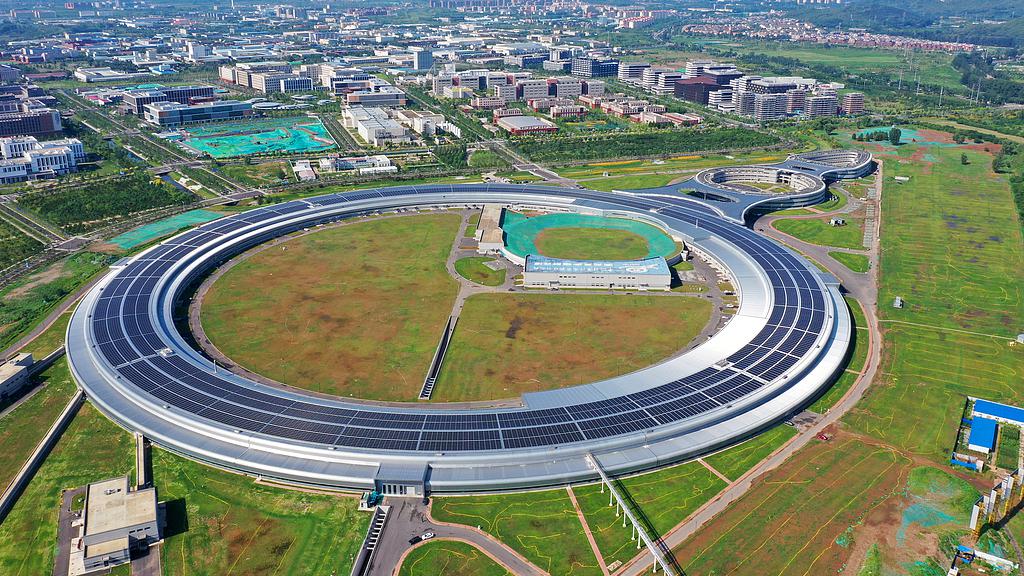
China’s cutting-edge scientific project, the High Energy Photon Source (HEPS), is set to enter trial operations by the end of 2025, according to the Institute of High Energy Physics (IHEP), part of the Chinese Academy of Sciences.
Located in Beijing’s Huairou District, HEPS is China’s first fourth-generation synchrotron radiation facility, and once operational, it will be among the brightest in the world. Acting as a powerful “X-ray microscope,” it will enable researchers to study the micro-world with unprecedented precision, opening doors for advanced breakthroughs in material science, chemical engineering, biomedicine, and beyond.
Construction on the project began in 2019 and has already passed key milestones. All 15 Phase-I beamlines have successfully generated light, marking a major step forward. Project Director Pan Weimin shared that the ultimate plan includes building up to 90 beamlines, with 45 targeted by 2030. Funding partnerships and collaborations with research institutions and industry players are actively underway to expand its research capacity.
HEPS will contribute significantly to China’s scientific ambitions, especially in areas like solid-state battery research, superconductivity, and drug development. With its unmatched brightness and coherence, the facility builds on the legacy of China’s other synchrotron sources, first and fourth generations in Beijing, second in Hefei, and third in Shanghai.
As a national strategic platform, HEPS is expected to accelerate industrial innovation and position China at the frontier of global scientific research.
Related Posts