

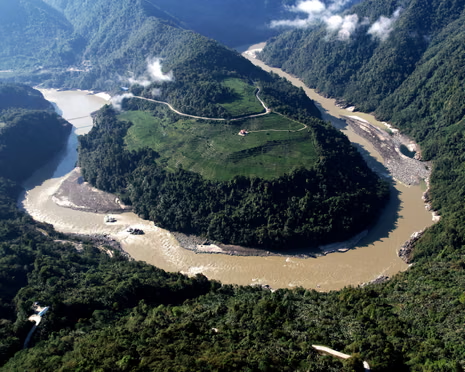
The framework of a hydropower project was presented by Premier Li Qiang, who is a member of the Standing Committee of the Political Bureau of the Communist Party of China (CPC) Central Committee. The massive structure is planned to be constructed on the Yarlung Zangpo River.
The important talk was delivered by Li Qiang at a revolutionary ceremony in Nyingchi city. Spokespersons from many organizations, like the National Development and Reform Commission and the Power Construction Corporation of China, spoke at the ceremony. The ceremony’s guest list also included members of an expert advisory committee for the building of the hydropower scheme, as well as a representative of the locals.
This massive project is reported to consist of 5 cascade hydropower stations with the ability to generate 300 billion kW hours of electricity per annum, at a cost of 1.2 yuan (£124bn). Li has called it “the project of the century.”
This hydropower project will essentially supply electricity for external consumption and then will look upon the domestic need in Xizang.
Recently, a ceremony took place in Beijing where China Yalong River Hydropower Development Co., Ltd. was launched to promote the hydropower plan. The attendees included Vice Premier Zhang Guoqing.
The announcement of the project has gained a clash of views from Bangladesh and India, nations that lie along the river, as well as from Tibetan factions (as the dam would be in Tibetan territory) and environmentalists.
The criticism from India and Bangladesh comes from a fear that the water would probably be blocked or diverted away from them. In response, Chinese officials have stated that their nation isn’t pursuing “water hegemony” in any way.
Groups from Tibet have observed holy areas by the side of the river and raised concerns about the possible forced migration of their people. Environmentalists are also worried about the wildlife in the surrounding areas, as well as tectonic shifting and landslides.
The government of China has refuted all the backlash and claims that this project will increase job opportunities, stimulate the progress of the renewable energy sector, and improve domestic energy supply. Li stated that significant importance would be placed on ecological conservation in order to prevent environmental destruction.
This huge initiative is part of a strategic plan for China to reduce its carbon emissions. The presumed operational start is expected to be after 2030.
Related Posts