
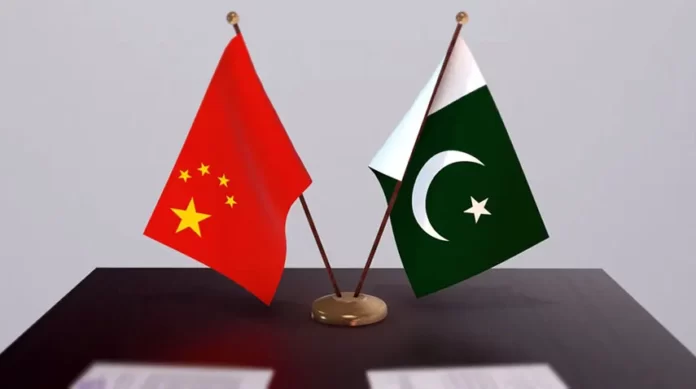
The Pakistan Embassy in China is set to organize a business networking event in Beijing at the end of next month to foster connections between Pakistani and Chinese entrepreneurs.
The event is strategically scheduled alongside the upcoming meeting of the heads of government of Shanghai Cooperation Organization (SCO) member states. An estimated 100 to 150 Pakistani business leaders and company representatives will travel to China to engage with nearly 300 Chinese firms.
According to Commercial Counselor Ghulam Qadir, meetings between participants will be arranged in advance to ensure thorough preparation and more productive outcomes, rather than relying on introductions on the day of the event.
A high-level ministerial committee has been established to supervise the initiative. It is headed by Federal Minister for Planning, Development and Reforms Ahsan Iqbal, with Commerce Minister Jam Kamal Khan serving as convener, and Haroon Akhtar Khan, the Prime Minister’s Special Assistant for Industries and Production, as co-convener.
Seven key sectors have been targeted to attract Chinese investment and boost trade: electric vehicles and battery storage, solar panel manufacturing, steel, copper, food and agriculture, information and communication technology, and chemicals and petrochemicals.
Qadir noted that Pakistan’s revised EV policy is designed to lower fuel import costs and bring in investment from companies like BYD, Geely, and Chery. He emphasized that scaling up EV production, battery assembly, and charging infrastructure is essential to achieving these aims.
Pakistan is also focusing on localizing solar panel manufacturing to reduce its annual $2 billion import bill. Qadir stated that local production would lower costs, create jobs, and even support exports due to robust domestic demand.
On the steel front, Qadir highlighted Pakistan’s interest in adopting green steel technologies from China. With growing demand from sectors like EVs and construction, and available land for industrial use, Pakistan sees strong potential for domestic steel production.
He also shared that Pakistan currently exports $1 billion worth of raw copper annually and plans to enhance its value by refining copper domestically. He believes strategic Chinese partnerships could help raise copper export value to $4–5 billion.
In food and agriculture, the goal is to increase crop productivity, develop livestock, and modernize food processing, enabling the export of surplus goods to meet rising demand in China.
Regarding information and communication technology, Qadir pointed out that Pakistan offers a skilled, cost-effective workforce, while China provides a vast market, creating a mutually beneficial environment for collaboration.
Lastly, he said that petrochemical joint ventures with Chinese firms could reduce dependence on oil imports, facilitate technology transfer, and open new avenues for exports.
Related Posts
Pakistani entrepreneur to expand business in Shanghai’s Lin-gang