
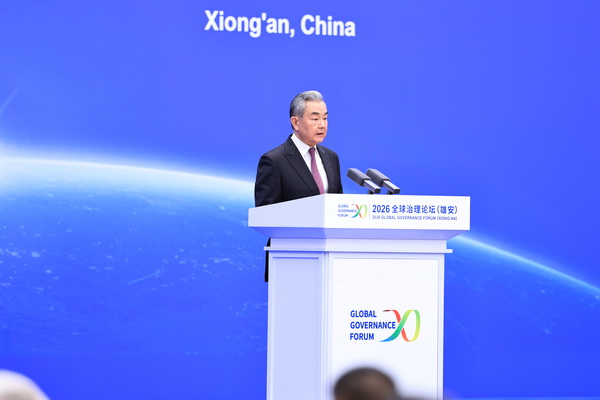
Chinese Foreign Minister Wang Yi has called for reforms to the global governance system, urging countries to strengthen multilateralism, uphold international law and expand cooperation in addressing shared challenges.
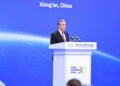
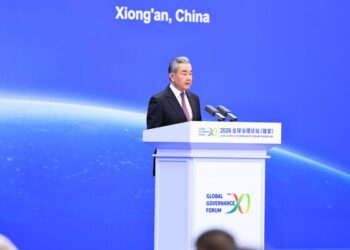
Speaking at the opening ceremony of the 2026 Global Governance Forum in Xiongan, Hebei Province, on October 23, Wang said the world was undergoing profound changes while facing growing challenges related to peace, security, development and international governance.
Wang, a member of the Political Bureau of the Communist Party of China Central Committee, said President Xi Jinping’s Global Governance Initiative (GGI) offered a framework for building a more just and equitable international system.
The forum marked the first anniversary of the initiative, which China launched to promote reforms in global governance and encourage international cooperation.
China Highlights Support for Global Governance Initiative
Wang said the GGI had received support from more than 160 countries and international organisations. He added that over 60 countries had joined the Group of Friends of Global Governance.
According to Wang, elements of the initiative had also been reflected in documents from multilateral platforms, including the G20, the Shanghai Cooperation Organization (SCO) and BRICS.
He described the initiative as a contribution to multilateralism at a time of international uncertainty. Wang also highlighted China’s efforts in diplomacy, trade, mediation and artificial intelligence cooperation as part of its broader approach to global governance.
Five Priorities for Global Governance Reform
Wang called on the international community to work together in five key areas to improve global governance.
Strengthening the United Nations
Wang reaffirmed the central role of the United Nations in international affairs. He called for countries to uphold the UN Charter, strengthen multilateral cooperation and support reforms to improve the organisation’s efficiency and ability to respond to global challenges.
He also urged greater coordination among countries to mobilise resources and address the concerns of developing nations.
Promoting Fairness and Sovereign Equality
Wang said all countries should have equal rights to participate in global governance, regardless of their size or economic strength.
He emphasised mutual respect, international law and peaceful dispute resolution as important principles for maintaining international peace and stability.
Expanding the Role of the Global South
Wang called for stronger representation of developing countries in international decision-making.
He said reforms to international financial institutions and the UN Security Council should reflect changes in the global landscape. He also highlighted the role of cooperation platforms such as BRICS and the SCO in advancing global governance reform.
Supporting Open Trade and Sustainable Development
Wang warned that protectionism could worsen economic imbalances and argued that openness and cooperation were essential for long-term development.
He called for safeguarding the World Trade Organization-centred multilateral trading system and advancing the UN 2030 Agenda for Sustainable Development.
Establishing Rules for Emerging Technologies
Wang said global governance should keep pace with developments in artificial intelligence and other emerging fields, including outer space, the deep sea and polar regions.
He advocated a people-centred approach to AI governance, with international cooperation to ensure that the technology benefits humanity and remains under human control.
China Announces Eight Practical Measures
During his keynote address, Wang outlined eight actions China plans to pursue in support of global governance reform.
These include:
- Hosting a successful APEC Economic Leaders’ Meeting in November, with priorities focused on openness, innovation and cooperation.
- Continuing engagement in United Nations reform.
- Encouraging the Group of Friends of Global Governance to expand its activities and membership.
- Supporting the implementation of the Biodiversity Beyond National Jurisdiction (BBNJ) Agreement and backing Xiamen’s bid to host its secretariat.
- Promoting a greater focus on the right to development in international human rights discussions.
- Issuing a position paper on strengthening governance of outer space.
- Publishing a progress report on the AI Capacity-Building Action Plan for Good and for All.
- Establishing a Global Governance Research Center to conduct research, publish a Global Governance Index and prepare annual reports.
Wang said these measures were intended to support international dialogue, practical cooperation and the development of more effective governance frameworks.
Xiongan Presented as a Model of Modern Development
Wang also highlighted the development of Xiongan New Area in Hebei Province, describing it as an important project in China’s national development strategy.
He said the area had undergone significant transformation over nine years, with development guided by long-term planning, environmental considerations, innovation and public well-being.
The forum’s location in Xiongan, Wang said, offered participants an opportunity to discuss future governance and explore practical approaches to shared international challenges.
He concluded by urging participants to pool their knowledge and experience to advance reforms and build a more just and equitable global governance system.
Read More Articles:
Chinese Travellers in Pakistan Need Better Tourism Facilities and Services