

Pakistan’s efforts to expand its space capabilities are entering a new phase as one of its astronauts prepares to participate in China’s Shenzhou-24 crewed mission as a scientific payload specialist.
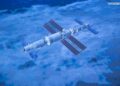
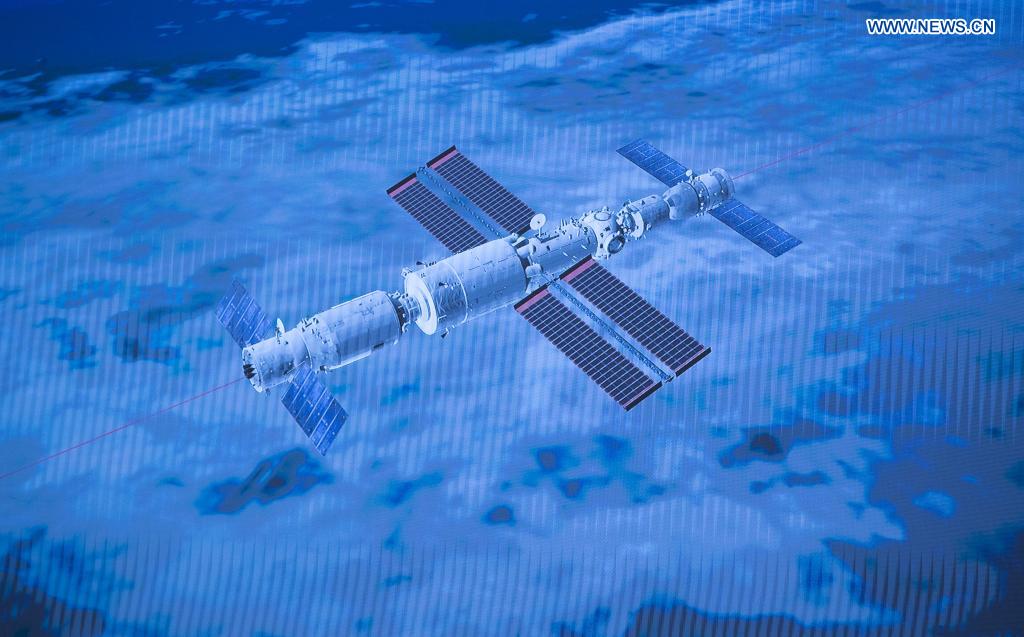
The Pakistani astronaut will become the first foreign national to visit China’s Tiangong space station, marking the first joint spaceflight involving Chinese and foreign astronauts in China’s crewed space programme.
According to the China Manned Space Agency (CMSA), the astronaut will undertake a short-term orbital flight before returning to Earth aboard the Shenzhou-23 spacecraft. China has not publicly identified the Pakistani astronaut or announced the mission’s launch date.
The mission represents more than a symbolic achievement for Pakistan. It will provide an opportunity to gain practical experience in human spaceflight, scientific payload operations and astronaut training, potentially supporting the country’s long-term space ambitions.
Pakistani astronaut mission marks new stage in bilateral cooperation
The upcoming flight is the result of a cooperation agreement signed between Pakistan’s Space and Upper Atmosphere Research Commission (SUPARCO) and China’s Manned Space Engineering Office on February 28, 2025.
Under the agreement, China would provide astronaut training to Pakistani candidates, with one selected participant joining a mission aboard the Tiangong space station as a scientific payload specialist.
The agreement was signed in Islamabad in the presence of Prime Minister Shehbaz Sharif. It established a framework for astronaut selection, training and participation in China’s human spaceflight programme.
Two Pakistani candidates, Muhammad Zeeshan Ali and Khurram Daud, were selected for training in China. They underwent preparation at the Astronaut Centre of China, including technical and operational training required for spaceflight.
The final astronaut’s identity has not been officially announced. However, the selection and training process has brought Pakistan closer to its first human spaceflight mission.
Zhang Chaozhe, Director of the Pakistan Study Center at Sichuan University, said the mission would provide Pakistan with access to advanced training, scientific research and operational experience that would be difficult to develop independently.
He noted that human spaceflight requires sophisticated technical systems, astronaut safety procedures and close coordination between participating countries.
Pakistan-China space cooperation spans more than three decades
Pakistan and China have developed space cooperation over several decades, beginning with satellite launches and gradually expanding into more advanced technological projects.
In July 1990, Pakistan’s first indigenously developed satellite, Badr-1, was launched aboard a Chinese Long March 2E rocket from the Xichang Satellite Launch Centre.
Developed by SUPARCO, Badr-1 was designed for scientific research, technological demonstration and communication experiments. Its successful launch provided Pakistani scientists and engineers with valuable experience in satellite development and operations.
More recently, Pakistan’s PRSC-EO3 remote-sensing satellite was launched on April 25, 2026, aboard a Chinese Long March-6 rocket from the Taiyuan Satellite Launch Centre.
According to SUPARCO, the satellite provides Earth observation capabilities for applications including agriculture, irrigation management, urban planning, environmental monitoring and disaster management.
These developments demonstrate how cooperation has expanded from satellite deployment to broader scientific and technological activities.
Zhang said the participation of a Pakistani astronaut in China’s crewed space programme reflected the growing depth of bilateral trust and technological cooperation.
He added that human spaceflight required an especially high level of mutual confidence because of the coordination involved in astronaut safety, mission operations and technical systems.
Tiangong space station opens opportunities for international research
The mission also highlights China’s efforts to expand international participation in space research through its Tiangong space station.
China has developed cooperation opportunities with the United Nations Office for Outer Space Affairs (UNOOSA), allowing international institutions to propose scientific experiments for the space station.
In the first round of the China Space Station cooperation programme, nine experimental projects involving 23 institutions from 17 UN Member States were selected for preparation and implementation.
The selected projects covered areas including aerospace medicine, space life sciences, biotechnology, microgravity research, astronomy and emerging technologies.
The initiative provides countries with opportunities to conduct scientific research in orbit without independently developing all the infrastructure required for human spaceflight.
For developing countries with limited space budgets and technical resources, such partnerships can provide access to research facilities, specialised expertise and international scientific networks.
Zhang said space exploration should not remain limited to a small group of countries with established human spaceflight programmes. He emphasised that international cooperation could help developing countries participate in scientific research and gradually strengthen their own capabilities.
Pakistan’s space programme could benefit from practical experience
Pakistan’s participation in Shenzhou-24 could provide valuable experience in astronaut training, scientific payload operations and the management of human spaceflight activities.
The experience may also help Pakistani scientists and engineers better understand the technical requirements of conducting experiments in microgravity and operating within an orbital research environment.
Such exposure could support future cooperation in biotechnology, medical research, materials science and other scientific fields.
However, participation in a foreign crewed mission does not mean Pakistan has independently developed a human spaceflight system. The mission will take place through China’s spacecraft, space station, training facilities and operational support.
Building an independent human spaceflight capability would require sustained investment in research, engineering, astronaut training, launch systems and supporting infrastructure.
A milestone for international space cooperation
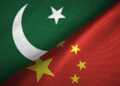
Pakistan’s planned participation in Shenzhou-24 represents an important development in its longstanding partnership with China.
For Pakistan, the mission offers a direct opportunity to gain experience in human spaceflight and expand its scientific capabilities. For China, it demonstrates the international cooperation opportunities associated with its crewed space programme.
The initiative also provides an example of how countries with developing space sectors can participate in advanced research through international partnerships.
As the mission approaches, its longer-term significance will depend on how effectively Pakistan uses the experience, technical knowledge and research opportunities to strengthen its domestic space programme.
Read More Articles:
Islamabad Hosts China Porcelain and Art Exhibition