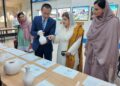

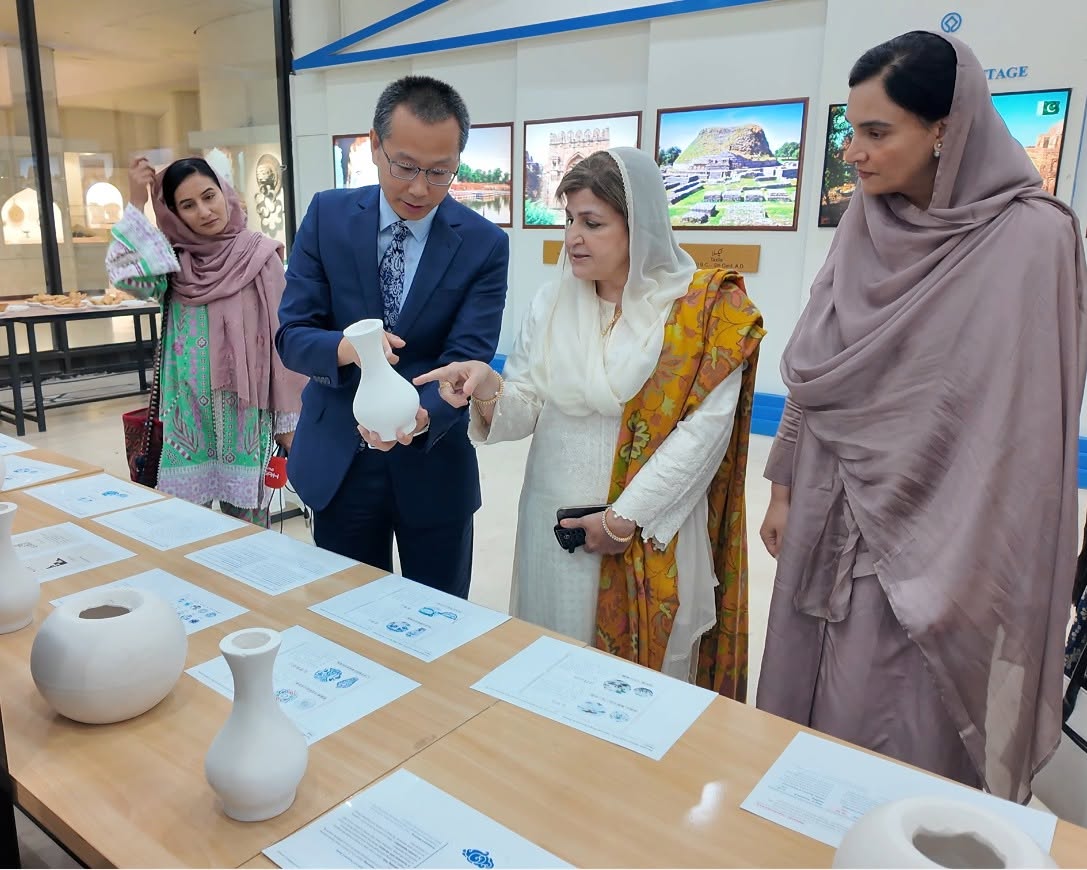
The National Museum Islamabad inaugurated a joint exhibition of Chinese porcelain artefacts and contemporary art on Thursday, bringing together traditional craftsmanship and modern artistic expression to mark the 75th anniversary of diplomatic relations between Pakistan and China.
The exhibition has been organised by the National Museum Islamabad under the National Heritage and Culture Division of the Government of Pakistan, in collaboration with the Department of Archaeology and Museums (DoAM).
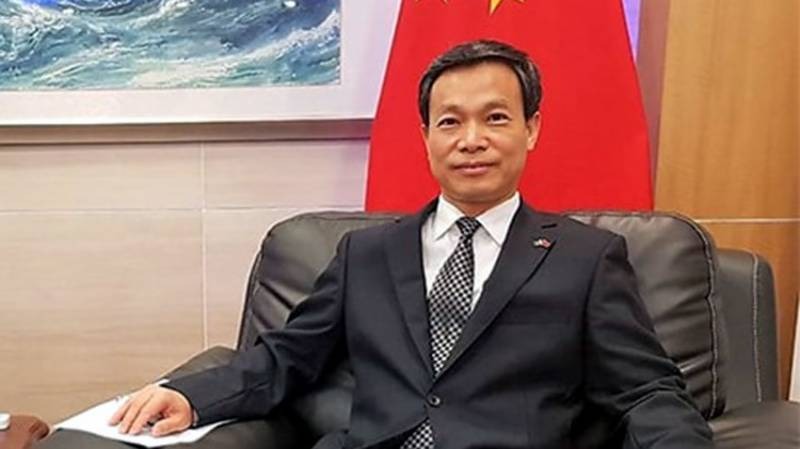
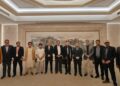
Parliamentary Secretary for National Heritage and Culture Farah Naz and Cheng Peng, Counsellor at the Chinese Embassy in Pakistan, addressed the inaugural ceremony.
Officials from the National Heritage and Culture Division, representatives of the Department of Archaeology and Museums, Chinese Embassy officials, artists, students and cultural representatives also attended the event.
Exhibition showcases traditional Chinese craftsmanship
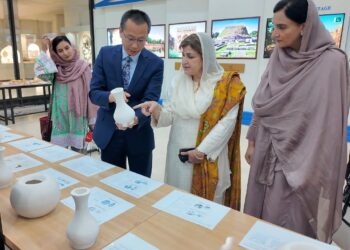
The exhibition features a collection of Chinese porcelain artefacts and contemporary artistic creations, highlighting the development of Chinese ceramic craftsmanship over several centuries.
Among the displayed pieces are Tang Sancai horse and camel figurines, Ru porcelain celadon wares, blue-and-white floral vessels, sculpted peony plates and contemporary dinnerware.
These objects demonstrate different artistic styles, decorative techniques and approaches to ceramic production. They also provide visitors with an opportunity to explore how traditional Chinese designs continue to influence contemporary artistic creations.
According to reports on the exhibition, participants showed considerable interest in the displayed artefacts and artworks, appreciating the craftsmanship and cultural heritage represented in the collection.
Chinese porcelain and the historical Silk Road
Chinese ceramics have played an important role in international trade and cultural exchange for centuries. Through historic land and maritime trade routes, Chinese ceramic products reached different parts of Asia, the Middle East, Europe and beyond.
The Silk Road helped connect communities through the exchange of goods, artistic techniques and cultural traditions. Chinese ceramic styles also influenced craftsmen in other regions, reflecting the movement of artistic ideas across borders.
The Metropolitan Museum of Art has documented how Tang Dynasty sancai ceramics influenced pottery traditions in other regions, including Iran. Meanwhile, the National Museum of China highlights the expansion of Chinese ceramic exports through maritime trade routes during the Tang, Song, Yuan, Ming and Qing dynasties.
The Islamabad exhibition brings this historical legacy into focus, allowing visitors to understand the wider cultural significance of Chinese porcelain beyond its artistic and decorative value.
Students explore Chinese ceramic painting
As part of the exhibition’s educational programme, students from IMCG F-7/2 participated in a ceramic painting workshop.
The workshop introduced students to traditional Chinese motifs and decorative designs, giving them an opportunity to explore ceramic art through practical activities.
The initiative also provided a platform for younger participants to learn about Chinese artistic traditions and engage with cultural heritage through creative expression.
Cultural diplomacy marks 75 years of Pakistan-China ties
The exhibition forms part of broader cultural activities marking 75 years of diplomatic relations between Pakistan and China.
During the inauguration, Farah Naz highlighted the importance of cultural exchanges in strengthening bilateral friendship, promoting mutual understanding and connecting people through shared appreciation of heritage and artistic traditions.
Chinese Embassy Counsellor Cheng Peng also reaffirmed the importance of Pakistan-China friendship and described cultural cooperation as an important pillar of bilateral relations.
Both sides appreciated the initiative, noting the contribution of joint cultural activities to bringing the people of the two countries closer.
The exhibition reflects the role of museums, artists and educational institutions in promoting people-to-people connections alongside diplomatic and economic cooperation.
It also adds to the cultural activities being held during the anniversary year, providing Pakistani visitors with an opportunity to explore Chinese history, craftsmanship and contemporary artistic expression.
Read More Articles:
CPEC 2.0 Expands Pakistan-China AI Cooperation