
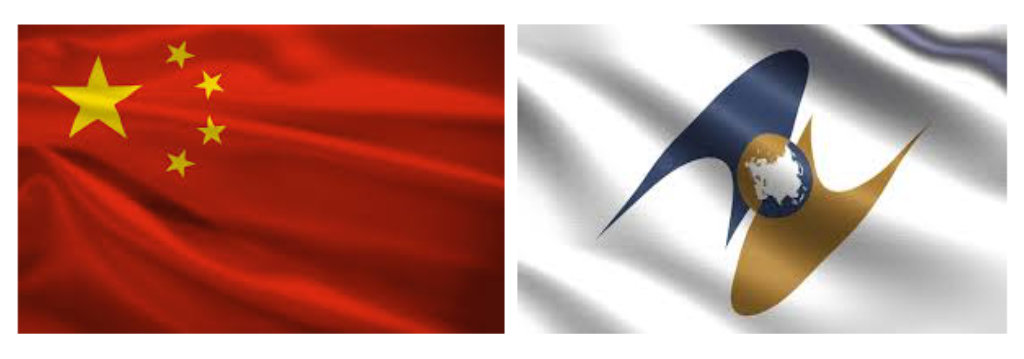
The integration of China’s Belt and Road Initiative (BRI) with the Eurasian Economic Union (EAEU) is gaining momentum, with officials and experts calling it a timely step that opens new opportunities for regional growth, trade, and connectivity.
Speaking at a recent press briefing, Alexey Fadeev, deputy director of the Russian Foreign Ministry’s Information and Press Department, said Russia and its EAEU partners are actively working with China to align development strategies. He noted that the initiative is consistent with Russian efforts to create an open integration framework across Eurasia, where free trade, labour mobility, and modern infrastructure can thrive.
Analysts highlight that the partnership has moved beyond dialogue into the implementation of joint infrastructure, digital, and transportation projects. Johnny Melikyan of the Orbeli Analytical Research Centre pointed to market integration in energy, such as oil, gas, and refined products, as well as advancements in freight rail digitalisation, as examples of practical cooperation.
The Eurasian Intergovernmental Council, which met last week in Cholpon-Ata, Kyrgyzstan, underscored the shared agenda of boosting mutual trade, removing barriers within the common market, and improving citizens’ quality of life. Aliaksei Egorov, rector of the Belarus State University of Economics, emphasised that adapting China’s successful economic practices could further enhance living standards across Eurasian nations.
The Eurasian Economic Commission also reaffirmed that deepening ties with China remain a top priority. Aligning strategic roadmaps in logistics, transport, and digitalisation is seen as a promising path forward.
Kyrgyz economist Iskender Sharsheev stressed that this alignment enhances Eurasia’s role as a transit hub between China and Europe, strengthening container logistics, refrigerated supply chains, and border crossing efficiency. “In practice, it has accelerated land corridors, diversified markets, and expanded technological cooperation,” he said.
Experts believe that the alignment of BRI with EAEU not only reflects shared visions of regional cooperation but also holds transformative potential for trade competitiveness, connectivity, and long-term prosperity.
Related stories: