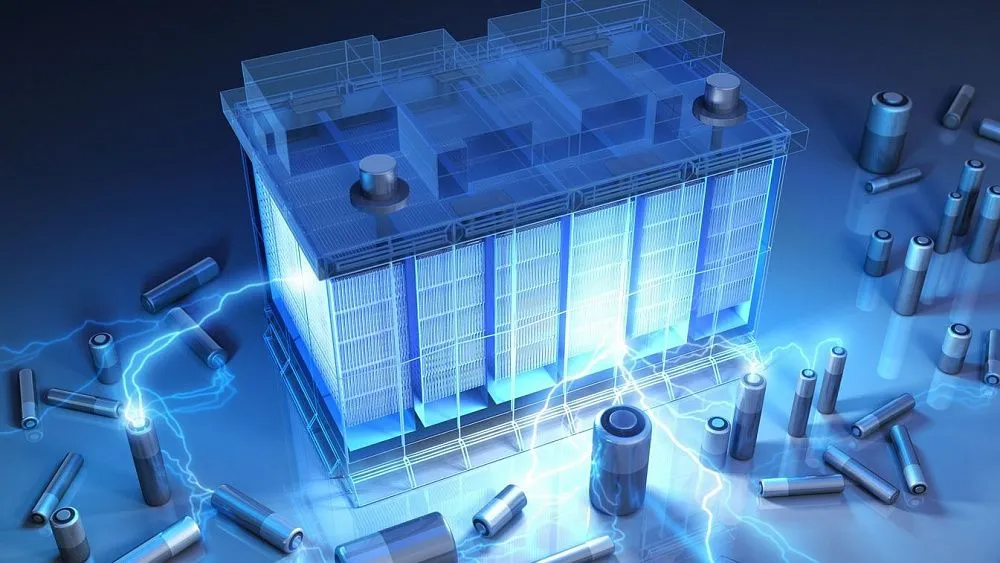
China has officially launched its largest vanadium flow battery (VFB) energy storage station ahead of schedule. Often called a “liquid battery,” this massive system stores energy in liquid electrolytes and acts as a huge power bank for renewable energy. It absorbs excess solar power during the day and releases electricity during peak hours. By replacing coal, the project heavily slashes carbon emissions.
Powerful Tech and Massive Scale
Vanadium flow batteries rely on the redox reaction of vanadium ions. The technology offers high safety, a long service life, and excellent scalability. Experts view it as one of the most promising options for long-term energy storage.
This specific project connects directly to a 100-megawatt solar power station. The facility boasts a rated capacity of 200,000 kilowatts and a total storage capacity of 1 million kilowatt-hours. Project manager Deng Fubin noted that finishing more than a month ahead of schedule allowed the station to generate an additional 130 million kilowatt-hours of electricity.
Cutting Coal and Cleaning the Grid
The successful commercial launch proves that vanadium flow batteries are ready for large-scale use in renewable energy networks. The plant will generate an average of 1.72 billion kilowatt-hours of electricity annually.
This clean power output will replace a massive amount of fossil fuel. Every year, the station will save approximately 51.9 metric tonnes of standard coal. Consequently, the project will cut carbon dioxide emissions by about 1.424 million metric tonnes annually.
Read More Articles:
China launches new AI model GLM 5.2