

China is experiencing an explosion in AI data usage. In May 2024, ByteDance’s AI assistant, Doubao, processed about 100 billion tokens every day. By March 2026, that number skyrocketed past 120 trillion. This represents a massive 1,000-fold increase in under two years.
Doubao is not a unique case. Across China, daily token consumption hit 140 trillion in March 2026, compared to just 100 billion in early 2024. The National Data Bureau notes this is a 1,000-fold jump. This rapid growth shows how quickly companies are adopting AI agents and large-scale models.
Token Pricing Goes Global
Tokens are now the fundamental metric of the AI era. They are the basic units of data processed by large language models. The world is burning through them at an incredible pace for training and running AI agents.
Global tech giants charge varying rates for their models. OpenAI’s GPT-5.5 costs $5 per million input tokens and $30 per million output tokens via its API. Anthropic uses a tiered structure for its Claude series:
Opus 4.8 costs $5 for inputs and $25 for outputs per million tokens.
Sonnet 4.6 sits at $3 for inputs and $15 for outputs.
Haiku 4.5 is the cheapest at $1 for inputs and $5 for outputs.
Standard chat is relatively light on tokens. In contrast, AI coding agents consume 10 to 50 times more data. This is due to massive context accumulation and heavy search overhead.
China Price War and Language Barrier
The Chinese market remains highly competitive. Alibaba Cloud charges $2.50 for inputs and $7.50 for outputs per million tokens on Qwen3.7-Max. DeepSeek’s V3.1 is even cheaper. It costs 2 yuan ($0.28) for inputs and 8 yuan ($1.10) for outputs.
ByteDance cuts costs further with Doubao Lite. It costs just 0.3 yuan for inputs and 0.6 yuan for outputs per million tokens, alongside large free tiers. Baidu’s ERNIE, Zhipu’s GLM, and Moonshot offer similarly low prices.
Language also impacts the final bill. On one side, Western models like Claude and GPT need 11% to 64% more tokens to process Chinese text than English. However, domestic models like Qwen and DeepSeek are optimized for Chinese. They process local text much more efficiently, which helps domestic developers save money.
The Hidden Infrastructure Cost
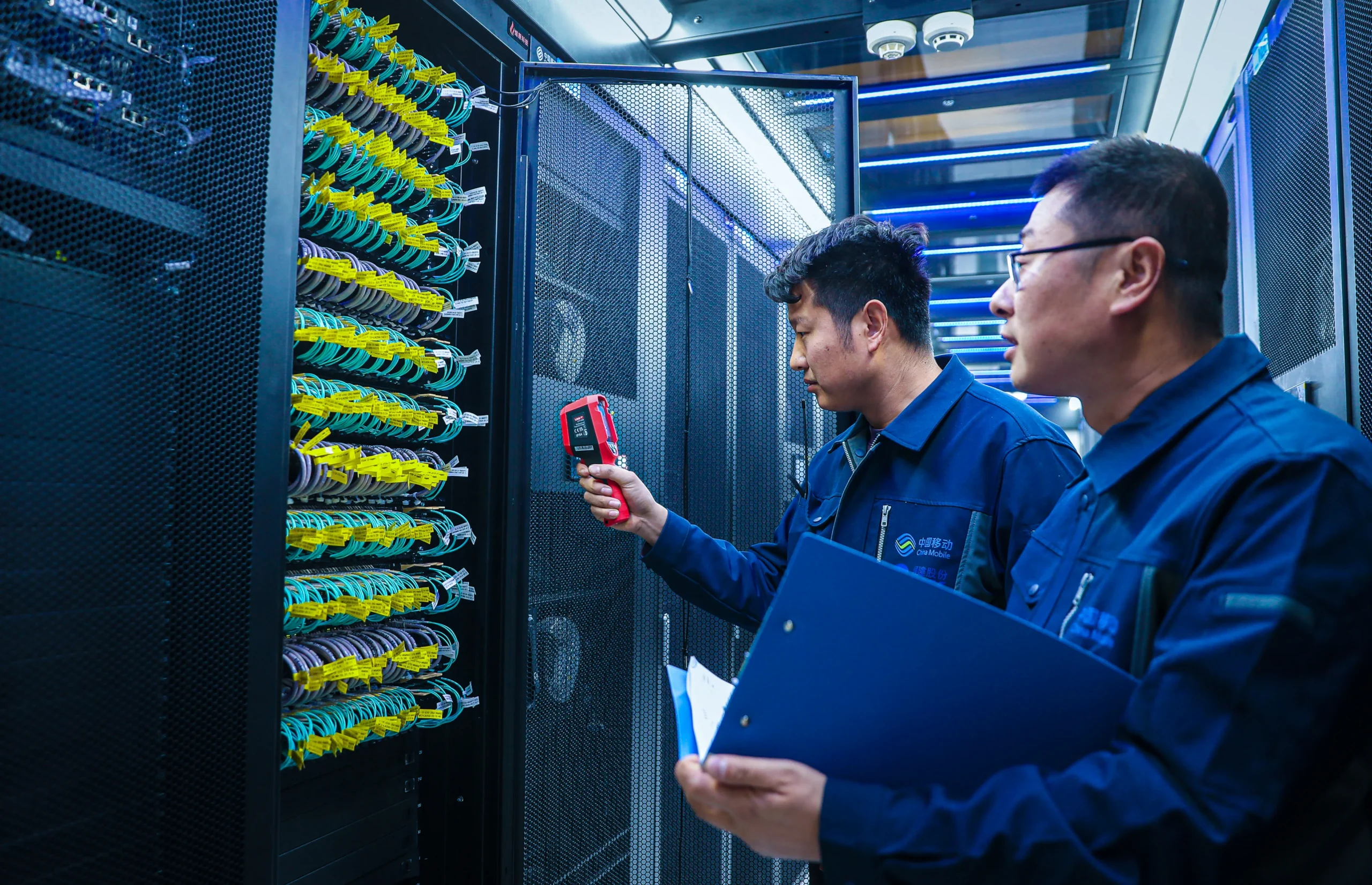
Running these AI applications requires a massive, costly infrastructure. Cloud providers are shifting how they bill clients. They are moving from resource-based billing to token-based metering. This connects costs directly to data usage. Monthly token bills for enterprise users can easily reach hundreds of thousands or millions of yuan.
To keep this sustainable, China is building a national integrated computing power network. This system links data centers, supercomputing hubs, and edge facilities. It will distribute computing power on demand, much like an electric grid.
The network is a priority for the 15th Five-Year Plan. It sits alongside vital water, power, and transport projects. The National Development and Reform Commission expects total investment in this grid to top 7 trillion yuan ($968 billion) this year.
Telecom Networks in China
The physical foundation for this computing grid is already expanding. By April 2026, China deployed over 5 million 5G base stations. These networks cover 330 cities with high-speed 5G-A connectivity.
During the current Five-Year Plan, networks will upgrade from “dual-gigabit” to “dual-ten-gigabit” speed. Thus, plans include building 500,000 new 5G-A base stations.
Looking ahead, 6G should launch commercially around 2030. It aims to boost network efficiency and capacity by more than ten times. China also plans to launch thousands of low-orbit satellites. Consequently, these satellites will provide total coverage across air, space, land, and sea. Ultimately, this telecom infrastructure is expected to generate 7 trillion yuan in industrial output, fueling the digital economy, automation, and robotics.
Read More Articles:
China to build interconnected AI grid