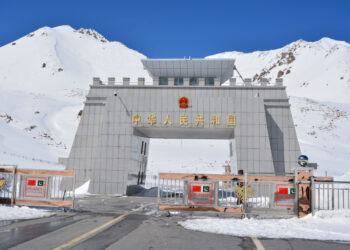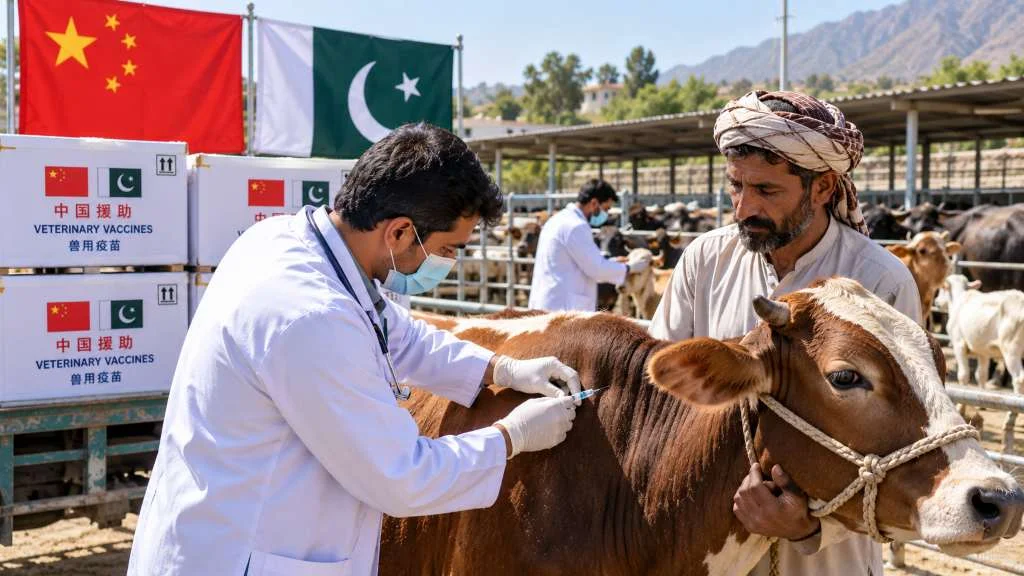
China’s provision of 300,000 veterinary vaccine doses is strengthening Pakistan’s efforts to control livestock diseases. The assistance also highlights the need for sustained vaccination, surveillance, and veterinary coverage.
The vaccines will help control lumpy skin disease (LSD) and Brucella melitensis. Pakistan’s Ministry of National Food Security and Research said authorities will use the vaccines under technical requirements.
These requirements include proper cold-chain management, monitoring, and coordination with provincial livestock departments.
Livestock Sector Faces Major Disease Risks
The support carries significant economic importance because livestock remains Pakistan’s largest agricultural subsector.
According to the Pakistan Economic Survey 2025-26, livestock contributed 62.45% of agricultural value addition and 14.64% of GDP. The sector also recorded 3.75% growth during the year.
Meanwhile, the Agricultural Census 2024 counted 55.86 million cattle, 47.74 million buffaloes, 44.59 million sheep, and 95.83 million goats across Pakistan.
These figures show the scale of rural assets vulnerable to livestock diseases.
Vaccination Supports Food and Economic Security
Animal health authorities increasingly link disease prevention with food security and rural economic stability.
The World Organisation for Animal Health (WOAH) identifies vaccination, early detection, biosecurity, and movement controls as important tools for managing lumpy skin disease. Brucellosis also presents wider risks because it can spread from animals to humans.
Therefore, effective disease control can protect both livestock productivity and public health.
Diseases Can Reduce Farm Income
Sher Ahmed, former Chief of the Mountain Agricultural Research Centre at the Pakistan Agricultural Research Council, highlighted the wider economic impact of livestock diseases.
He said diseases can reduce farm income, productivity, and food security. Lumpy skin disease can lower milk production, affect fertility, and damage hides.
Similarly, brucellosis can cause reproductive losses and pose health risks to people.
Need for Long-Term Veterinary Support
China’s vaccine assistance provides immediate support for Pakistan’s livestock disease-control efforts. However, sustained progress will require regular vaccination and stronger disease surveillance.
In addition, Pakistan needs wider veterinary coverage and effective biosecurity measures. These steps can help protect rural livelihoods and improve animal productivity.
Ultimately, stronger livestock health systems can contribute to Pakistan’s agricultural growth, food security, and rural economic resilience.
Read More Articles:
Pakistan, Türkiye to Deploy Forces in Saudi Arabia