

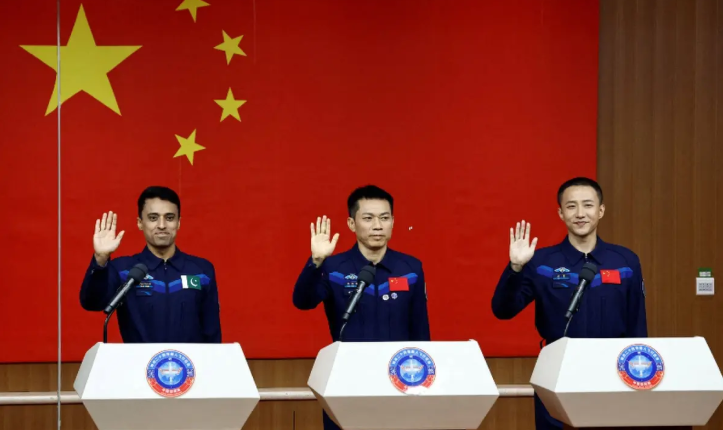
The prospect of Muhammad Zeeshan Ali becoming Pakistan’s first astronaut to travel into orbit has sparked widespread excitement and national pride. It marks a new chapter in China-Pakistan cooperation and offers a compelling example of how developing countries can participate in advanced scientific exploration through international partnerships.
As Zoon Ahmed Khan, a research fellow at the Center for China and Globalization, argues, this is a moment of profound national significance for Pakistan. Ali will not only become the first Pakistani astronaut in orbit but also the first foreign astronaut to take part in a Chinese space mission. His journey carries the aspirations of an entire nation and could inspire other countries in the Global South to pursue similar opportunities.
The mission also demonstrates that meaningful cooperation in space requires more than political agreements. It demands mutual commitment, trust and a willingness to learn from one another.
From “iron brothers“ to partners in space
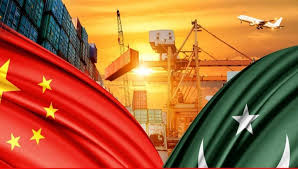
The mission carries particular significance as China and Pakistan mark the 75th anniversary of their diplomatic relations. For decades, the two countries have described their relationship as one between “iron brothers,” underpinned by strategic trust, close political coordination and growing people-to-people exchanges.
In May 2025, during Pakistani Prime Minister Shehbaz Sharif’s visit to China, the two sides adopted a 2025–2029 action plan aimed at building an even closer community with a shared future.
The astronaut cooperation agreement, signed in Islamabad in 2025, added a new dimension to this longstanding partnership. It took bilateral cooperation beyond traditional areas and into one of the most technologically demanding fields of human endeavor.
China and Pakistan have already established cooperation in satellite development and related services. But sending a Pakistani astronaut to China’s space station represents a more people-centered form of collaboration, one that brings opportunities for scientific research, technological innovation and human capital development.
For Pakistani researchers, access to the space environment and valuable orbital data offers an opportunity that would otherwise be difficult to obtain. Research conducted in microgravity could also contribute to scientific advances with practical applications in biotechnology, materials science, food security and climate change.
Building a space future, one generation at a time
Another important legacy of the mission could be the development of Pakistan’s own human spaceflight capabilities.
Upon his return, Ali will bring back valuable operational experience in spacecraft systems, emergency procedures and conducting experiments in microgravity. His backup astronaut, Khurram Daud, has also received systematic training at China’s astronaut center.
Together, they represent an emerging pool of trained professionals whose knowledge can be passed on to future astronauts, researchers and engineers.
More importantly, the mission could change how young Pakistanis view their own future. For many children, seeing someone from their own country travel into space can make a space ambition feel much more attainable.
If Ali can use his experience to engage with students and young researchers after returning home, his influence could extend well beyond the space mission itself. He could become a role model for a generation encouraged to pursue science, technology, engineering and mathematics.
Making space cooperation more inclusive
China has repeatedly emphasized the peaceful use of outer space, equality and mutual benefit as guiding principles of its space program. The decision to select Pakistan, a developing country, as the first foreign partner to send an astronaut on a Chinese space mission gives practical meaning to these principles.
For decades, human spaceflight has largely been associated with a small number of countries possessing substantial financial resources, advanced technology and established space programs. Access to such opportunities has remained beyond the reach of many developing nations.
The China-Pakistan mission offers a different possibility: countries do not necessarily have to develop every capability independently before becoming participants in space exploration. Through international cooperation, they can gain access to expertise, technology, research platforms and training while gradually strengthening their own capabilities.
Of course, one mission cannot transform a country’s space industry overnight, nor can international cooperation replace the need for sustained domestic investment in education, research and technological innovation.
But every ambitious journey needs a starting point.
As Khan said, for Pakistan, Muhammad Zeeshan Ali’s journey to China’s space station could be that starting point. For China-Pakistan relations, it opens a new frontier in a friendship that has evolved over 75 years. And for other developing countries, it offers a reminder that the future of space exploration need not be reserved for a privileged few.
Read More Articles:
Zeeshan Ali to Make History on Shenzhou-24 Mission
Shenzhou-24 Logo Features Pakistan’s National Flower
China Offers 61 Scholarships to Pakistani Students