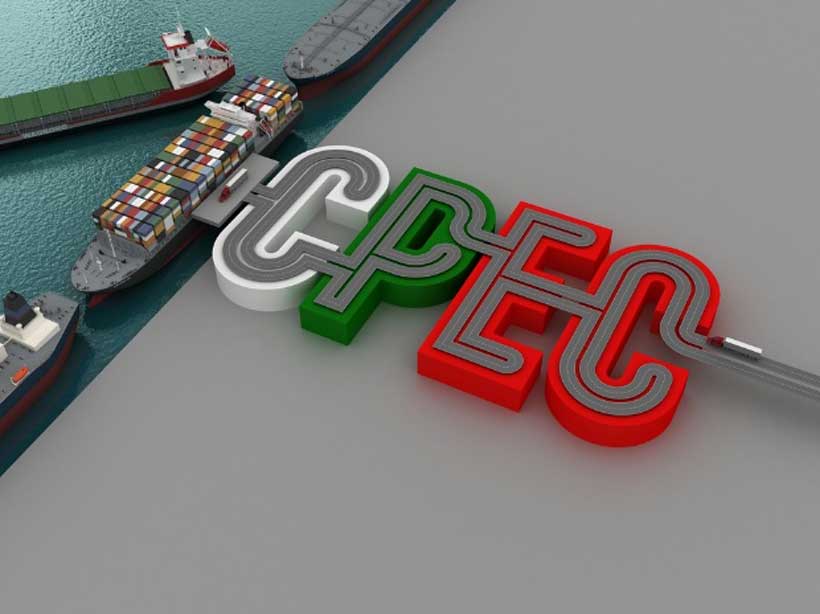
The China-Pakistan Economic Corridor (CPEC) is entering a new phase of cooperation, but its future expansion depends on more than infrastructure development and financial commitments. Persistent security threats, regional tensions, bureaucratic challenges and questions about local participation continue to affect the environment in which CPEC projects operate.
As Pakistan and China move towards CPEC 2.0, both countries face the challenge of translating their strategic partnership into sustainable economic outcomes. Security concerns, particularly attacks targeting Chinese nationals and infrastructure, have increased the importance of protecting development projects and maintaining investor confidence.
At the same time, misinformation and disinformation circulating on social media can complicate public understanding of CPEC and Pakistan-China relations. Addressing misleading narratives requires timely communication, transparent project information and greater engagement with local communities.
The next phase of CPEC therefore needs an integrated approach that connects security cooperation with economic development, institutional efficiency and public trust.
Liu Haixing’s Visit Renews Focus on CPEC Security
The recent visit of Liu Haixing, Minister of the International Department of the Communist Party of China (CPC) Central Committee, to Pakistan has brought renewed attention to bilateral cooperation.
During his November 2 meetings with Prime Minister Shehbaz Sharif and Chief of Defence Forces Field Marshal Syed Asim Munir, Liu discussed the strategic partnership, regional developments and stronger institutional engagement.
In his meeting with Prime Minister Shehbaz Sharif, both sides reaffirmed their commitment to expanding cooperation in trade, investment, connectivity, infrastructure, information technology and agricultural modernisation. The Prime Minister also emphasised the importance of political engagement and party-to-party exchanges. <Cite refs={[“turn822156search2″,”turn781795search5”]}/>
In a separate meeting at General Headquarters, Field Marshal Asim Munir and Liu discussed regional and international security dynamics. Both sides expressed their resolve to strengthen the all-weather strategic cooperative partnership. <Cite refs={[“turn781795search1″,”turn781795search2”]}/>
The visit also carried an important security message. According to the South China Morning Post, Liu expressed China’s willingness to deepen high-level security cooperation and work with Pakistan to ensure the safe and smooth operation of the strategic corridor. <Cite refs={[“turn822156search1”]}/>
These engagements reflect the importance both countries attach to protecting Chinese personnel, projects and investments. However, the meetings should be understood as reaffirmations of cooperation rather than the announcement of a fully developed new security agreement.
Security Threats Remain a Major Challenge for CPEC
CPEC’s strategic and economic significance has made the security of its projects a major concern for Pakistan and China.
Balochistan, which hosts Gwadar Port and several important development initiatives, faces persistent militant violence. Attacks attributed to the Balochistan Liberation Army (BLA), Baloch Liberation Front (BLF) and other armed groups have created risks for security personnel, infrastructure, local communities and foreign workers.
Chinese nationals have also been targeted in attacks in Pakistan. These incidents have increased security requirements for Chinese companies and complicated the operating environment for development projects.
An assessment by the South Asia Terrorism Portal documents attacks against Chinese nationals in Pakistan over several years, including incidents in Balochistan and other provinces. Its figures are based on compiled open-source reporting and should be read within that methodology. <Cite refs={[“turn822156search17″,”turn822156search19”]}/>
The consequences extend beyond immediate casualties and physical damage. Security incidents can disrupt construction schedules, increase operating costs, affect insurance arrangements and weaken the confidence of potential investors.
Protecting CPEC therefore requires more than deploying additional security personnel. Pakistan and China need coordinated threat assessment, intelligence cooperation, secure transport arrangements and effective mechanisms for responding to emerging risks.
Pakistan-Afghanistan Tensions Complicate Regional Connectivity
Regional instability presents another challenge for CPEC and Pakistan’s wider connectivity ambitions.
Deteriorating relations between Pakistan and Afghanistan have created difficulties for cross-border trade and regional transport. Islamabad has repeatedly raised concerns about militant groups, particularly the Tehreek-e-Taliban Pakistan (TTP), operating from Afghan territory. The Afghan authorities have disputed aspects of Pakistan’s allegations.
The May 2026 Pakistan-China joint statement acknowledged the importance of preventing groups, including the TTP and the Eastern Turkistan Islamic Movement (ETIM), from using either country’s territory to threaten regional security. It also welcomed China’s role in facilitating informal talks between Pakistan and Afghanistan in Urumqi in April 2026. <Cite refs={[“turn822156search16″,”turn781795search13”]}/>
The regional situation demonstrates why counterterrorism cooperation cannot be limited to protecting individual projects. It also requires diplomatic engagement, border coordination and efforts to prevent militant networks from exploiting gaps in regional security.
Alternative Routes Can Strengthen Central Asian Connectivity
Pakistan has also been exploring alternative trade routes to diversify regional connectivity and reduce dependence on routes affected by political and security disruptions.
The route through China’s Xinjiang region offers opportunities to connect Pakistan with Kyrgyzstan, Kazakhstan and other Central Asian markets. This approach builds on existing transport and transit arrangements, including the Quadrilateral Traffic in Transit Agreement (QTTA), signed by Pakistan, China, Kyrgyzstan and Kazakhstan in 1995.
According to Pakistan’s Ministry of Foreign Affairs, the QTTA provides a framework for facilitating transit trade between the four countries and connecting Central Asian markets with Pakistan’s seaports, including Gwadar. <Cite refs={[“turn781795search12”]}/>
Recent reporting has also highlighted the use of routes through China as Pakistan seeks to diversify its trade links with Central Asia. <Cite refs={[“turn781795search16″,”turn781795search17”]}/>
Gwadar’s geographical position gives Pakistan opportunities to develop maritime trade, logistics and regional transport services. However, these opportunities depend on reliable infrastructure, commercially competitive services, political stability and effective security arrangements.
Route diversification should therefore complement wider regional cooperation rather than be viewed as a substitute for diplomatic engagement with neighbouring countries.
China-Pakistan Security Cooperation Gains Importance
China’s willingness to strengthen counterterrorism cooperation with Pakistan is reflected in the joint statement issued during Prime Minister Shehbaz Sharif’s visit to China in May 2026.
The statement said China was ready to work with Pakistan to implement the Global Security Initiative, establish a China-Pakistan Security Partnership, expand bilateral and multilateral counterterrorism cooperation and strengthen military-to-military engagement.
Pakistan, in turn, committed to taking targeted measures to ensure the safety of Chinese personnel, projects and institutions. <Cite refs={[“turn822156search16”]}/>
This provides an important bilateral foundation for developing more coordinated security arrangements.
The joint military exercise Karakoram 2026, conducted in China’s Xinjiang region from October 14 to 22, further demonstrated the two countries’ growing defence cooperation.
The nine-day exercise focused on joint counterterrorism operations in high-altitude areas. According to China’s Ministry of National Defense, the training included unmanned aerial vehicle operations, moving-target searches, long-range shooting, joint command and live-force exercises. <Cite refs={[“turn822156search0″,”turn822156search21”]}/>
Such exercises can improve operational coordination, strengthen professional exchanges and build experience in responding to complex security threats.
However, military cooperation must also be supported by civilian institutions, effective governance and long-term development policies.
Proposed Corridor of Safety, Security and Counterterrorism
In this context, the Center for Knowledge and Public Policy has advocated establishing a dedicated Pakistan-China Corridor of Safety, Security and Counterterrorism.
The proposal aims to protect the mutual interests of both countries while safeguarding CPEC projects, personnel and infrastructure.
As CPEC 2.0 expands into industrial development, mining, agriculture, information technology and private-sector investment, a coordinated security framework could help address threats across different sectors.
The proposal also recognises that security cannot be separated from economic development and institutional performance. A sustainable framework must combine physical protection with intelligence cooperation, cybersecurity and governance reforms.
To translate this concept into practical policy, an Integrated Security and Safety Model (ISSM) can be developed around four interconnected pillars.
Four Pillars of an Integrated Security and Safety Model
1. Physical Security and Counterterrorism
The first pillar focuses on establishing a coordinated corridor security system through improved border management, modern surveillance, secure transport arrangements and intelligence-led deployment of security personnel.
Advanced surveillance platforms, unmanned aerial vehicles and AI-supported monitoring systems could help authorities identify suspicious activity, assess potential threats and improve situational awareness.
Technology should complement, rather than replace, trained personnel and established security procedures. Its deployment must also follow applicable laws, operational safeguards and appropriate oversight.
Pakistan and China could explore further cooperation in surveillance equipment, secure communications and other defence technologies according to their operational requirements.
The objective should be to develop a comprehensive protection framework for Chinese nationals, development projects, transport routes and critical infrastructure.
2. Joint Intelligence Sharing and Coordination
The second pillar proposes establishing a Joint Group for Information Sharing and Intelligence-Based Operations.
Timely intelligence exchange is essential for identifying threats before they develop into attacks. A dedicated institutional mechanism could facilitate threat assessments, information sharing, strategic coordination and professional training.
Such a group could bring relevant civilian and security institutions from both countries into a structured consultation framework.
Its responsibilities could include identifying emerging security patterns, assessing threats to specific projects, improving communication between relevant authorities and developing coordinated responses to cross-border risks.
Clear procedures for information protection, accountability and lawful data sharing would be essential to its effectiveness.
3. Joint Cybersecurity Operational Group
The third pillar focuses on cybersecurity, which is becoming increasingly important as CPEC expands into digital infrastructure, smart logistics, financial systems and technology-based industrial operations.
Cyberattacks against critical infrastructure can disrupt communication networks, transport systems, industrial operations and essential public services.
Pakistan and China should therefore explore establishing a Joint Cybersecurity Operational Group to strengthen digital resilience and improve coordination against cyber threats.
The proposed group could focus on:
- Protecting critical information infrastructure and industrial control systems.
- Sharing information about cyber threats and vulnerabilities.
- Developing coordinated incident-response procedures.
- Strengthening cybersecurity training and technical capacity.
- Promoting secure digital systems across CPEC-related projects.
This pillar would help ensure that the expansion of digital connectivity and technological cooperation is supported by effective protection mechanisms.
4. Governance, Institutional Reform and Community Participation
The fourth pillar addresses governance, administrative efficiency and the relationship between development projects and local communities.
Security arrangements alone cannot deliver sustainable stability if local populations do not see meaningful economic and social benefits from development.
Balochistan requires continued investment in education, healthcare, employment opportunities, infrastructure and local economic development. Strengthening local government institutions and involving communities in project planning can help address concerns about participation and the distribution of benefits.
Any proposed administrative restructuring of the province must follow constitutional procedures, democratic consultation and local consensus.
Institutional efficiency is equally important at the federal level. Strengthening coordination through the Special Investment Facilitation Council (SIFC), reducing bureaucratic delays and establishing transparent investment procedures could improve the business environment.
Clear project timelines, predictable regulations and effective dispute-resolution mechanisms would also help build investor confidence.
Ultimately, governance reforms should ensure that security, economic opportunities and development benefits reach the communities hosting CPEC projects.
Combating Disinformation Through Transparency and Public Engagement
Another challenge facing CPEC is the spread of misleading information about projects, investment commitments and Pakistan-China relations.
Social media platforms can rapidly circulate unverified claims, creating confusion among the public and potentially affecting perceptions among businesses and investors.
Addressing this challenge requires a consistent public information strategy. Government institutions, project authorities and relevant stakeholders should publish accurate information about project progress, financing, employment opportunities and implementation challenges.
Regular briefings, accessible project data and engagement with journalists, researchers, universities and local communities could improve public understanding.
Transparency is particularly important in areas where communities have concerns about land, employment, resource management and the distribution of economic benefits.
Rather than relying only on responses to misleading claims, both countries should encourage open communication and provide verifiable information about CPEC’s objectives and outcomes.
Moving CPEC 2.0 Towards Sustainable Regional Development
CPEC 2.0 represents an opportunity to broaden Pakistan-China economic cooperation through industrial development, agriculture, mining, technology and private-sector investment.
However, achieving these objectives requires a stable security environment, efficient institutions and stronger public confidence.
The proposed Integrated Security and Safety Model offers a framework for connecting physical protection, intelligence sharing, cybersecurity and governance within a coordinated bilateral approach.
Its implementation would require clearly defined responsibilities, legal safeguards, sustainable funding and regular performance assessments. It should also complement existing bilateral security arrangements rather than create overlapping institutions without defined mandates.
Pakistan and China have already reaffirmed their commitment to a China-Pakistan Security Partnership and expanded counterterrorism cooperation. The next step is to translate these commitments into practical mechanisms that protect investments while supporting long-term regional stability.
The future of CPEC will depend not only on infrastructure and financial commitments but also on institutional resilience, local participation, public trust and effective regional diplomacy.
A Pakistan-China Corridor of Safety and Security could provide an important foundation for this effort, helping transform CPEC into a more secure, productive and sustainable platform for regional connectivity and shared economic development.
Read More Articles:
CPEC 2.0 Expands Pakistan-China AI Cooperation