
China and the European Union have reached an understanding on Chinese hybrid-vehicle exports, introducing new limits that could reshape trade between the two markets. Announced on 12 October 2026 after months of negotiations, the arrangement seeks to address European concerns over rising imports while preserving conditions for Chinese manufacturers to access the EU market.
China’s Ministry of Commerce said the agreement would allow hybrid-vehicle exports to continue growing, ensure China’s export quota was no lower than those granted to other countries, and raise the quota above 2025 levels. However, European reporting points to a more restrictive outcome for shipments, leaving questions about how the arrangement will work in practice.
According to Reuters, European Trade Commissioner Maroš Šefčovič indicated that the agreement could reduce Chinese hybrid-car exports to the bloc by more than half. The difference between Beijing’s account and the reported European restrictions makes the implementation details particularly important.
China-EU Hybrid-Car Deal Introduces New Export Limits
Reporting by the Financial Times, The Wall Street Journal and other international outlets indicates that the EU arrangement centres on an annual quota of 350,000 Chinese hybrid and plug-in hybrid vehicles for 2027, compared with projected shipments of as many as 800,000 in 2026. Reports also indicate that the quota could increase by 6% annually.
The precise implementation timetable and the treatment of individual manufacturers remain important details to watch. Some reporting places the introduction of the restrictions in December 2026, while the 350,000-vehicle figure relates to the 2027 quota.
The arrangement follows discussions between Chinese Commerce Minister Wang Wentao and Šefčovič, who have sought to manage trade tensions between the two economies. European officials have expressed concern about the competitive pressure facing the bloc’s automotive industry, while Beijing has emphasised fair treatment and predictable market access for Chinese companies.
The agreement therefore reflects an effort to manage competing priorities. The EU wants to protect its automotive industry from a rapid increase in imports, while China seeks to prevent trade restrictions from undermining its manufacturers’ access to a major overseas market.
Chinese Car Exports Rise as Domestic Sales Weaken
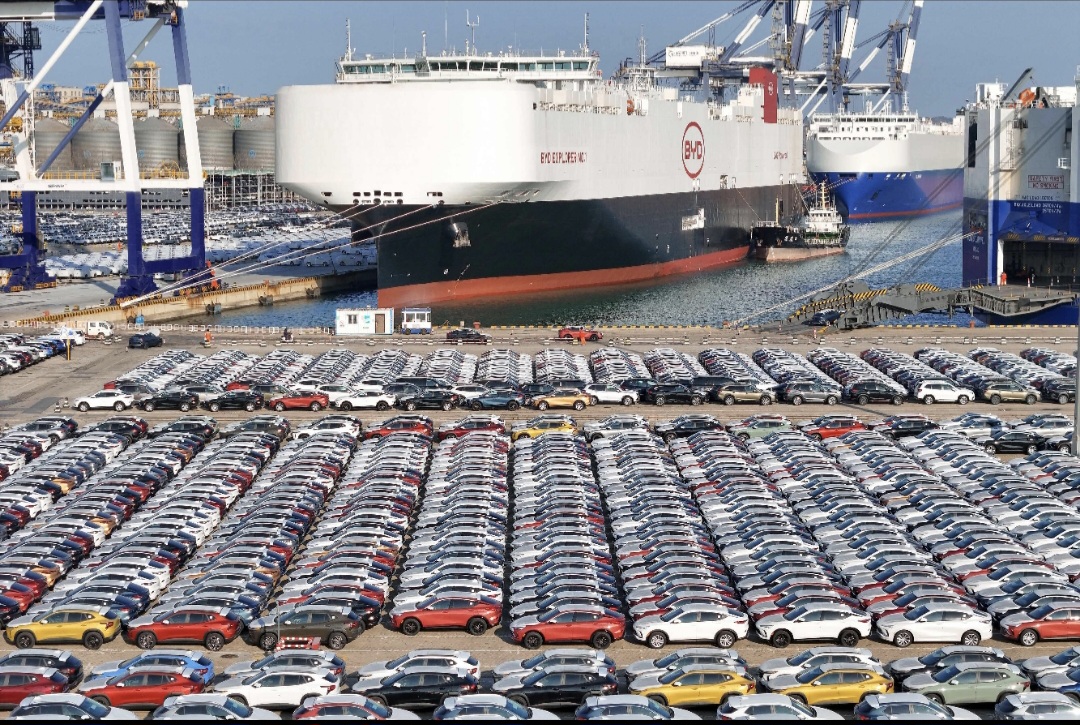
The negotiations come as Chinese automakers increasingly rely on overseas markets to sustain growth. According to the Associated Press, citing data from the China Association of Automobile Manufacturers (CAAM), China exported approximately 919,000 passenger vehicles in September 2026, a 64% increase compared with the same month a year earlier.
Passenger-car exports exceeded 7.1 million units during the first nine months of 2026, representing year-on-year growth of more than 70%. In contrast, domestic passenger-car sales fell by approximately 27% in September to more than 1.6 million units, according to the same industry data.
The contrasting figures highlight the growing importance of international markets to China’s automotive manufacturers. Overseas demand has helped offset weaker domestic sales, but trade restrictions threaten to make expansion more difficult in some of the industry’s most commercially attractive destinations.
Europe is an important market in this context. Restrictions on hybrid-vehicle shipments could force Chinese manufacturers to reconsider their export strategies, product mix and longer-term investment decisions. However, the effects will vary between companies, depending on their European sales, manufacturing arrangements and ability to serve customers through alternative channels.
What the China-EU Deal Could Mean for Pakistan
The agreement also raises questions for Pakistan’s automotive industry, where Chinese manufacturers have established a growing presence. Although the EU arrangement does not change Pakistan’s import rules or confirm any relocation of Chinese production, it illustrates how trade restrictions can influence the commercial decisions of international manufacturers.
If access to particular export markets becomes more difficult, manufacturers may reassess where they produce vehicles and how they serve overseas customers. Nevertheless, a change in export policy does not automatically make Pakistan an attractive manufacturing base. Investment decisions depend on production costs, policy stability, workforce skills, supplier networks, infrastructure and access to markets.
For Pakistan, the more practical question is whether cooperation with Chinese automotive companies can support deeper domestic manufacturing rather than continued dependence on imported finished vehicles. Local supplier development, technical training and investment in production capacity could help the country capture greater economic value from its automotive partnerships.
Achieving those outcomes would require consistent industrial policies and commercially viable production conditions. Pakistan would also need to demonstrate that locally manufactured vehicles could meet the quality, cost and regulatory requirements of the markets they are intended to serve. The EU deal, on its own, provides no evidence that Chinese companies are preparing to shift production to Pakistan.
Implementation Will Determine the Deal’s Impact
The agreement’s commercial significance will depend on the final rules governing quotas, eligible vehicles, manufacturer allocations and enforcement. Greater clarity on these arrangements will help businesses assess how many vehicles they can ship to Europe and whether alternative production or distribution strategies are necessary.
The distinction between hybrid vehicles, plug-in hybrids and fully electric vehicles also matters. These categories can face different regulatory treatment, so the reported hybrid-car quota should not be interpreted as a blanket restriction on every Chinese-made vehicle entering the EU.
For European manufacturers, the arrangement could provide some protection from rapidly rising imports. However, the longer-term competitiveness of the bloc’s automotive industry will also depend on innovation, production efficiency, pricing and consumer demand. Import limits alone cannot guarantee stronger industrial performance.
For Chinese manufacturers, the agreement introduces another consideration into an already changing international trade environment. Companies will need to weigh the costs of exporting against the benefits of local production, partnerships and access to different markets.
The China-EU hybrid-car deal is therefore more than a quota arrangement. It highlights the growing connection between trade policy and industrial strategy as major economies seek to balance market access with domestic manufacturing priorities. Until implementation details become clearer, its full commercial impact will remain uncertain. For Pakistan, the key lesson is that automotive investment opportunities depend not simply on changes in overseas trade rules, but on the strength of its own industrial environment.