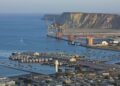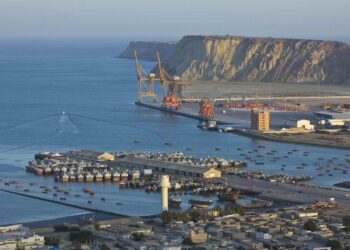

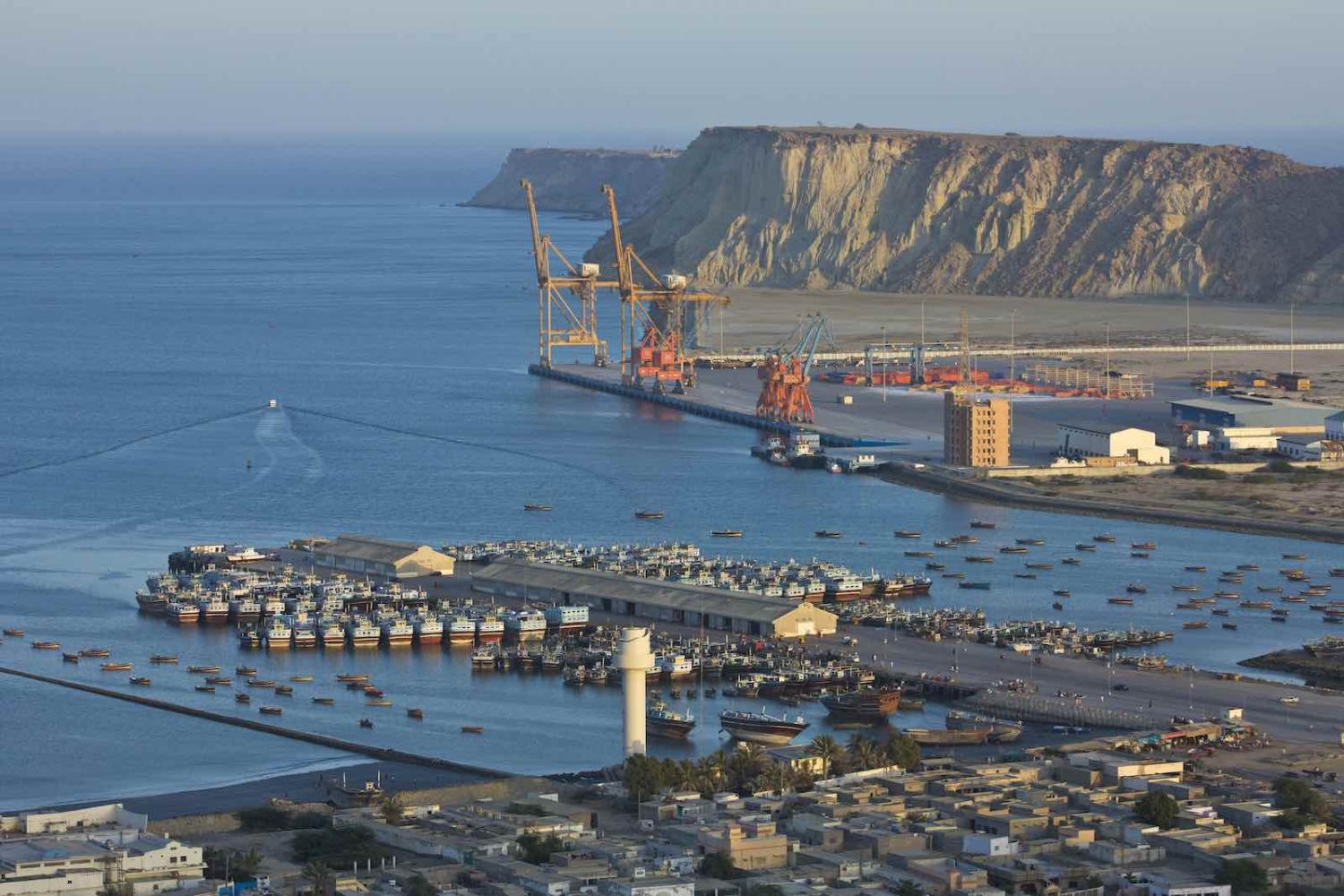
Gwadar Port is entering a more important phase of its commercial development, but the evidence points to a port with growing activity rather than an already established regional trade hub.
The latest vessel records published by the Gwadar Port Authority list 10 berthed vessels carrying a combined 194,304 metric tonnes of cargo, with seven additional vessels recorded at anchorage. The listed calls include steel, machinery, industrial equipment, fertilizer and transshipment cargo. The figures provide a useful snapshot of activity at a port that has long been presented as a central component of CPEC and Pakistan’s regional connectivity ambitions.
The question is therefore no longer simply whether Gwadar can handle commercial vessels. The more important question is whether individual cargo movements can develop into regular shipping services, industrial activity and sustained trade volumes.
Gwadar Port Is Handling Larger Cargo Shipments
One of the clearest recent examples came in May 2026, when MV Bi Jia Shan berthed at Gwadar carrying approximately 53,277 metric tonnes of prime steel billets. The Gwadar Port Authority said the vessel arrived with around 20,669 pieces of cargo and operated at an approximate 12.8-metre draft.
Other recent vessel calls included MV Kai Xuan 11 with 29,832 tonnes of machinery and steel, MV Yuan Hang Wei with 34,000 tonnes, MV Ocean Sky with 25,250 tonnes of steel and MV Suvari Reis with 19,000 tonnes of steel billets.
These movements demonstrate that Gwadar is capable of handling substantial cargo shipments. They do not, by themselves, establish that the port has reached the scale or frequency associated with a mature regional trade hub.
That distinction is important when assessing the port’s commercial progress.
The Bigger Question Is Commercial Consistency
Port development is measured not only by whether a large ship can berth, but by the regularity and diversity of cargo moving through the facility.
Gwadar has recorded transshipment activity alongside bulk and project cargo. In May, the port reported that MV Shu Long was carrying 16,077 tonnes of Chinese-manufactured industrial equipment and pipes that had originally been bound for Kuwait before being diverted to Gwadar.
Such diversions can increase activity and demonstrate operational flexibility. But long-term commercial performance requires recurring customers, established shipping routes, predictable cargo volumes and connections with producers and markets.
The available vessel data therefore show real commercial activity, while also highlighting why a longer-term assessment needs more than individual vessel milestones.
Gwadar Free Zone Has Another Piece of the Puzzle
The port is only one part of Gwadar’s intended economic model.
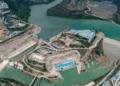
The Gwadar Free Zone has an allocated area of 2,281 acres. According to the CPEC Secretariat, its first 60-acre phase has been completed, 46 enterprises have registered for investment and three companies have started production. Development of the second phase, covering 2,221 acres, began in July 2021.
The significance of the Free Zone is that it is designed to connect port activity with industrial production and value addition.
If businesses import raw materials through Gwadar, process or manufacture products in the zone and then distribute those goods to Pakistani or international markets, the port becomes part of a wider economic ecosystem.
That is a more demanding test than simply increasing the number of vessels calling at the port.
Why China Still Matters to Gwadar’s Next Phase
Gwadar’s development remains closely connected to the Pakistan-China economic relationship and the wider CPEC framework.
The China-Pakistan 2025–2029 Action Plan calls for stronger maritime cooperation and specifically identifies the development of Gwadar’s commercial functions, improved use of marine resources and stronger interconnection between the New Gwadar International Airport and Gwadar Port.
The plan also sets the objective of developing Gwadar as a regional connectivity hub. The language of the plan is significant because it places greater emphasis on the port’s economic function rather than infrastructure construction alone.
That aligns with the broader direction of CPEC 2.0, which increasingly focuses on trade, industrial cooperation, private-sector participation and value-added economic activity.
Security Is Part of the Commercial Equation
Gwadar’s commercial development also operates within a difficult security environment.
For shipping companies, investors and industrial operators, infrastructure is only one part of the decision to use a port. Security, insurance costs, logistics reliability, road connections, customs procedures and access to dependable services all influence commercial choices.
That means Gwadar’s long-term competitiveness will depend on several factors moving together rather than on port infrastructure alone.
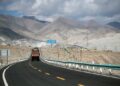
The development of the Free Zone, road and airport connectivity, maritime services and the wider security environment will all influence whether cargo activity becomes a sustained commercial ecosystem.
Is Gwadar Becoming a Trade Hub?
The evidence supports a more measured conclusion.
Gwadar is handling substantial individual cargo shipments and has demonstrated its ability to accommodate large vessels. Its Free Zone has registered dozens of enterprises, while the CPEC framework continues to identify the port as a major component of Pakistan-China connectivity.
At the same time, the available evidence does not yet establish the sustained cargo frequency, diversified shipping network and industrial scale associated with a mature regional trading hub.
Gwadar’s commercial story is therefore still developing.
The next phase of CPEC will be judged less by the completion of another piece of infrastructure and more by whether ports, industrial zones, transport links and private businesses begin operating as one connected economic system.
For Gwadar, that is the real test.
Read More Articles:
Silkway Impex Expands China Business Partnerships