
The second phase of the China-Pakistan Economic Corridor, known as CPEC 2.0, is expanding the scope of economic cooperation between Pakistan and China.
While CPEC 1.0 focused heavily on infrastructure and energy, the new phase places greater emphasis on trade, industrialization, agriculture, mining, technology, innovation, and regional connectivity.
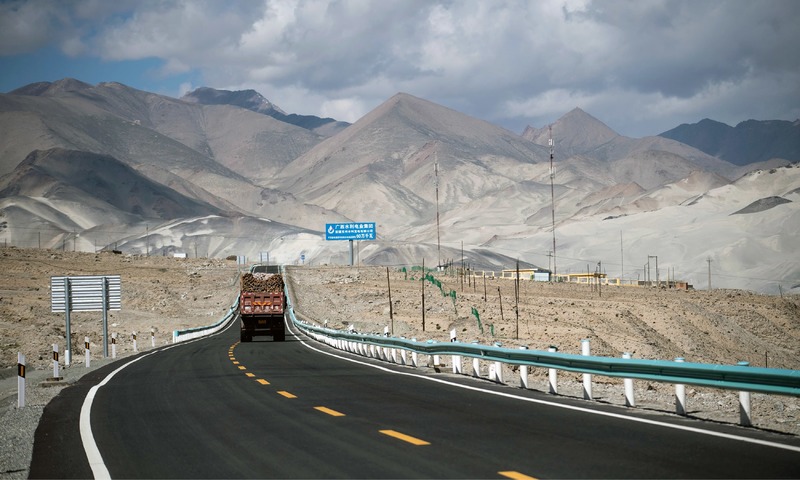
In this changing landscape, Xinjiang CPEC 2.0 connectivity is gaining greater importance. The Xinjiang Uygur Autonomous Region connects Pakistan with western China through the Karakoram Highway and the Khunjerab-Sost border crossing.
Pakistan has described Xinjiang as the birthplace of CPEC. It has also highlighted the region’s historical and cultural links with Pakistan.
Khunjerab Becomes a Key Trade Gateway
The Khunjerab Pass is central to the growing connection between Pakistan and Xinjiang.
In 2023, Pakistan and China agreed to keep the crossing open for transport throughout the year. Year-round operations began in December 2024.
This change created new opportunities for continuous land-based trade between Pakistan and western China. It can also support stronger people-to-people contacts.
Moreover, modern customs systems can make this corridor more efficient. Digital documentation, improved inspection facilities, and better logistics can reduce delays.
These improvements are particularly important for agricultural products and other perishables.
Xinjiang’s Expanding Transport Network
Xinjiang has developed an extensive transport network in recent years.
According to China’s State Council Information Office, the region had 9,202 kilometres of railway lines in 2024. The figure compares with 4,914 kilometres in 2012.
Its highway network also reached 230,000 kilometres. Meanwhile, Xinjiang had 595 civil aviation routes, including 25 international routes.
These developments strengthen Xinjiang’s potential as a logistics platform for CPEC 2.0.
Connecting Pakistan With Eurasian Markets
Xinjiang’s importance extends beyond its direct connection with Pakistan.
In 2024, more than 16,400 China-Europe freight trains travelled through Xinjiang. This highlights the region’s growing role in wider Eurasian logistics.
For Pakistani businesses, stronger links with Chinese logistics hubs could create access to additional markets.
Consequently, CPEC 2.0 can connect Pakistani producers with wider regional supply chains. The focus is increasingly shifting from infrastructure development toward trade and investment.
Supporting Trade and Industrial Cooperation
Pakistan and China have agreed to make CPEC 2.0 more industry-focused. Agriculture and mining are also among the priority areas.
The framework also emphasizes trade, investment, information technology, science and technology, education, and skills development.
Xinjiang can contribute to this transition by connecting Pakistani producers with Chinese businesses and markets.
The region itself has also recorded rapid growth in foreign trade. According to China’s State Council Information Office, Xinjiang’s total imports and exports reached 434.16 billion yuan in 2024.
This expanding market could offer opportunities for Pakistani agricultural products, minerals, textiles, and other exports.
Learning From Khorgos
Pakistan is also studying Xinjiang’s experience in modern border management.
In June 2025, Pakistan’s Ambassador to China Khalil Hashmi visited the Khorgos Free Trade Zone and Dry Port in Xinjiang. Discussions focused on technology-based customs and border-management systems.
The experience could provide useful lessons for improving facilities at Khunjerab.
Future cross-border trade will depend on more than roads. Digital customs, integrated border management, logistics technology, cold-chain systems, and efficient inspections will also be important.
From Xinjiang to Gwadar
CPEC 2.0 offers a broader connectivity vision linking northern Pakistan with the Arabian Sea.
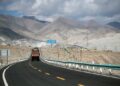
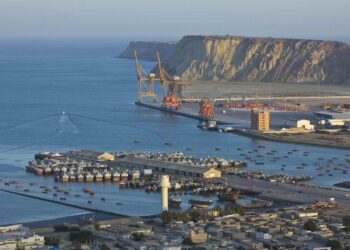
The Karakoram Highway connects Pakistan with Xinjiang through Khunjerab. Further south, Gwadar provides a maritime gateway on the Arabian Sea.
Together, these links can create a network connecting production centres, markets, logistics facilities, and people.
Additionally, Xinjiang’s established links with Central Asia and Eurasian transport networks give CPEC 2.0 a wider regional dimension.
Opportunities and Challenges Ahead
Xinjiang’s role in CPEC 2.0 is not limited to geography. The region could become an important conduit for Pakistani exports and broader Asian markets.
However, several practical issues will influence the success of this connectivity.
These include:
- Efficient border management
- Reliable transport infrastructure
- Competitive logistics costs
- Higher Pakistani export capacity
- Greater private-sector participation
- Investment in industrial production
- Modern cold-chain facilities
- Digital customs and inspection systems
Addressing these areas can help Pakistan make greater use of its land connection with western China.
Xinjiang’s Growing Role in CPEC 2.0
The importance of Xinjiang CPEC 2.0 connectivity extends beyond the Khunjerab border.
Its expanding transport infrastructure, logistics networks, international trade, and border facilities provide a foundation for deeper economic links between Pakistan and China.
CPEC 1.0 established important infrastructure. Now, CPEC 2.0 aims to build on that foundation through trade, investment, industry, innovation, and regional connectivity.
In this context, Xinjiang can serve as an important link between Pakistan, China, Central Asia, and wider Eurasian markets.
Read More Articles:
Pakistan Embassy in Beijing Marks Defence Day