
CPEC 2.0 is increasingly expanding into areas that are less visible than highways, power plants and ports. Marine science and the blue economy are emerging as one of those areas, linking Pakistan’s coastline and maritime resources with research, technology, environmental management and regional cooperation.
More than 100 government officials and experts from China, Pakistan, Sri Lanka, Bangladesh, the Maldives and other South Asian countries participated in the China-South Asian Countries Marine Cooperation Forum held in Qingdao on September 17–18. The forum adopted the China-South Asian Countries Marine Cooperation Initiative, focusing on marine science, sustainable development and the blue economy.
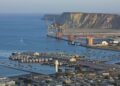
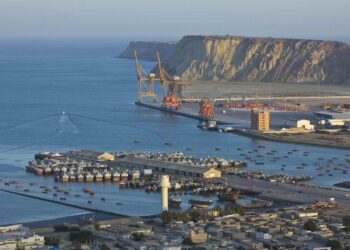
For Pakistan, the significance goes beyond another international conference. The country has a coastline of roughly 1,000 kilometres and an extensive maritime economic space, while Gwadar places the country’s maritime potential directly within the CPEC framework.
Pakistan and China Are Building Marine Science Links
The Qingdao forum focused on three broad areas: ocean and climate observation, forecasting and disaster prevention; marine ecological protection and restoration; and integrated ocean management and sustainable blue-economy development.
Pakistani experts participated in the discussions, including representatives from the National Institute of Oceanography and Lasbela University of Agriculture, Water and Marine Sciences.
Prof. Dr Abdul Malik, Vice Chancellor of LUAWMS, highlighted Chinese support for Pakistan’s marine-science capacity, particularly in human-resource development. Other Pakistani participants pointed to opportunities for technology transfer, joint research and capacity building.
The Chinese First Institute of Oceanography, which hosted the forum, said representatives from five South Asian countries and China took part in the September meeting.
That creates a foundation for cooperation that is based not only on infrastructure, but also on knowledge and scientific capacity.
Why This Matters for Gwadar
Gwadar gives the marine agenda a direct connection to CPEC.
The port is designed to function as part of a wider connectivity and economic network, while the CPEC 2025–2029 Action Plan calls for stronger cooperation in the marine economy, sustainable use of marine resources, marine scientific research and environmental protection.
The same plan calls for better interconnection between the New Gwadar International Airport and Gwadar Port and identifies the objective of developing Gwadar as a regional connectivity hub.That means marine science can contribute to CPEC in ways that are easy to overlook.
Better ocean observation can support maritime planning. Marine research can strengthen environmental management. Improved scientific understanding can support fisheries, aquaculture and other forms of coastal economic activity.
The link between science and commerce is therefore indirect but important.
The Blue Economy Is Bigger Than Fishing
The blue economy is often reduced to fisheries, but its scope is considerably broader.
It can include aquaculture, seafood processing, maritime transport, marine research, coastal tourism, environmental services, offshore resources and technologies linked to ocean monitoring and climate resilience. Pakistan has already identified some of these areas within its CPEC 2.0 agenda.
A CPEC Secretariat consultation on B2B cooperation in April 2026 specifically identified aquaculture and seafood processing as areas for potential cooperation. The session also discussed Gwadar industrial development and value-added processing.
That approach matters because it connects natural resources with processing and industrial capacity. Exporting raw marine products creates a different economic outcome from developing domestic processing, cold-chain logistics, packaging, certification and branded seafood products.
From Ocean Data to Economic Activity
The biggest potential contribution of marine science may be information. Fisheries and aquaculture depend on knowledge of marine ecosystems. Ports and shipping depend on reliable information about weather and ocean conditions. Coastal communities are affected by storms, flooding, erosion and changes in marine ecosystems.
The Qingdao forum’s emphasis on observation, forecasting and disaster prevention therefore has both environmental and economic relevance.
But scientific cooperation should not automatically be described as an economic success. Research partnerships, training programmes and technical exchanges create capabilities; turning those capabilities into commercial outcomes requires institutions, investment, regulation and private-sector participation.
That distinction is particularly important for CPEC 2.0.
A Different Kind of CPEC 2.0
The first phase of CPEC became closely associated with large infrastructure and energy projects. The second phase is being presented by Pakistani officials as a broader programme involving industry, agriculture, technology, minerals, human-resource development and business-to-business cooperation.
Marine science fits naturally into that broader model. It can strengthen the knowledge base needed to develop coastal industries while supporting environmental safeguards. It can also create opportunities for Pakistani researchers and universities to work with Chinese institutions on areas where both countries face shared challenges.
This is a different form of connectivity; one built around research networks, skills and institutional cooperation rather than roads and physical infrastructure alone.
Pakistan’s Ocean Could Become Part of Its Economic Strategy
Pakistan’s maritime potential is substantial, but potential is not the same as economic output.
The country will need stronger research capacity, better marine data, modern fisheries and aquaculture practices, cold-chain infrastructure, processing facilities, export standards and effective environmental regulation if the blue economy is to become a larger contributor to growth.
China can be one partner in that process, particularly through research cooperation, technical training and institutional links. For CPEC 2.0, the significance of marine cooperation may therefore lie in what it enables over time.
The next phase of Pakistan-China cooperation does not have to be measured only in kilometres of road, megawatts of electricity or tonnes of cargo. It can also be measured in researchers trained, scientific capabilities developed, marine resources managed sustainably and new industries built around Pakistan’s coastline. That is where the blue economy enters the wider CPEC 2.0 story.
Read More Articles:
China National Day 2026: What 77 Years of China’s Development Means for Pakistan and CPEC 2.0