
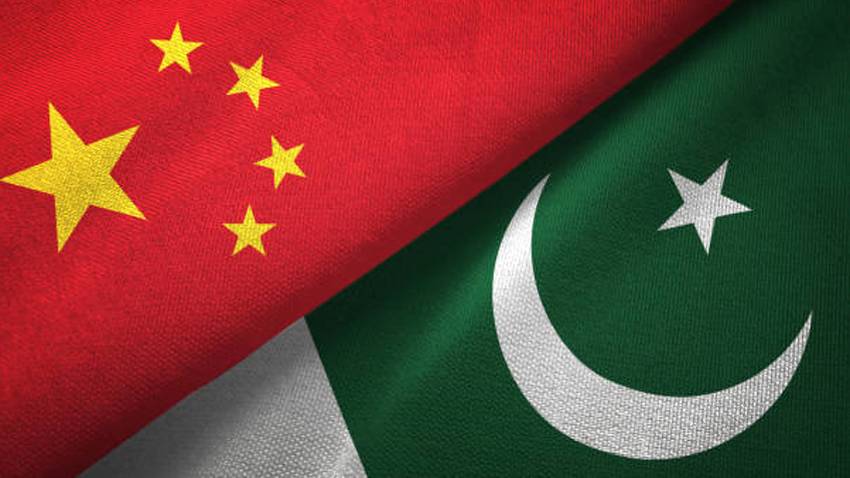
China will mark its 77th National Day on October 1, commemorating the founding of the People’s Republic of China in 1949. This year’s anniversary comes at a significant moment for Pakistan-China relations. The two countries are also marking 75 years of diplomatic ties, while CPEC enters a phase increasingly focused on industry, agriculture, technology, investment and business-to-business cooperation.
The National Day celebrations have already begun. Chinese diplomatic missions in Pakistan have held receptions in Islamabad, Lahore and Karachi, while Beijing has prepared a seven-day holiday, public cultural programmes and major displays across the capital.
At the same time, China has entered the first year of its 15th Five-Year Plan for 2026–2030. For Pakistan, these developments matter because China’s economic priorities will shape the opportunities available to one of its longest-standing regional partners.
China National Day 2026: What Is Planned?
October 1 marks the proclamation of the People’s Republic of China in Beijing in 1949. The Chinese State Council has designated October 1–7 as the 2026 National Day holiday, with September 20 and October 10 designated as adjusted working days. The week-long break is expected to bring large-scale domestic travel and public activity across China.
Beijing has also issued detailed arrangements for the National Day period. Tiananmen Square will operate under special access arrangements for the October 1–7 holiday, including overnight opening before the flag-raising ceremony on the first several days.
The National Museum of China will remain open throughout October 1–7, while Beijing’s cultural authorities have instructed museums to organise National Day exhibitions and, where appropriate, extended or evening programmes.
The capital’s visual preparations are equally extensive. Tiananmen Square now features an 18-metre-high “Blessings to the Motherland” flower basket carrying the dates “1949–2026”. Ten themed flower installations have also been placed along Chang’an Avenue, with themes ranging from innovation and green development to urban renewal and rural revitalisation.
A National Celebration With a Wider Message
On September 28, the National Committee of the Chinese People’s Political Consultative Conference and five other central organisations jointly held a National Day reception at the Great Hall of the People in Beijing to mark the 77th anniversary. CPPCC Chairman Wang Huning attended and delivered remarks.
The timing is significant because 2026 is also the opening year of China’s 15th Five-Year Plan. Approved in March, the plan covers 2026–2030 and places high-quality development, technological innovation, modern industrial capacity and further opening-up among its priorities.
China has set a target for average annual R&D spending growth of at least 7 percent during the plan period and aims to raise the value added of core digital-economy industries to 12.5 percent of GDP by 2030.
For Pakistan, these are not distant policy statistics. They indicate the sectors in which China is directing its next phase of economic and technological development and therefore where cooperation could become more relevant.
Pakistan Is Marking the Occasion Too
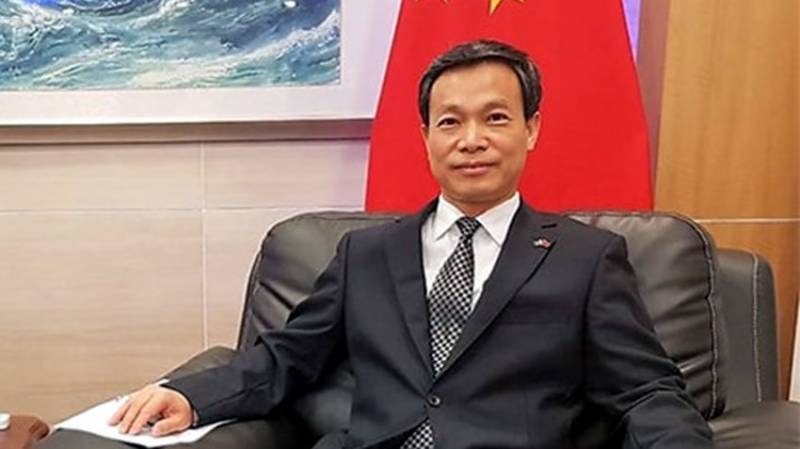
China’s National Day has also become a significant diplomatic event in Pakistan this year. The Chinese Consulate General in Lahore held a reception on September 18 at which Consul General Sun Yan discussed agriculture, industry, mining, technology and people-to-people exchanges. He said CPEC was moving towards an upgraded “Version 2.0” and highlighted five proposed cooperation corridors focused on growth, livelihoods, innovation, green development and openness.
In Karachi, a September 22 reception brought together Sindh Governor Nehal Hashmi, Chief Minister Murad Ali Shah and Chinese diplomatic representatives. The discussion focused on CPEC 2.0, agriculture, industry and mining, alongside renewable energy, technology, infrastructure, healthcare and education.
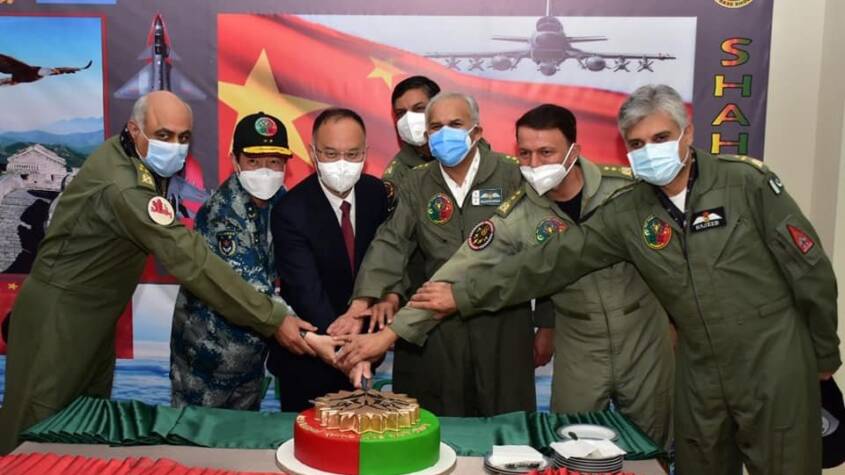
The Chinese Embassy and Chinese community organisations also held a National Day and Mid-Autumn Festival reception in Islamabad on September 22. The event brought together Pakistani officials, diplomats, Chinese enterprises and members of the Chinese community, with speakers calling for greater technology transfer, local-industry partnerships and economic cooperation.
The 75th Anniversary Adds Another Layer
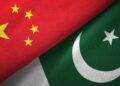
The National Day celebrations are taking place within a much larger Pakistan-China anniversary year. Pakistan and China established diplomatic relations on May 21, 1951.
For the 75th anniversary in 2026, Pakistan’s federal government established a special committee and planned 72 activities covering diplomacy, trade, culture and technology, alongside more than two dozen joint Pakistan-China activities.
Several of those initiatives have already been completed. The State Bank of Pakistan issued a Rs75 commemorative coin, made available to the public from May 25. The 19-gram copper-nickel coin carries the flags of both countries and the years 1951 and 2026.
Pakistan and China have also used cultural programmes to mark the anniversary, including the September Beijing International Great Wall Concert, “An Ode to Ironclad Friendship,” which brought Pakistani and Chinese performers together at Badaling.
These activities are not National Day events in the narrow sense. They belong to the broader 75th-anniversary programme. Their relevance is that they show how the relationship is being presented in 2026: through diplomacy, business, culture and people-to-people links alongside strategic cooperation.
From CPEC Phase I to CPEC 2.0
The economic relationship is now entering its most important transition. According to Pakistan’s CPEC Secretariat, approximately $25 billion in Chinese investment was made during CPEC Phase I, while nearly 8,000 megawatts was added to Pakistan’s power-generation capacity. The first phase also supported the development of the Thar coal project and a fibre-optic network.
The next phase is being framed differently. Pakistan’s Planning Ministry says CPEC Phase II will focus on business-to-business cooperation, industrial development, agricultural modernisation, minerals, technology and human-resource development. The government is also sending around 1,000 Pakistani agricultural experts to China for training in modern agricultural technologies.
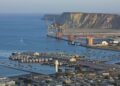
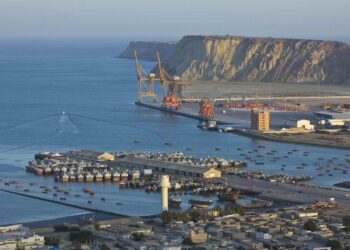
The May 2026 Pakistan-China joint statement similarly called for the high-quality development of the upgraded CPEC 2.0, while identifying Gwadar as a potential regional connectivity hub and emphasising cooperation in areas ranging from agriculture and education to technology and industry.
Why China’s New Development Cycle Matters to Pakistan
The connection between China’s National Day and CPEC therefore extends beyond symbolism. China has entered a new five-year planning cycle with a stronger emphasis on advanced manufacturing, digital industries, emerging technologies and green development. Its 2026 government targets include GDP growth of 4.5–5 percent, more than 12 million new urban jobs and a reduction of around 3.8 percent in carbon dioxide emissions per unit of GDP.
For Pakistan, the opportunity lies in identifying where its own economic priorities intersect with China’s. Agricultural technology is one example. Manufacturing and industrial supply chains are another. Digital services, renewable energy, minerals, logistics and higher-value exports could also become increasingly important as CPEC 2.0 moves away from a predominantly infrastructure-led model.
But cooperation will not automatically produce these outcomes. Pakistan will need firms capable of meeting quality standards, skilled workers, reliable logistics, stronger certification systems and policies that encourage investment into productive sectors.
The Next Chapter Is About What Comes After Infrastructure
That is ultimately what gives China National Day 2026 a distinct meaning for Pakistan. The relationship has already accumulated major infrastructure and energy projects. The CPEC Secretariat’s own figures; around $25 billion in Chinese investment and nearly 8,000 MW of additional generation capacity during Phase I, provide a measurable record of that period.
The question now is what Pakistan can build on top of those foundations. China’s National Day comes as Beijing begins implementing its 15th Five-Year Plan and Pakistan pushes CPEC 2.0 towards industrial cooperation, agricultural modernisation, technology, minerals and private-sector investment. At the same time, the two countries are using their 75th diplomatic anniversary to expand cultural, educational and business links.
The next stage of the relationship will therefore be judged less by the number of new projects announced than by what existing connectivity enables: more productive industries, stronger exports, technology transfer, skilled workers and deeper participation by Pakistani businesses.
China’s 77th National Day is consequently more than an anniversary for Pakistan to observe. It is also a timely point to examine the economic direction of a partnership that has entered its eighth decade; and to ask how CPEC 2.0 can connect Pakistan to China’s next development cycle.
Read More Articles:
Xinjiang’s Role in Driving CPEC 2.0