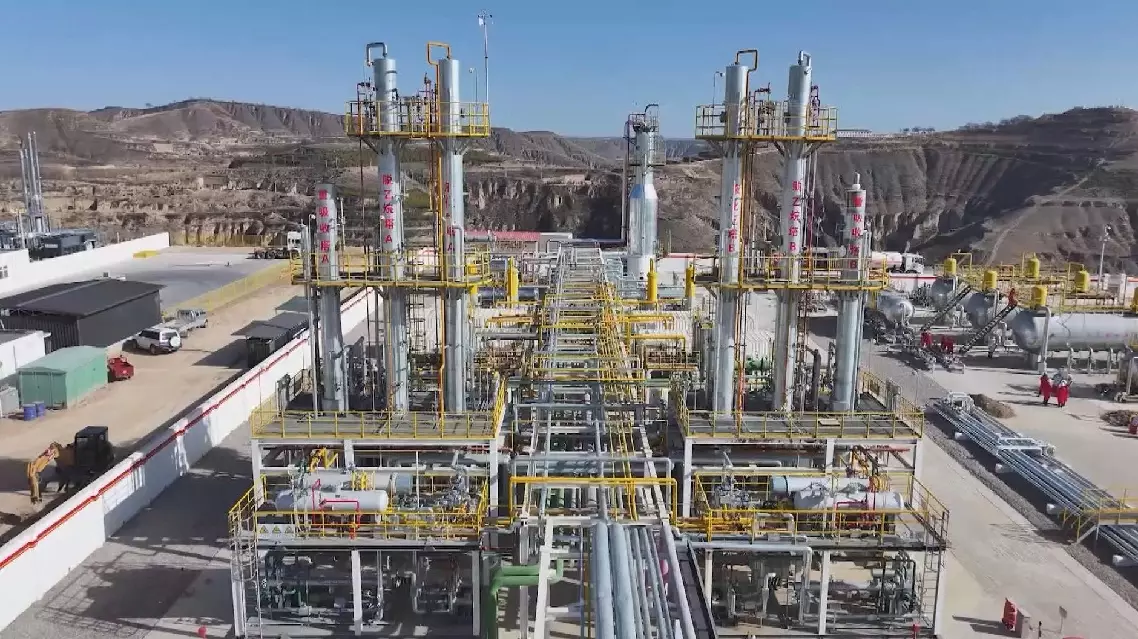
China’s oil exploration has hit a major milestone, with the Fuman Oilfield, located in the heart of the Taklimakan Desert in Xinjiang, reaching daily oil and gas output of 10,000 tons, according to China National Petroleum Corporation (CNPC). This achievement marks a significant breakthrough in tapping wells deeper than 8,000 meters, regions previously considered “exploration-forbidden zones” due to extreme geological conditions like high pressure, temperature, and toxic gases.
New Milestone in Ultra-Deep Oil Extraction
Fuman Oilfield, with depths ranging between 7,000 to 10,000 meters, has now become a benchmark for deep-earth oil development. High-yield wells, including one exceeding 9,000 meters, demonstrate the region’s vast untapped potential. CNPC engineers have credited technological innovations and new geological theories for identifying 70 oil- and gas-rich fault zones, allowing the drilling of over 300 ultra-deep wells.
Tarim Oilfield, which manages operations in the region, has expanded processing and transport infrastructure across 200 kilometres, enabling it to handle up to 5 million tons annually. This supports a daily flow of 10,000 tons of crude oil and 5 million cubic meters of natural gas, even in some of the most challenging terrains on land in China.
Changqing Shale Oilfield Crosses 10,000 Tons Output Mark
Meanwhile, the Changqing Oilfield in the Ordos Basin, Inner Mongolia, also hit a production milestone with daily shale oil output crossing 10,000 tons for the first time. CNPC reported on July 23 that the figure reached 10,006 tons, thanks to breakthroughs in tapping thin, heterogeneous shale layers, previously deemed uneconomical by international standards.
Fifteen years of sustained R&D, including 135 drilled wells and continuous deployment of automated rigs and advanced drilling tools, have driven this success. New wells planned for 2025 are expected to add an additional 1,320 tons per day, reinforcing the field’s contribution to China’s energy security.
Related posts