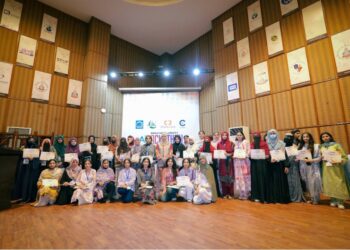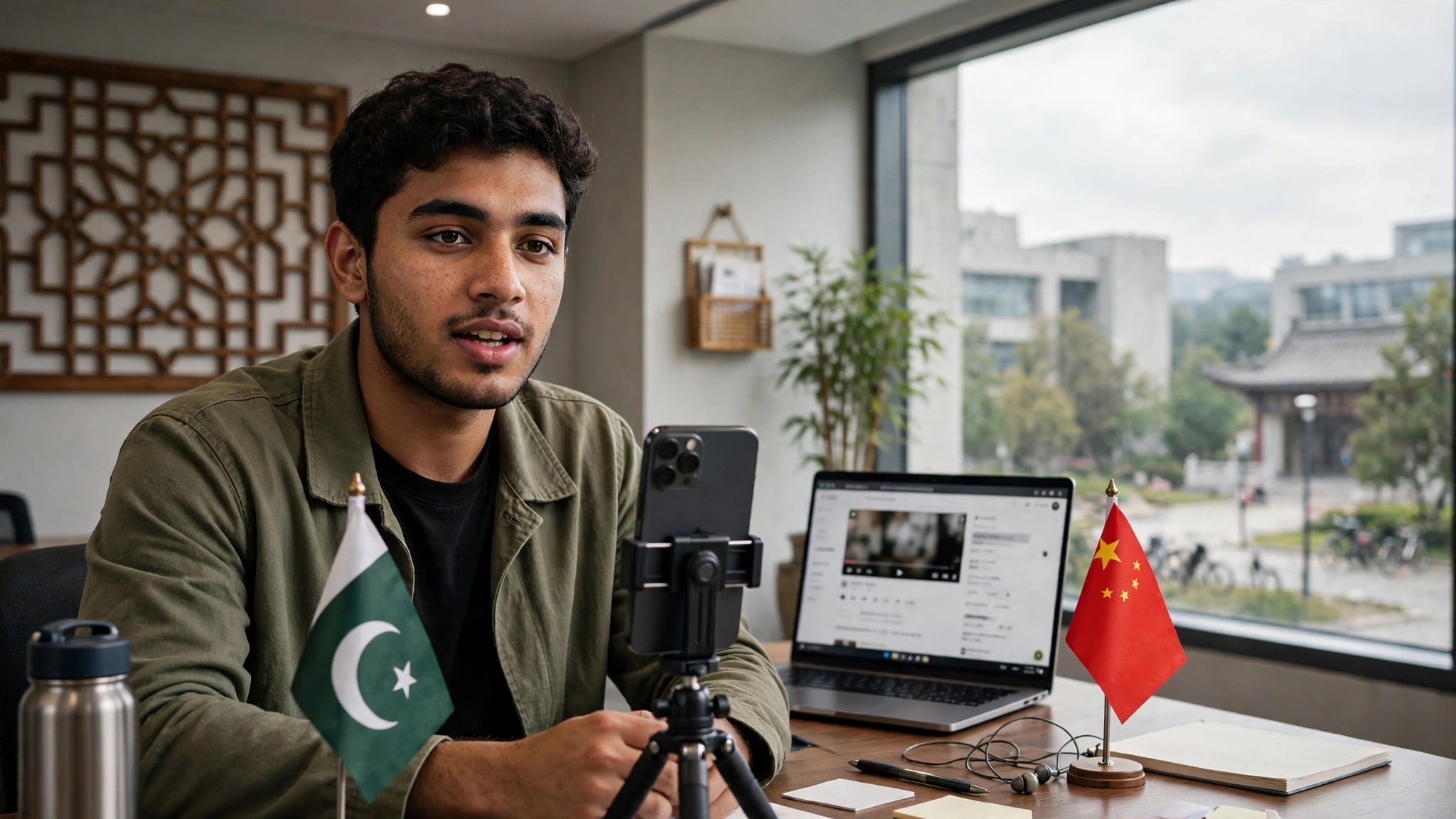
Pakistani creators in China have found a way to introduce their country to Chinese audiences through Mandarin-language videos. By sharing Pakistani food, tourism, traditions and everyday experiences, these creators offer viewers a personal perspective on life in Pakistan.
Younus Ghazali provides one documented example. In January 2021, his channel on Bilibili, one of China’s major video platforms, had attracted 85,000 subscribers. His videos explored Pakistani culture and tourism while highlighting differences between Pakistani and Chinese society.
His audience included Chinese viewers who could learn about Pakistan directly from a Pakistani student speaking their language. This approach offers a different perspective on cultural exchange, allowing individuals to share their experiences without relying entirely on official communication.
Two Stories of Cultural Exchange
The Associated Press of Pakistan (APP) reported on Ghazali and Muhammad Abubakar in January 2021. Both Pakistani students used their language skills and personal experiences to introduce Pakistan to Chinese audiences.
Ghazali studied at Yunnan Normal University in China. According to the APP report, he began making videos in April 2020. His initial motivation was to express gratitude for China’s assistance to Pakistan during the COVID-19 pandemic.
He later expanded his content to cover Pakistani food, tourism, traditions and daily life. His videos also explored differences between the two societies, giving viewers a glimpse into his personal experiences.
Muhammad Abubakar, a 27-year-old creator from Lahore at the time of the report, studied Chinese language and culture at Yanshan University.
Abubakar noticed a gap between the strong relationship Pakistan and China shared at the government level and the understanding their people had of each other. He used his videos to help bridge that gap.
Both creators also recognised the goodwill many Chinese viewers already felt towards Pakistan. Abubakar attributed his popularity partly to the affection Chinese people had for Pakistan.
Their experiences show how language skills and personal storytelling can help people understand another culture. Rather than speaking on behalf of governments, these creators shared their own observations and experiences.
How Bilibili Supports Digital Cultural Exchange
Bilibili provides a platform where creators can reach Chinese-speaking audiences through video content. Its creator community includes videos about everyday experiences, personal stories and lifestyle.
The platform has also introduced creator-development initiatives and vlogging activities to encourage original content. These efforts provide useful context for understanding the environment in which Pakistani creators in China have shared their experiences.
Personal storytelling fits naturally into this format. A Pakistani student can discuss local food, university life or cultural traditions in Mandarin, giving viewers an accessible introduction to another society.
However, this does not mean Bilibili provided special support to Pakistani creators. The available reporting does not establish that Ghazali or Abubakar received preferential treatment from the platform.
Their experiences instead demonstrate how individuals can use an existing digital platform to communicate across linguistic and cultural boundaries.
What the Evidence Reveals About Pakistani Creators in China
The available evidence has an important limitation: much of the documented information dates to January 2021.
The Associated Press of Pakistan reported Ghazali’s subscriber count and Abubakar’s activities at that time. These details provide a historical snapshot, not their current audience figures.
No independently verified, more recent subscriber counts for either creator could be established from the sources reviewed for this article.
Information about other Pakistani creators producing comparable Mandarin-language content also remains limited. Online references sometimes describe Pakistani-Chinese influencers as popular without providing verifiable identities, reliable audience figures or sufficient evidence of nationality.
These gaps make it difficult to assess the overall scale of this activity.
It would be premature to describe the examples as proof of a rapidly expanding Pakistani creator community in China. The available evidence does not establish how many creators currently produce similar content or how their audiences have changed since 2021.
What the evidence does establish is more specific: at least two Pakistani students used Mandarin-language videos to introduce their country to Chinese viewers and attracted documented interest on a major Chinese platform.
Whether this pattern has expanded, declined or remained under-documented requires further research.
Digital Storytelling and Pakistan-China Relations
Pakistani creators in China represent one example of how digital media can contribute to people-to-people communication between the two countries.
Pakistan Observer’s coverage of cultural cooperation has highlighted the role of media, digital communication and cultural exchanges in strengthening mutual understanding. Discussions about broader cooperation have also included opportunities for exchanges involving journalists and content creators.
This wider context helps explain why individual digital storytellers matter to Pakistan-China relations. Their videos can introduce audiences to another society through personal experiences rather than formal diplomatic messaging.
However, individual activity should not be confused with government-led cooperation. The available reporting does not establish that Ghazali or Abubakar participated in a formal creator-exchange programme.
Similarly, discussions about potential media initiatives do not prove that specific programmes have been implemented. Independent creators and official cultural programmes may support similar objectives without operating under the same arrangements.
The documented cases therefore represent individual contributions to a broader conversation about cultural exchange.
Why Pakistani Creators Matter to Chinese Audiences
The experiences of Ghazali and Abubakar demonstrate a practical form of digital cultural exchange.
Both creators discussed familiar subjects, including food, tourism, traditions, university life and differences between Pakistani and Chinese society. These everyday topics gave Chinese viewers a personal introduction to Pakistan.
For example, a video about Pakistani food can introduce viewers to local dishes and eating traditions. A discussion about university life can reveal similarities and differences between students in the two countries.
Such content does not replace journalism, educational exchanges or formal diplomacy. Instead, it provides another way for people to learn about a country through the experiences of someone who lives its culture.
Language also plays an important role. By speaking Mandarin, Pakistani creators can communicate directly with Chinese viewers without requiring every message to pass through translation.
This direct communication can make cultural stories more accessible and personal. It also gives creators an opportunity to explain their own experiences rather than rely solely on outside descriptions of Pakistan.
A Small but Tangible Form of Cultural Exchange
The available evidence does not yet establish a large or fully documented ecosystem of Pakistani creators on Chinese platforms. However, the documented experiences of Ghazali and Abubakar show how individual creators can reach audiences across national and linguistic boundaries.
Their work highlights a straightforward idea: people can build cultural understanding by sharing their everyday experiences in a language their audience understands.
For Pakistan-China relations, this represents a modest but tangible form of digital cultural exchange. These creators have shown how personal stories can complement official engagement and introduce Pakistan to Chinese audiences, one video at a time.
Read More Articles :
Breaking the Double-Standard Lens on China’s Population Shifts
CIIE 2026 Could Open New Trade Opportunities for Pakistani Exporters in China