
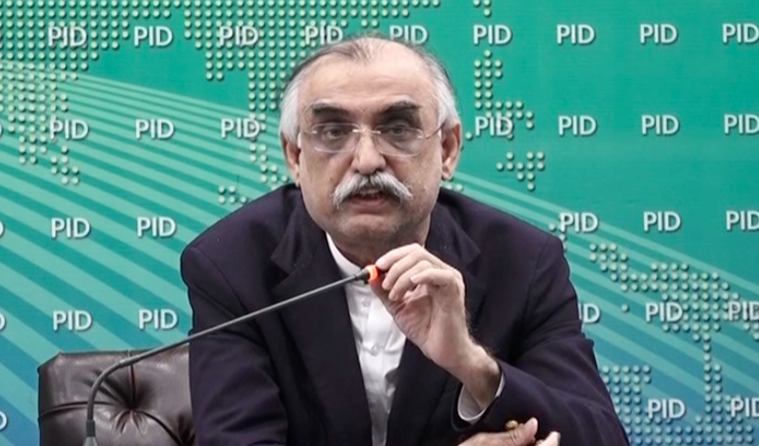
An old video featuring Pakistani economist and former Federal Board of Revenue (FBR) chairman Shabbar Zaidi is being reshared on social media over Pakistan’s trade ties with China. The video is being circulated with misleading context, creating a false impression about his remarks and their timing. Its renewed circulation also risks being used to create distrust in Pakistan-China relations and disrupt the strong economic and strategic partnership between the two countries.
Social media posts have attributed the statement, “End trade relations with China and your economy will recover,” to Zaidi.
However, the video is not recent. Its renewed circulation removes the original context and creates a misleading impression about both the timing of the remarks and Pakistan’s current relationship with China.
Zaidi’s Views Predate the Current Debate
Zaidi has previously expressed concerns about Pakistan’s economic structure, trade deficit and dependence on imports. His discussions have also addressed CPEC and China’s wider Belt and Road Initiative.
A 2023 discussion featuring Zaidi covered these issues and showed that his views on Pakistan’s economic relationship with China were part of a broader debate about economic policy.
Therefore, presenting the resurfaced clip as a new statement can mislead audiences about his position and its relevance to current Pakistan-China relations.
CPEC Goes Beyond Imports
A key point often missed in criticism of CPEC is that the initiative is not simply a trade arrangement.
The China-Pakistan Economic Corridor (CPEC) has supported investment in energy, transport infrastructure, connectivity and other development areas. Its next phase, commonly known as CPEC 2.0, places greater emphasis on industrialisation, agriculture, technology, Special Economic Zones and business-to-business investment.
This creates opportunities for Pakistan to move from importing finished products toward producing more goods domestically.
CPEC Can Help Expand Pakistani Exports
Pakistan’s challenge is not simply how much it imports from China. The bigger question is how effectively Pakistan can use Chinese investment, technology and market access to strengthen its own productive capacity.
For example, cooperation in agriculture can support modern farming and food processing. Technology partnerships can help Pakistani companies improve productivity. Industrial cooperation can also create opportunities for local manufacturing.
Furthermore, access to Chinese markets could help Pakistani exporters expand beyond traditional products.
A stronger export base would gradually address the trade imbalance more effectively than simply cutting economic ties.
Infrastructure Creates Long-Term Economic Value
CPEC has also contributed to Pakistan’s connectivity through roads, energy projects and other infrastructure.
Improved connectivity can reduce transportation costs and link producers with domestic and international markets. Energy projects have also addressed important constraints that previously affected industrial activity.
These investments should therefore be assessed through their long-term economic impact, rather than only through the annual trade balance.
Pakistan-China Ties Remain Broad
Pakistan and China maintain an all-weather strategic cooperative partnership that extends well beyond trade.
Their cooperation includes infrastructure, energy, agriculture, defence, education, technology, healthcare and regional connectivity.
China has also remained an important investment and development partner for Pakistan.
Consequently, the relationship should be evaluated on the basis of its overall economic and strategic value rather than through a single trade-deficit indicator.
Verdict: Old Video, Misleading Context
CPEC should instead be viewed as a platform that can help Pakistan strengthen infrastructure, attract investment, develop industries and expand exports.