

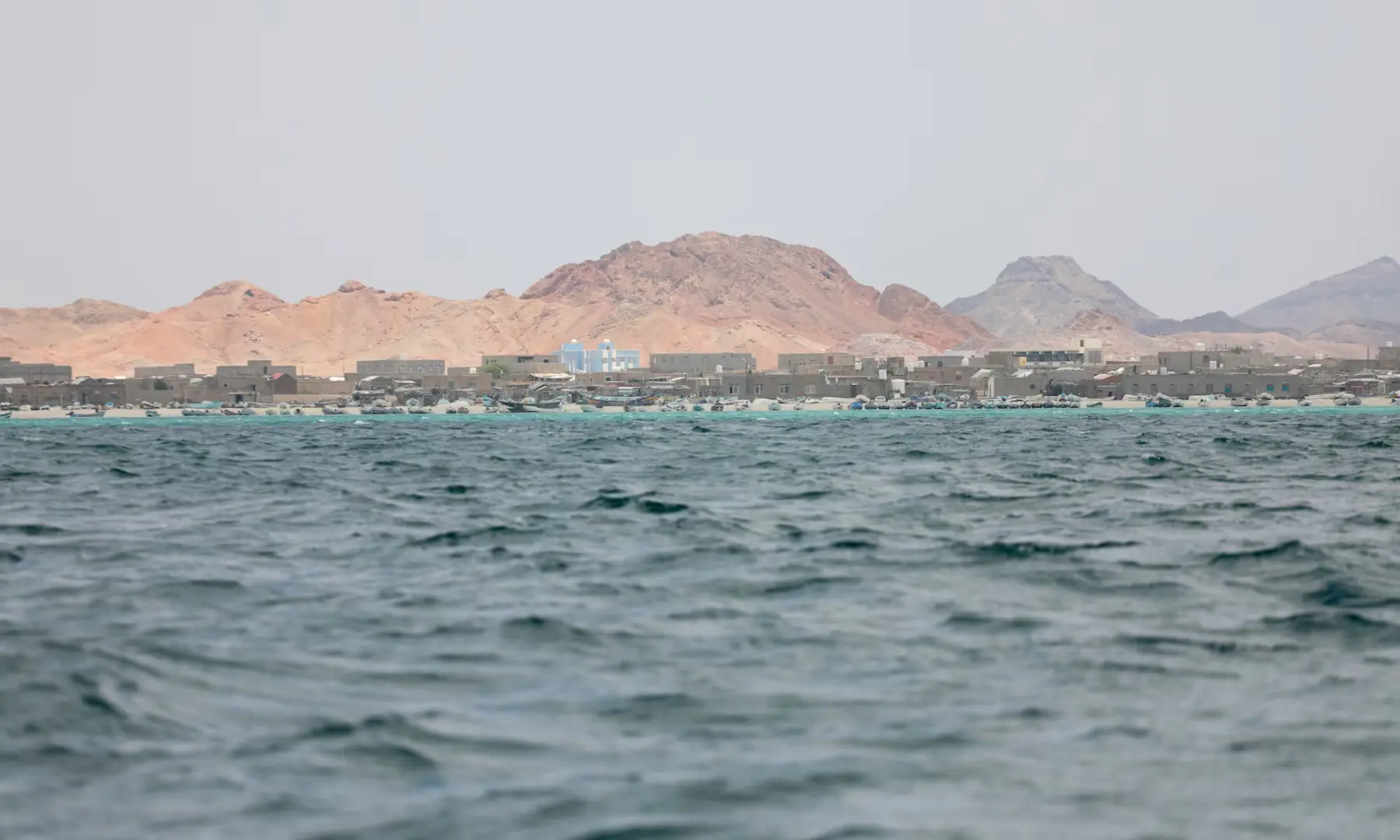
The Red Sea crisis is becoming an increasingly important concern for Pakistan as Yemen’s Houthi movement expands its presence along the country’s western coastline and moves closer to the Bab el-Mandeb Strait.
The latest escalation is significant because Bab el-Mandeb is one of the world’s major maritime chokepoints. The strait connects the Red Sea with the Gulf of Aden and provides an important link between the Indian Ocean, the Suez Canal and European markets.
On September 10, Reuters reported that Houthi forces had captured the Red Sea port of Mocha and advanced towards strategic islands near Bab el-Mandeb. Five days later, Reuters reported that the Houthis had strengthened their position around the strait, raising fresh concerns about international shipping.
For Pakistan, the developments have a direct human and economic dimension. Pakistani sailors have already been killed in attacks on commercial vessels in the region, while Islamabad has repeatedly called for the protection of commercial shipping. China, meanwhile, has pursued direct contacts with the Houthis to protect the movement of its vessels.
The crisis therefore extends beyond Yemen. It touches Pakistan’s maritime interests, China’s trade routes, energy security and the wider connectivity that underpins regional commerce.
Why Bab el-Mandeb Matters
Bab el-Mandeb is the southern gateway to the Red Sea. Ships using the Suez Canal to move between Asia and Europe generally pass through this route before entering or leaving the Red Sea.
Its importance became particularly clear after attacks on commercial shipping began disrupting the route in late 2023. UN Trade and Development reported in 2024 that the Red Sea crisis was causing major disruption to global shipping, while the IMF reported that trade through the Suez Canal fell by 50 percent year-on-year during the first two months of 2024.
The disruption forced many shipping companies to take longer routes around the Cape of Good Hope. That increases sailing distances, fuel consumption and operating costs.
The effects can extend far beyond the immediate conflict zone. Higher freight and insurance costs can feed into the prices of imported goods, while longer routes can delay deliveries and place additional pressure on already stretched supply chains.
The Latest Houthi Advance
The current situation is different from the earlier phase of the Red Sea crisis because the Houthis are now seeking greater control over territory along Yemen’s western coast.
Reuters reported on September 10 that Houthi forces had captured Mocha, a strategically located port city, and advanced towards the Hanish islands. On September 11, Reuters reported that Houthi forces had reached Perim, an island located directly in the Bab el-Mandeb Strait.
The geographical significance is considerable. Control or influence over territory surrounding the strait could provide the Houthis with greater capacity to threaten or disrupt commercial traffic.
Reuters reported on September 16 that the Houthi offensive had strengthened the position of the movement’s leadership and increased concerns over global trade through Bab el-Mandeb.
That does not mean all shipping through the Red Sea has stopped. But the growing military presence around a major maritime chokepoint increases the risks faced by commercial operators and can influence decisions about whether ships use the route.
Pakistan Has a Direct Stake
On July 23, Pakistan’s Foreign Office said Islamabad viewed threats to commercial shipping in the Red Sea as a serious matter and stressed the importance of freedom of navigation. It also said that any attack on Pakistani vessels would be a red line for Pakistan.
The concern became more immediate in August when commercial vessel came under repeated Houthi attacks while sailing through the Bab el-Mandeb Strait on August 11. Pakistan’s Foreign Office confirmed that Pakistani nationals were among those killed and injured. Subsequent reporting by Arab News said three Pakistani sailors were killed, while six injured sailors were later repatriated to Pakistan.
The incident demonstrated how instability in a distant maritime corridor can directly affect Pakistani citizens. It also gives Islamabad a practical reason to maintain diplomatic engagement on Red Sea security. Pakistan needs international shipping routes to remain open not only for trade, but also for the movement of energy and other essential imports.
Pakistan’s Saudi Arabia Connection
The Red Sea crisis is also connected to Pakistan’s longstanding relationship with Saudi Arabia. The latest Houthi offensive has placed additional pressure on Saudi Arabia because the kingdom relies heavily on maritime routes for international energy trade. Reuters reported that the Houthi advance towards Bab el-Mandeb was creating new risks for Saudi oil exports and other commercial shipping.
For Islamabad, this creates a diplomatic balancing act. Pakistan has strong ties with Saudi Arabia but has also maintained channels of communication with Iran, which has close political ties with the Houthis. Reuters reported on September 10 that Pakistan had urged Iran to rein in Houthi attacks after conveying Saudi concerns to Tehran. Iranian officials have disputed the idea that they exercise direct control over Houthi operations.
Pakistan’s approach has therefore combined support for maritime security with an emphasis on diplomacy and regional stability.
China’s Role Is Particularly Significant
China’s response adds another important dimension to the crisis. On July 28, Reuters reported that China had opened direct contacts with the Houthis in an effort to secure safe passage for Chinese oil tankers travelling through the Red Sea. According to sources cited by Reuters, Chinese officials were working through contacts involving Iran, while several Chinese-linked vessels had reportedly received assurances about passage.
China did not publicly confirm the details of the reported arrangement. However, Chinese Foreign Ministry spokesperson Mao Ning said on July 29 that China had consistently called for peace and stability in the Red Sea and for the safety of commercial shipping.
The episode illustrates Beijing’s preference for protecting its commercial interests through diplomatic channels where possible. China is deeply dependent on maritime trade and imports large quantities of energy. Maintaining access to major sea lanes is therefore an economic priority, particularly when disruptions can increase transport costs and complicate energy supplies.
What It Means for Pakistan-China Relations
The Red Sea crisis also provides a wider context for Pakistan-China economic cooperation. CPEC has positioned Gwadar and Pakistan’s Arabian Sea coastline within China’s broader vision of regional connectivity. But ports and transport corridors do not operate in isolation. Their economic value depends partly on the wider maritime networks connecting South Asia with the Middle East, Africa and Europe.
This does not mean that the Red Sea crisis directly threatens CPEC or that Gwadar depends on the Bab el-Mandeb route. The connection is more indirect but still important.
A prolonged disruption in the Red Sea can increase shipping costs, alter vessel routes and affect energy markets. Those pressures can influence the broader cost of international trade, including for countries connected to global maritime supply chains.
For Pakistan, the crisis therefore reinforces the importance of developing reliable maritime infrastructure while also paying greater attention to the security of the sea lanes surrounding its wider trading environment.
The Energy Dimension
Energy is another reason the Red Sea crisis matters to Islamabad. Pakistan remains dependent on imported energy, meaning international oil prices and shipping costs can have consequences for the domestic economy. When maritime routes become more expensive or less predictable, the additional cost can eventually reach importers and consumers.
The current Red Sea escalation is occurring alongside wider disruption in the Middle East. UNCTAD reported in 2025 that Suez Canal tonnage remained around 70 percent below 2023 levels as shipping continued to adjust to the Red Sea crisis. The organisation also noted that rerouting had pushed global vessel activity towards longer distances.
The lesson for Pakistan is straightforward: maritime security and economic security are increasingly connected. A disruption thousands of kilometres away can affect freight rates, insurance, fuel costs and the reliability of supply chains reaching Pakistan.
A Shared Maritime Concern
China and Pakistan do not have identical interests in the Red Sea crisis, but there is a clear area of overlap. China is seeking to keep its commercial shipping and energy supplies moving. Pakistan wants to protect its citizens, maintain access to international trade and avoid a wider regional conflict that could increase economic pressure.
Both countries also have an interest in regional connectivity. China’s response has so far included direct engagement with the Houthis, while Pakistan has relied more heavily on diplomatic contacts with Saudi Arabia, Iran and other regional partners. These approaches reflect different positions, but both demonstrate the importance of keeping maritime routes open.
For Pakistan, maintaining strong communication with China can also provide an important channel for discussing wider developments affecting the region’s trade and connectivity environment.
Why the Red Sea Matters to Pakistan
The Houthi advance has transformed the Red Sea crisis from a shipping-security problem into a wider regional issue. Developments around Mocha, Perim and the Bab el-Mandeb Strait now have implications for Saudi Arabia, Iran, China, Pakistan and international shipping.
For Islamabad, the immediate priorities are protecting Pakistani citizens and commercial interests, maintaining secure maritime routes and supporting diplomatic efforts that can prevent further escalation.
For China, the priority is similarly connected to the security of trade and energy routes, although Beijing is pursuing its interests through its own diplomatic channels. The crisis ultimately highlights a broader reality for Pakistan. CPEC and Gwadar can strengthen the country’s position as a regional connectivity hub, but infrastructure alone cannot guarantee connectivity. Roads, ports and trade corridors also depend on a stable international maritime environment.
As tensions around Bab el-Mandeb continue, the security of the wider Indian Ocean and Middle Eastern sea lanes will remain an important part of Pakistan’s economic and strategic outlook.
Read More Articles:
Pakistan, China Boost Police Training Cooperation