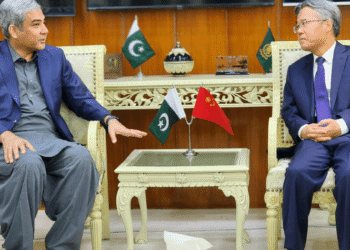

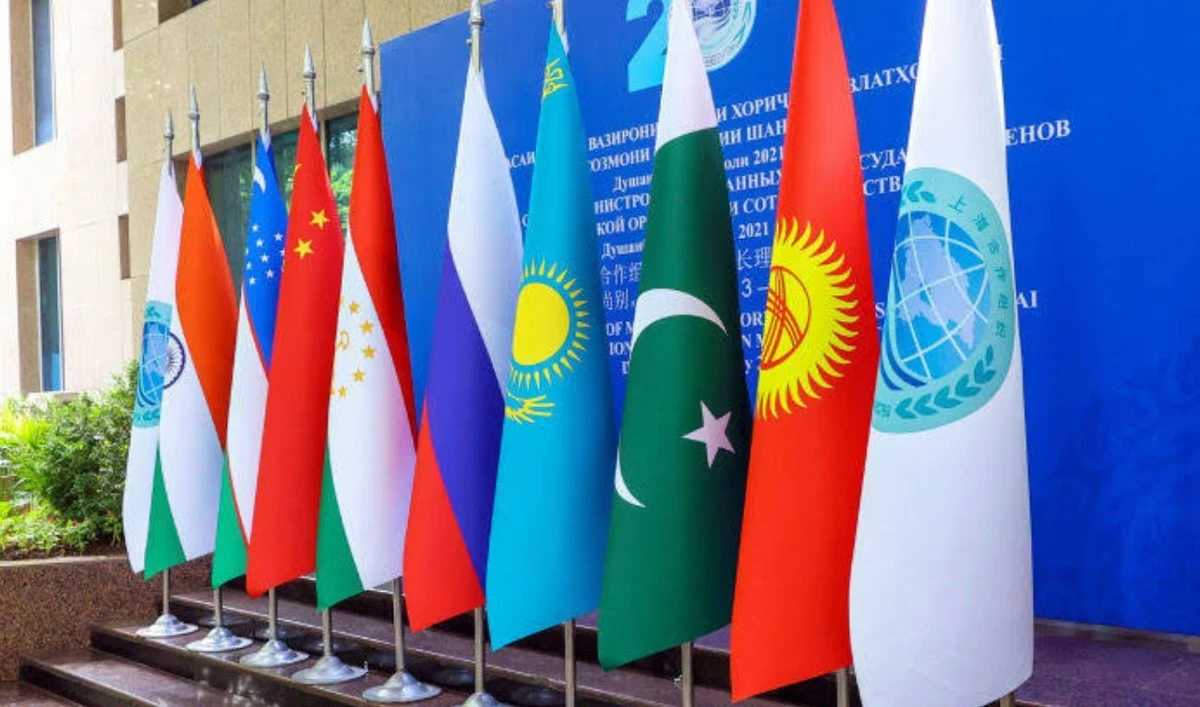
Pakistan has begun its rotating chairmanship of the Shanghai Cooperation Organisation (SCO) with a clear diplomatic opportunity to strengthen regional connectivity, economic cooperation and its position in Eurasian affairs. However, the real measure of its performance will be the practical outcomes it delivers before hosting the organisation’s next Council of Heads of State summit in Islamabad in August 2027.
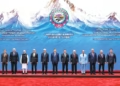
The chairmanship follows the 26th SCO Heads of State Council meeting held in Bishkek, Kyrgyzstan, on September 1, 2026. The summit was chaired by Kyrgyz President Sadyr Japarov, while Prime Minister Shehbaz Sharif represented Pakistan. Following the meeting, Pakistan assumed the rotating chairmanship for 2026–2027.
Pakistan has adopted the theme “Turning Vision into Action: Connectivity, Innovation and Shared Prosperity”, signalling its intention to prioritise economic integration, transport infrastructure, technological cooperation and people-to-people engagement.
The challenge is to turn these priorities into measurable achievements rather than another series of diplomatic declarations.
What the Bishkek Summit Revealed About the SCO
The Bishkek summit produced 28 outcome documents, including the Bishkek Declaration and a protocol amending the SCO Charter. The agreements covered institutional development, regional security, economic cooperation, environmental issues and other areas of collaboration.
The outcomes demonstrated the organisation’s ability to maintain consensus among countries with different political systems, strategic interests and foreign policy priorities.
However, the summit also highlighted the limitations of this consensus-based approach. Although member states have supported the establishment of an SCO Development Bank, its operational structure and financial arrangements remain under discussion.
The issue is significant because the organisation needs effective financial mechanisms to translate regional economic ambitions into infrastructure and development projects.
The SCO also continues to rely heavily on diplomatic language when addressing sensitive geopolitical disputes. Its ability to maintain dialogue among countries with competing interests is an important strength, but institutional development often moves more slowly than political declarations.
For Pakistan, this creates both an opportunity and a responsibility. Its chairmanship can help move discussions towards practical cooperation while maintaining the consensus required to keep all member states engaged.
Pakistan’s Connectivity Agenda and the Strategic Importance of Its Ports
Connectivity is central to Pakistan’s chosen chairmanship theme. The country aims to strengthen its position as a regional trade and transit gateway by connecting Central Asian economies with international maritime markets.
Central Asia is landlocked, while Russia is seeking to diversify its trade and transport connections towards Asian and southern markets. Pakistan’s ports of Karachi, Port Qasim and Gwadar could provide additional access to the Arabian Sea and international shipping routes.
The SCO has already been discussing an Action Plan for the Development of Ports and Logistics Centres for 2026–2030. The proposed framework aims to improve transport and logistics services, strengthen regional trade and develop cooperation among member states.
For Pakistan, promoting this initiative as an SCO-wide connectivity framework rather than presenting it exclusively as a national or CPEC-linked proposal could help broaden regional participation.
This distinction is particularly relevant because India has historically objected to connectivity initiatives associated with CPEC on sovereignty grounds, specifically because the corridor passes through Gilgit-Baltistan, which India claims as part of its territory.
A multilateral approach could provide a wider platform for discussing transport cooperation among SCO members, although it would not automatically remove existing political disagreements.
The proposed ports and logistics framework should therefore be judged by its practical outcomes. These include transit facilitation, customs coordination, infrastructure access, cargo handling arrangements and reliable cross-border transport procedures.
Without these measures, the initiative risks becoming another policy document with limited economic impact.
Afghanistan Is a Critical Test for Regional Connectivity
Pakistan faces a major contradiction in its connectivity ambitions: it wants to serve as a gateway for Central Asian trade while its relationship with Afghanistan remains deeply strained.
Several important overland routes connecting Pakistan with Central Asia depend on transit through Afghanistan. The proposed Trans-Afghan Railway, for example, would connect Uzbekistan with Pakistan through Afghan territory, potentially providing a new route towards Pakistani ports.
However, persistent security concerns, border tensions and interruptions to bilateral trade have weakened the reliability of this corridor.
Pakistan accuses Afghan authorities of allowing militant groups, particularly the Tehreek-e-Taliban Pakistan (TTP), to operate from Afghan territory. Kabul rejects these allegations. The resulting tensions have disrupted trade and undermined regional connectivity.
Pakistan’s Ministry of Commerce acknowledged in November 2026 that the suspension of bilateral and transit trade with Afghanistan had adversely affected exports and regional connectivity.
The consequences extend beyond the two countries. Afghanistan has increasingly explored alternative trade routes through Iran and Central Asia, while Pakistan risks losing opportunities to serve as a major regional transit gateway.
Pakistan’s SCO chairmanship could provide an opportunity to approach Afghanistan-related challenges through a wider regional framework.
Several neighbouring countries share concerns about militancy, border instability and the movement of extremist groups. This creates scope for discussions on regional security, intelligence cooperation, border management and economic stability.
However, Pakistan would need to combine its security concerns with diplomatic engagement. Sustainable connectivity requires cooperation with Afghanistan, not simply the expectation that Kabul will accommodate Islamabad’s demands.
A workable regional approach would need to address security concerns while offering practical economic incentives, transit arrangements and confidence-building measures.
Pakistan and Russia Can Strengthen Their Economic Partnership
Pakistan’s relationship with Russia is another area where the SCO could provide an institutional platform for cooperation.
Bilateral relations have gained momentum through diplomatic exchanges and discussions on trade, energy, investment and security.
In October 2026, Russian Interior Minister Vladimir Kolokoltsev visited Pakistan, marking the first visit by a Russian interior minister to the country. During the visit, the two sides discussed cooperation against organised crime, intelligence sharing, anti-narcotics efforts and other security matters. They also agreed to work towards further agreements on extradition and the transfer of convicted individuals.
The visit reflected a broader effort to strengthen bilateral engagement beyond traditional diplomatic relations.
The SCO could help institutionalise this cooperation through multilateral discussions on transport, trade, energy and regional security.
However, Pakistan should recognise that Russia already has access to established and developing transport networks, particularly the International North–South Transport Corridor (INSTC), which links Russia with Iran and South Asia through a multimodal transport system.
Pakistan’s proposed routes should therefore be viewed as complementary options rather than replacements for Russia’s existing corridors.
For Moscow to consider Pakistan a reliable trade and transit partner, Islamabad will need to address practical requirements, including payment mechanisms, customs procedures, transport infrastructure and predictable transit arrangements through Afghanistan.
The credibility of Pakistan’s connectivity agenda will ultimately depend on its ability to provide reliable services rather than simply geographical advantages.
The SCO Development Bank Could Become Pakistan’s Biggest Economic Achievement
One of the most important priorities for Pakistan’s chairmanship is progress on the proposed SCO Development Bank.
The idea received political support at the SCO summit in Tianjin in September 2025. Since then, member states have continued discussions on the institution’s operational structure, participation and financial arrangements.
The fifth round of consultations took place in Hangzhou, China, on September 14–15, 2026, under the joint chairmanship of China and Pakistan. Representatives from 29 countries and officials of the SCO Secretariat participated in the discussions.
The Bishkek Declaration subsequently acknowledged progress and called for continued work on establishing the bank.
However, the institution has not yet become operational. Important questions remain concerning its founding structure, capital contributions, governance arrangements, membership and lending framework.
For Pakistan, reaching an agreement on the bank’s establishment or securing a concrete founding arrangement before the Islamabad summit would represent a major economic achievement.
Such an institution could potentially support regional infrastructure, energy, transport, industrial development and other cross-border projects.
It could also strengthen financial cooperation among member states and provide another channel for mobilising development resources.
Nevertheless, establishing a development bank requires agreement on complex financial and institutional issues. Pakistan’s chairmanship will need to build consensus rather than rush towards a symbolic announcement without a workable framework.
India’s Participation Will Test Pakistan’s Diplomatic Leadership
The August 2027 Islamabad summit will be another important test of Pakistan’s chairmanship.
As host, Pakistan will be responsible for inviting all SCO member states, including India, and ensuring that the summit provides a functional platform for regional dialogue.
India participated in the SCO Council of National Coordinators meeting held in Islamabad from September 28 to 30, 2026. The meeting reviewed activities under Pakistan’s chairmanship and preparations for upcoming organisational engagements.
The participation demonstrated that institutional cooperation within the SCO can continue despite serious bilateral disagreements between Pakistan and India.
Persuading Indian Prime Minister Narendra Modi to attend the 2027 summit may prove difficult. However, India’s participation would strengthen the credibility of Pakistan’s chairmanship and demonstrate its ability to manage a multilateral organisation involving countries with competing interests.
A summit attended by all member states, despite political differences, would send a stronger message about the SCO’s regional relevance than an event affected by boycotts or diplomatic confrontations.
Pakistan must also ensure that the summit reflects the image of an open and accessible regional trading hub. Excessive security restrictions and logistical disruptions could undermine that message.
Universities and Think Tanks Can Strengthen SCO Cooperation
The success of Pakistan’s chairmanship should not depend exclusively on government meetings and high-level diplomatic engagements.
Universities, research institutions, think tanks and business associations across SCO member states can contribute to long-term regional cooperation.
Academic exchanges, joint research programmes, student mobility, conferences and policy dialogues can create stronger relationships beyond the annual summit cycle.
Track-II diplomacy can also provide opportunities for experts and former officials to discuss sensitive regional issues in a less formal environment.
These activities could support cooperation in areas such as regional connectivity, economic security, climate change, artificial intelligence, education and counterterrorism.
Pakistan’s universities and research institutions can use the chairmanship to strengthen academic partnerships with institutions in China, Russia, Central Asia and other SCO countries.
Such engagement would help make the organisation more relevant to businesses, researchers and ordinary citizens.
Three Benchmarks Will Determine Pakistan’s Success
Pakistan’s performance during its SCO chairmanship can be assessed against three practical benchmarks.
First, progress on the SCO Development Bank. Pakistan should work towards a concrete agreement on the bank’s founding structure, governance and operational framework. A financial breakthrough would provide an important institutional foundation for regional economic cooperation.
Second, implementation of the ports and logistics framework. The proposed 2026–2030 action plan should produce practical measures involving customs coordination, transit facilitation, infrastructure access and cross-border transport arrangements. Another communiqué without implementation would offer limited economic value.
Third, a successful Islamabad summit in August 2027. Pakistan must bring all member states to the table, manage political differences and demonstrate that it can provide effective leadership within a diverse regional organisation.
Progress on Afghanistan and Pakistan’s relations with Russia will also influence the success of these priorities, particularly because regional connectivity depends on political stability and reliable transport arrangements.
Pakistan Has an Opportunity to Become a Stronger Eurasian Connector
Pakistan has started its SCO chairmanship with an important diplomatic opportunity. Its geographical position, maritime infrastructure and growing engagement with China, Russia and Central Asian countries give it considerable potential to contribute to regional connectivity.
However, geography alone cannot make Pakistan a successful regional trade gateway. Reliable transit arrangements, security cooperation, predictable regulations and effective diplomacy are equally important.
The SCO provides Islamabad with a platform to address these challenges through multilateral engagement. Its chairmanship can also help strengthen Pakistan’s economic partnerships and improve its standing in Eurasian affairs.
The real test will come in August 2027, when Islamabad hosts the next Heads of State summit.
If Pakistan makes meaningful progress on the Development Bank, advances a workable ports and logistics framework and develops a credible regional approach to Afghanistan, its chairmanship could leave a lasting institutional and economic legacy.
Otherwise, it risks being remembered more for diplomatic ceremonies and declarations than for tangible achievements.
The opportunity is significant, but delivering results will determine whether Pakistan emerges as a credible Eurasian connector.