
The Asia-Pacific region has undergone significant economic transformation over the past three decades, with regional trade, investment and cross-border connectivity playing an increasingly important role in economic growth.
At the centre of this transformation is the Asia-Pacific Economic Cooperation (APEC) forum, established in 1989 to strengthen economic cooperation among economies along the Pacific Rim.
What began as an informal dialogue among 12 economies has developed into a regional platform bringing together 21 member economies to address shared economic challenges, promote trade and investment, and encourage sustainable development.
Today, APEC provides a forum for governments, businesses and other stakeholders to discuss policies and identify opportunities for deeper regional integration.
From 12 Founding Economies to a Regional Forum of 21
APEC’s origins date back to January 1989, when Australian Prime Minister Bob Hawke proposed stronger economic cooperation among Asia-Pacific economies during a speech in Seoul, South Korea.
Later that year, ministers from 12 economies gathered in Canberra, Australia, on November 6–7 to establish the forum.
The founding members were Australia, Brunei Darussalam, Canada, Indonesia, Japan, Malaysia, New Zealand, the Philippines, Singapore, South Korea, Thailand and the United States.
Membership subsequently expanded. China, Hong Kong, China, and Chinese Taipei joined in 1991, followed by Mexico and Papua New Guinea in 1993. Chile joined in 1994, while Peru, Russia and Vietnam became members in 1998.
This expansion brought APEC’s membership to 21 economies, representing a diverse range of economic systems, development levels and regional interests.
Advancing Trade and Regional Economic Integration
One of APEC’s central objectives is to make trade and investment easier across the Asia-Pacific region.
Its cooperation focuses on reducing trade barriers, improving customs procedures, simplifying business regulations and encouraging the movement of goods, services, investment and people across borders.
In 1994, APEC leaders adopted the Bogor Goals in Indonesia, setting targets for free and open trade and investment by 2010 for industrialised economies and 2020 for developing economies.
The initiative helped establish a shared framework for reducing tariffs and strengthening regional economic integration.
According to APEC, average tariffs across member economies declined from 17 percent in 1989 to 5.3 percent in 2021. During the same period, merchandise trade among member economies increased more than ninefold.
These changes reflect the region’s growing economic interdependence and the contribution of trade liberalisation and cooperation to regional development.
Three Pillars of APEC Cooperation
APEC’s work traditionally centres on three major areas: trade and investment liberalisation, business facilitation, and economic and technical cooperation.
Together, these pillars provide a framework for improving market access, reducing business costs and strengthening the capacity of member economies.
The forum also supports cooperation in areas such as digital transformation, supply-chain resilience, energy security, environmental protection, food systems and human development.
Unlike a treaty-based trade organisation, APEC operates through voluntary cooperation and consensus. Its decisions are not legally binding, allowing economies with different economic structures and policy priorities to participate in regional initiatives.
APEC Putrajaya Vision 2040 Sets Long-Term Direction
In 2020, APEC leaders adopted the Putrajaya Vision 2040, establishing a long-term framework for building an open, dynamic, resilient and peaceful Asia-Pacific community.
The vision identifies three economic drivers:
- Trade and investment: Strengthening free and open trade, regional economic integration and market access.
- Innovation and digitalisation: Supporting technological development, digital connectivity and innovation-led growth.
- Strong, balanced, secure, sustainable and inclusive growth: Promoting development that benefits communities across the region while addressing environmental and economic challenges.
The vision aims to ensure that regional cooperation continues to support prosperity and opportunities for future generations.
China Hosts APEC 2026 Under Community-Building Theme
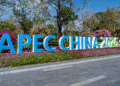
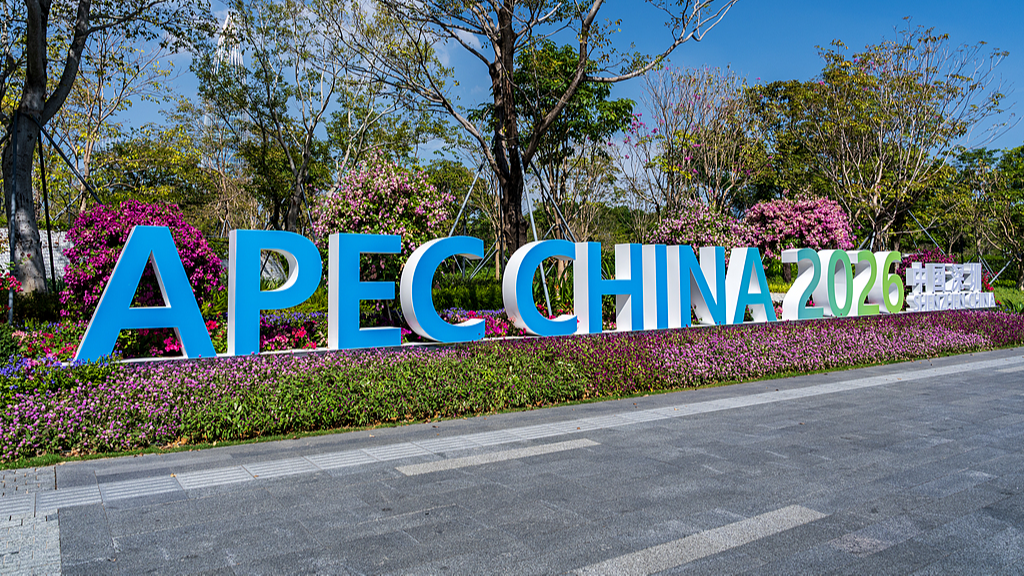
China is hosting APEC in 2026 under the theme “Building an Asia-Pacific Community to Prosper Together.”
The host economy has identified three priorities: openness, innovation and cooperation.
These priorities cover trade and investment, digital transformation, technological development, sustainable growth and stronger regional connectivity.
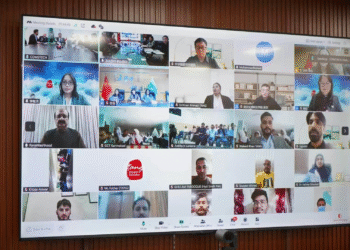
Throughout 2026, APEC members have held ministerial meetings, senior officials’ discussions and technical sessions to advance cooperation across these areas.
The APEC Economic Leaders’ Meeting is scheduled for November 18–19 in Shenzhen, bringing regional leaders together to discuss economic cooperation and the future direction of the forum.
Building a More Connected and Resilient Region
The Asia-Pacific region faces shared challenges, including economic uncertainty, supply-chain disruptions, climate change, technological competition and uneven development.
APEC provides a platform for member economies to exchange policy experiences, coordinate responses and explore practical solutions to these issues.
Its continued work on trade facilitation, digital infrastructure, innovation, sustainable development and regional connectivity reflects the changing needs of the global economy.
As APEC approaches its next phase of cooperation, the Putrajaya Vision 2040 provides a common direction for building a more integrated, resilient and inclusive regional economy.
Ultimately, the goal of building an Asia-Pacific community goes beyond increasing trade. It seeks to strengthen economic relationships, expand opportunities and ensure that regional cooperation contributes to shared prosperity across the Pacific region.
Read More Articles:
Pakistan Puts Karachi, Gwadar Ports at Centre of ECO Trade Push