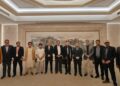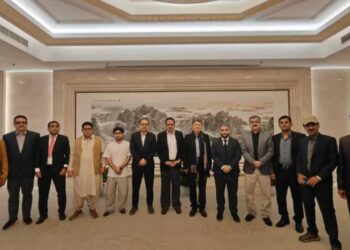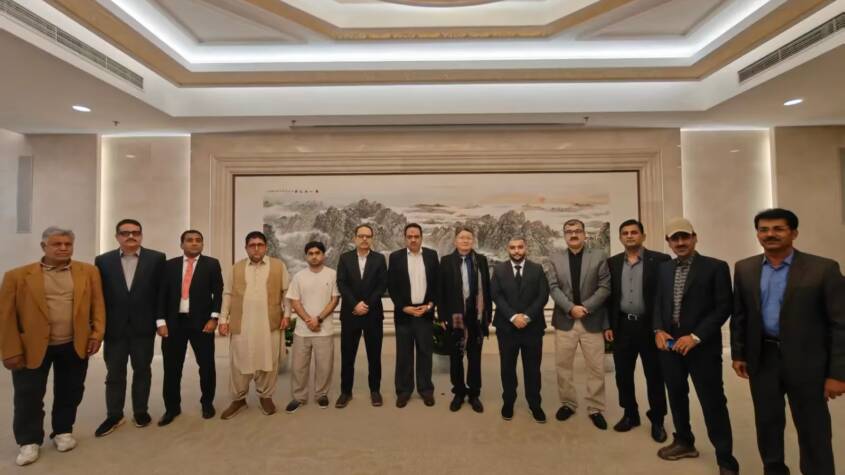
A Pakistani delegation comprising foreign affairs expert Muhammad Mehdi and officials from Balochistan has visited China to explore opportunities for strengthening bilateral relations, developing Gwadar Port and expanding trade between the two countries.
The visit was organised by the Chinese Embassy in Islamabad at the invitation of the Chinese government. During their stay in Beijing, the delegation met officials from China’s Ministry of Foreign Affairs, Tianjin University and other government and business institutions.
The discussions covered the China-Pakistan Economic Corridor (CPEC), regional connectivity, port infrastructure, maritime trade, security and economic cooperation.
The delegation met Cheng Wei, Counsellor in the South Asia Division of China’s Ministry of Foreign Affairs; Li Xiang, Deputy Director-General at the ministry; and Gao Yuqing, Director of the Tianjin International Trade and Shipping Centre.
According to a report published by the Associated Press of Pakistan, the meetings aimed to identify new opportunities for commercial cooperation and strengthen the longstanding relationship between Pakistan and China.
Gwadar Port’s Strategic Importance for Regional Trade
During the discussions, Muhammad Mehdi highlighted Gwadar’s geographical importance, describing it as more than a Pakistani seaport and a potential trade gateway to West Asia.
He said Gwadar could offer China one of the shortest maritime routes for trade with Europe and Africa, giving the port an important role in regional and international connectivity.
The discussions also covered opportunities to improve port infrastructure and strengthen maritime links between Pakistan and international markets.
Mehdi stressed that bringing Pakistan’s ports in line with modern international standards could create further opportunities for investment, trade and economic cooperation.
Gwadar is a central component of CPEC, which connects Pakistan’s Arabian Sea coastline with China’s Xinjiang region through a network of transport, energy and infrastructure projects.
The port’s development is intended to support maritime trade, logistics and economic activity in Balochistan. However, its potential as a regional trade hub will depend on continued infrastructure development, commercial activity and effective connectivity with domestic and international markets.
Pakistan-China Coordination on CPEC Security
Security was another important subject during the meetings.
Mehdi said the security situation in Balochistan was gradually improving because of strategies adopted by Pakistan’s security forces. However, he stressed that Pakistan and China needed a coordinated approach to address security challenges affecting CPEC projects.
The issue remains important for both countries because the safety of workers, infrastructure and investment is essential to the continuation of development activities.
China has repeatedly highlighted the importance of security cooperation with Pakistan as both countries work to advance CPEC.
The discussions during the delegation’s visit provided another opportunity to exchange views on protecting economic projects and strengthening coordination between the two sides.
Green Port Development and Sustainable Infrastructure
Mehdi also congratulated Chinese officials on Tianjin Port’s initiative to develop a zero-carbon terminal and expressed hope that similar environmentally sustainable projects could be introduced at Karachi and Gwadar ports.
China’s Tianjin Port has developed an integrated wind, solar and energy-storage system to supply its intelligent container terminal with renewable electricity.
According to China’s National Development and Reform Commission, the system was connected to the grid in December 2021. The terminal became the world’s first zero-carbon terminal powered entirely by electricity generated from renewable sources, including wind and solar energy.
The initiative demonstrates how renewable energy and modern technology can support more sustainable port operations.
Mehdi said adopting similar modern and environmentally friendly systems at Pakistan’s ports could help upgrade maritime infrastructure and create additional opportunities for cooperation with China.
Healthcare Cooperation and Gwadar’s Social Development
The delegation also discussed cooperation in healthcare and social development in Gwadar.
Gwadar Port Authority Director Qazi Nematullah appreciated China’s continued support for social welfare initiatives in the port city. He discussed opportunities to expand bilateral cooperation in healthcare, including the establishment of a hospital in Gwadar.
Himal Dashti, representing Gwadar Port Development, also thanked the Chinese officials and appreciated Mehdi’s detailed discussion of issues concerning the port city.
The healthcare discussions reflect the importance of linking infrastructure development with improvements in public services and local living conditions.
China has also highlighted projects involving healthcare, clean drinking water, transport infrastructure and other public facilities as part of its wider development cooperation in Gwadar.
Balochi Cultural Gifts Highlight People-to-People Ties
The visit also included a cultural exchange highlighting the historical friendship between Pakistan and China.
Hayat Murad, representing Pakistan Customs, presented traditional Balochi shawls and caps to the Chinese hosts and Muhammad Mehdi as gestures of friendship and goodwill.
The gifts showcased Balochistan’s cultural heritage and added a people-to-people dimension to the discussions.
The meetings highlighted the potential for stronger cooperation between Pakistan and China in trade, maritime infrastructure, healthcare, security and sustainable development.
Although no new agreement or investment commitment was announced in the reported meetings, the discussions provided an opportunity to identify areas for future cooperation, particularly in the development of Gwadar Port and the advancement of CPEC.
Read More Articles:
CPEC 2.0 Needs a Stronger Security Framework