HUBCO’s CPEC-Era Power Assets Deliver Billions in Returns
HUBCO CPEC power projects are providing a clearer picture of the financial returns from Pakistan’s China-backed energy investments. The Hub Power Company Limited (HUBCO) reported unconsolidated net profit of Rs24.47 billion for the financial year ended June 30, 2026, up from Rs19.08 billion a year earlier, while dividend income rose to Rs29.31 billion.
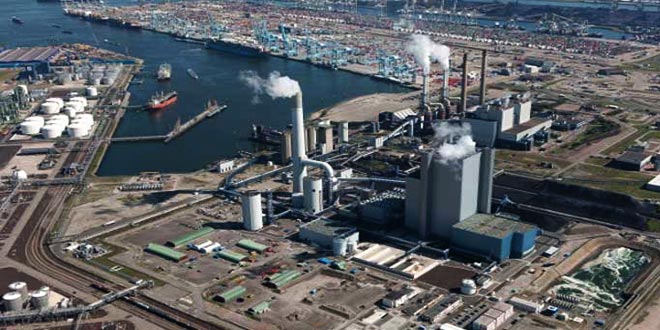
The results offer a useful measure of how investments in Pakistan’s power sector are contributing to the financial performance of a major domestic energy company. HUBCO’s portfolio includes China Power Hub Generation Company Limited (CPHGC), a 1,320-megawatt (MW) coal-fired power project developed as part of the China-Pakistan Economic Corridor (CPEC).
However, the figures require careful interpretation. HUBCO’s reported dividend income reflects returns from multiple investments, while its overall earnings also include contributions from associates and joint ventures. The company attributed the increase in unconsolidated profit primarily to higher dividend income from its Thar projects after they reached their respective project completion dates. The figures therefore demonstrate the performance of a broader investment portfolio, not the returns generated by a single CPEC project. HUBCO’s FY2026 financial results and Integrated Annual Report 2026 provide the underlying financial disclosures.
Which CPEC Power Project Is HUBCO Linked To?
CPHGC operates a 1,320MW imported-coal power plant comprising two 660MW units, alongside an integrated coal jetty at Hub in Balochistan. The project achieved commercial operations on August 17, 2019, and was developed through a joint venture involving HUBCO and China Power International Holdings.
According to HUBCO’s official project information, the company increased its shareholding in CPHGC from 26 per cent to 47.5 per cent in 2019 after raising Rs7 billion through a rights issue. HUBCO’s FY2026 annual report continues to identify a 47.5 per cent legal ownership interest in the project.
The plant is part of the energy infrastructure developed under CPEC’s first phase, when power generation was a central priority. Its operating history now provides a basis for examining the financial contribution of a major China-Pakistan energy investment beyond the construction and commissioning stages.
CPHGC’s significance extends beyond its installed capacity. Large power projects require sustained operations, fuel procurement, maintenance, financing and reliable arrangements for supplying electricity to the national grid. Their long-term economic value depends not only on completing construction but also on operating reliably and managing costs and financial obligations over time.
How Much Did CPHGC Contribute to HUBCO?
HUBCO’s FY2026 annual report records a share of profit of Rs38.79 billion from CPHGC, compared with Rs35.78 billion in FY2025. It also records Rs36.17 billion in dividends received from the joint venture.
These figures should not be confused with HUBCO’s unconsolidated dividend income of Rs29.31 billion. The two figures measure different things within different accounting contexts and cannot simply be added together or treated as interchangeable measures of cash received. The reported share of profit reflects HUBCO’s accounting share of the joint venture’s earnings, while dividends represent distributions from an investee company.
The distinction matters when assessing how CPEC-linked infrastructure contributes to a Pakistani company’s financial position. Accounting profit indicates a project’s reported profitability, but the timing and amount of cash distributions, financing requirements and future capital expenditure also influence the benefits ultimately available to investors.
CPHGC itself reported revenue from customer contracts of approximately Rs147.42 billion and profit of Rs81.67 billion for FY2026, according to HUBCO’s annual report. These figures indicate the scale of the joint venture’s operations, but they should be read alongside its costs, financing structure and obligations rather than viewed in isolation.
HUBCO’s broader results also reflect its investments in other projects. The company reported unconsolidated dividend income of Rs29.31 billion, compared with Rs14.91 billion in the previous financial year, and unconsolidated earnings per share of Rs18.86, up from Rs14.71. It specifically attributed the improvement in parent-company profit primarily to higher dividend income from its Thar projects following their project completion dates.
The central takeaway is that HUBCO’s earnings reflect a portfolio of energy investments at different stages of maturity. CPHGC is an important part of that portfolio, but it is not the sole explanation for the company’s FY2026 performance.
HUBCO CPEC Power Projects: What Do the Results Reveal?
The financial results point to an important transition in the assessment of CPEC: from measuring investment commitments and construction milestones to examining the performance of operating assets.
At the start of major infrastructure programmes, headline measures typically include financing secured, capacity installed and projects completed. Once plants begin operating, the questions become more specific. How consistently do they supply electricity? Are they financially sustainable? How do their earnings and distributions compare with the capital invested? And what wider benefits do they deliver for Pakistan’s economy?
The CPEC power portfolio has contributed substantial generation capacity to Pakistan’s electricity system. Yet installed capacity alone does not settle the wider question of value. Power-sector performance is also shaped by fuel costs, tariffs, payment collection, financing terms, grid constraints and the financial health of the electricity supply chain.
Pakistan’s longstanding challenges around circular debt and capacity payments illustrate why a profitable project and a financially sustainable power sector are not necessarily the same thing. A company’s earnings can improve even while broader questions remain about electricity affordability, payment flows and the allocation of costs across consumers, generators and the state.
That is why the HUBCO CPEC power project results should be treated as evidence of company-level financial performance, not proof that all of Pakistan’s power-sector problems have been resolved. A full assessment of CPEC’s energy legacy must consider both the returns earned by project companies and the effects on electricity supply, industrial activity, public finances and consumers.
HUBCO CPEC Power Projects and the Lessons for CPEC 2.0
The experience of HUBCO CPEC power projects can help inform how Pakistan evaluates the long-term economic value of infrastructure investments. Pakistan and China are now seeking to broaden CPEC beyond its original emphasis on energy and transport infrastructure. At the 92nd CPEC Progress Review Meeting on August 31, 2026, Pakistan’s Planning Ministry said Phase I had attracted approximately US$25 billion in Chinese investment and added nearly 8,000MW to the country’s power-generation capacity. The meeting identified industry, agriculture, minerals, technology, human-resource development and business-to-business partnerships as priorities for the next phase.
This shift places greater emphasis on turning infrastructure into productive economic activity. Reliable electricity can support factories, processing facilities and other businesses, but power capacity alone cannot guarantee industrial growth. Competitiveness also depends on predictable energy costs, investment conditions, skilled workers, logistics, access to finance and the ability to sell products in domestic and international markets.
The next phase of CPEC will therefore need to be assessed through measurable outcomes: new industrial investment, higher-value exports, job creation, technology transfer and stronger participation by Pakistani firms. The performance of established power projects can inform that assessment, particularly by showing how long-term infrastructure investments generate operating revenues and financial returns.
At the same time, policymakers need to examine how these returns connect to the wider economy. The objective is not merely to establish that a project is profitable, but to understand whether its benefits support sustainable growth, stronger productive capacity and improved economic resilience.
HUBCO’s FY2026 results offer one part of that picture. Its financial performance shows the continuing significance of an energy portfolio that includes CPEC-linked assets. The larger test for Pakistan is whether the infrastructure developed during CPEC’s first phase can help underpin a more productive economy in the second.
From Infrastructure to Economic Outcomes
The experience of HUBCO and CPHGC highlights why CPEC’s next chapter needs to be judged by evidence rather than announcements alone. Operating assets, project-level earnings and dividend distributions provide concrete measures of commercial performance. But they are only part of the wider assessment.
For Pakistan, the challenge is to connect infrastructure investment with affordable and reliable electricity, stronger industry, export growth and sustainable public finances. For CPEC 2.0, the opportunity is to build on the first phase while measuring success through economic outcomes that reach beyond individual companies.
The key question is no longer simply how much infrastructure has been built. It is how effectively that infrastructure supports lasting economic value for Pakistan.
Related Articles
- HUBCO Achieves Thar Coal Project Completion Milestone — How the completion milestone opened the way for dividend distributions from HUBCO’s Thar projects.
- HUBCO Says CPHGC’s 2×660MW Power Plant Declared ‘Project Complete’ — The project-completion milestone for the China-Pakistan power joint venture.
- Thar Coal Reforms Cut Costs, Boost Efficiency — Pakistan’s efforts to improve the operational efficiency and economics of Thar coal mining.
- CPEC 2.0 Shifts Focus to Integrated Economic Corridors — How the next phase aims to move beyond infrastructure towards industrialisation, technology and export-led growth.