

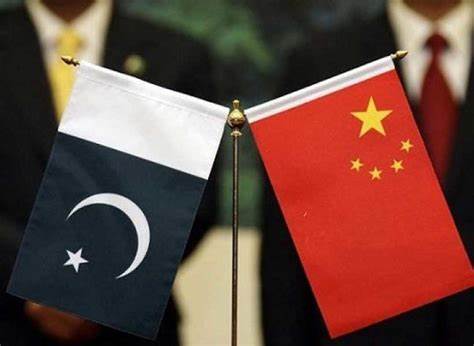
China-Pakistan agricultural cooperation is helping transform crop production in Pakistan. Chinese hybrid rice seeds have delivered higher yields, while joint research has supported the development of crops suited to local conditions.
The partnership began in 2003, when Chinese agricultural technician Zhu Xiaobo arrived in Pakistan with hybrid rice seeds. She faced language barriers and struggled to find a local partner.
Of the 38 seed companies she contacted, only a family business in Lahore agreed to work with her. Its owner, Tahar Salimi, eventually decided to test the seeds on his farm.
Hybrid Rice Delivers Higher Yields
Zhu explained the planting process through drawings because she could not communicate easily with local farmers. Although the sowing season was nearly over, Salimi agreed to give the seeds a chance.
The results exceeded expectations. The hybrid rice produced yields around 40% to 50% higher than many local varieties, according to the report.
The partnership later registered QY0413, described as Pakistan’s first commercialised hybrid rice variety. Its success encouraged more Chinese seed companies to enter the market.
Zhu said Chinese seeds now account for more than 90% of Pakistan’s hybrid rice seed market. She also linked the cooperation to higher incomes for hundreds of thousands of farmers.
Chinese Experts Support Local Farmers
The cooperation extends beyond seed sales. Since 2010, the company has sent staff to Pakistan to train farmers in practical farming techniques.
The training covers seed soaking, fertiliser use and pest control. Su Zhongxiang, a former agricultural research institute official from China’s Hubei province, said farmers also need continued support in the field.
He stressed that companies must help farmers solve problems after selling their seeds.
Joint Research Targets Cooking Oil Imports
In 2007, Zhu’s team began developing rapeseed varieties suited to Pakistan. The goal was to help reduce the country’s dependence on imported edible oil, particularly palm oil from Southeast Asia.
The work proved difficult because Pakistan’s warmer climate caused the plants to mature too quickly. Early crops looked healthy but produced empty seed pods.
After more than a decade of setbacks, the company registered a new rapeseed variety in 2019.
Zhu said successful agricultural cooperation requires local adaptation. Technology, services and farm management must match the country’s climate and growing conditions.
Young Experts Build New Agricultural Links
As Pakistan and China mark 75 years of diplomatic relations in 2026, younger professionals are joining agricultural cooperation efforts.
Zhang Ao, a 23-year-old molecular biology graduate, spent more than two months visiting farms in Lahore, Gujranwala and Multan. He studied how Chinese crop varieties performed under Pakistan’s soil and climate conditions.
His visits also gave him opportunities to meet young Pakistanis interested in artificial intelligence, Chinese electric vehicles and technological development.
Zhang said these exchanges helped him understand the wider role of international cooperation. He noted that young people in Pakistan were familiar with Chinese technology brands and products.
A Long-Term Partnership for Agriculture
The China-Pakistan agricultural partnership combines seed development, farmer training and local research. These efforts aim to improve crop productivity and develop varieties that suit Pakistan’s agricultural needs.
The experience also highlights the importance of adapting technology to local conditions rather than simply transferring farming methods from one country to another.
For Zhu, the partnership reflects the potential of agricultural innovation to create lasting change. As both countries strengthen their ties, cooperation in seeds, research and farmer support remains an important area for future growth.
Read More Articles:
Pakistan Expects Over 4% Economic Growth in FY2027