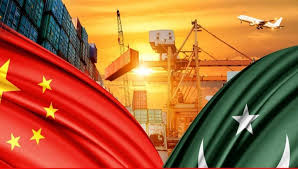

In Keqiao, the relationship between Pakistan and China’s textile industry is visible in more than contracts and containers.
It can be found in fabric shops, restaurants, business offices and the routines of Pakistani traders who have spent years navigating one of the world’s most concentrated textile markets.
Keqiao, a district of Shaoxing in Zhejiang province, has become a significant base for Pakistani businesspeople involved in textile trade. A report published by Zhejiang’s government information portal in May 2026 said the district was home to more than 500 permanent Pakistani residents and received more than 20,000 short-term business visitors from Pakistan each year.
The numbers describe a community, but they also point to something larger: a commercial relationship that has developed through repeated travel, personal connections and familiarity with the Chinese textile supply chain.
A business community built over decades
Pakistani traders did not arrive in Keqiao as part of a single bilateral programme.
Their presence developed alongside the growth of China Textile City and the expansion of China’s role in global textile manufacturing and distribution.
APP reported that Pakistani traders initially travelled to Keqiao to purchase textiles and began establishing permanent roots there during the 1990s. Earlier reporting put the Pakistani community at a considerably larger figure than the more recent official local-government report, illustrating why community estimates should be treated according to their date and methodology rather than combined indiscriminately.
The newer Zhejiang report provides a more recent snapshot and describes Pakistani professionals working in trade, services, mediation and research.
The evolution is important.
A trading community can begin with a narrow commercial purpose , buying and selling goods but over time develop its own supporting infrastructure. People learn the language, establish relationships with suppliers, understand local regulations and create services that make repeated business easier.
Why Keqiao matters to Pakistani traders
Keqiao’s significance comes from the scale and concentration of its textile ecosystem.
APP previously described China Textile City as a major textile distribution centre, with a large concentration of products, operators and international buyers.
For a Pakistani textile entrepreneur, proximity to this market can reduce some of the barriers associated with international sourcing.
Instead of communicating with manufacturers from thousands of kilometres away, traders based in or regularly visiting Keqiao can inspect fabrics, compare suppliers, negotiate orders and monitor production more directly.
That does not make business automatically easy.
Sourcing from a large industrial cluster also requires knowledge of quality standards, delivery schedules, contracts, payments, logistics and supplier reliability. Language and cultural familiarity can become commercial assets in their own right.
The experience of long-term residents illustrates this.
Zhejiang’s 2026 report profiled Fida Muhammad, who has worked in textile foreign trade in Keqiao for nearly three decades and specialises in velvet fabric exports. His career provides an example of how long-term commercial relationships can develop alongside the transformation of the local textile industry.
From trader to community
The Pakistani presence in Keqiao is no longer defined entirely by textile purchasing.
The 2026 report describes a second-generation Pakistani textile entrepreneur who inherited a family business and later opened a Pakistani restaurant. Another Pakistani professional, Arbab Muhammad Tayyab, now works as an international mediator dealing with disputes involving foreigners in China. Researcher Azim Uddin operates a laboratory focused on composite materials and 3D printing while also working in international talent development.
These examples suggest a community becoming more professionally diverse.
That diversification matters because international business communities often depend on services beyond the original trade itself. Mediation can help address disputes. Restaurants provide social space. Research and technical expertise can create new links between business and innovation.
For Pakistanis who spend substantial periods in China, such networks can also make everyday life more manageable.
APP’s earlier reporting documented halal food outlets, mosques and community activities in Keqiao, showing how commercial settlement had developed alongside social infrastructure.
The language of business
One of the less visible assets in such a community is language.
Zhejiang’s 2026 profile describes Pakistani businessman Fida Muhammad as fluent in Chinese. That kind of linguistic ability can be commercially useful in a market where relationships, negotiation and day-to-day communication are central to business.
Language does not eliminate commercial risk, but it can reduce misunderstandings and widen access to local networks.
It can also change the nature of a person’s relationship with the host city.
A trader who initially arrives as a foreign buyer may eventually become a long-term resident who understands local business practices, develops relationships with Chinese colleagues and participates in community life.
That transition is visible in the careers of several Pakistanis now based in Keqiao.
A textile hub that is changing
Keqiao itself is changing.
The district is increasingly trying to move beyond the image of being simply a large textile marketplace. In September 2026, local authorities promoted a group of Keqiao textile companies at WHITE Milano during Milan Fashion Week, including a dedicated Keqiao pavilion featuring 10 companies and brands. The initiative reflected an effort to connect local textile production with international fashion and design markets.
The shift matters for Pakistani traders because the market they operate in is also evolving.
Textile sourcing is increasingly influenced by design, digitalisation, sustainability, branding and changing consumer demand. A trader who once focused primarily on finding suitable fabric may increasingly need to understand product development, fashion trends and international compliance.
Pakistan’s own textile industry is part of this changing relationship.
In December 2024, the China National Textile and Apparel Council and Pakistan’s Board of Investment signed a memorandum of understanding at the China Textile Conference in Keqiao. The discussions covered technology, green development, materials, artificial intelligence and textile-park cooperation.
The institutional relationship is therefore moving alongside the private networks already operating on the ground.
When trade becomes people-to-people exchange
The Pakistani presence in Keqiao also illustrates a less formal dimension of China-Pakistan economic relations.
Bilateral trade is often described through export figures, investment agreements and industrial projects. Those measures are important, but they do not capture the daily work required to make cross-border commerce function.
A Pakistani trader who learns enough Chinese to negotiate with suppliers, a restaurant owner adapting a Pakistani menu to local conditions, or a mediator helping resolve disputes between foreign businesses and Chinese counterparts all occupy a space between commerce and people-to-people interaction.
The Zhejiang report’s description of Pakistani professionals working in different sectors reflects that broader evolution.
At the same time, the existence of a business community should not be romanticised. International traders still face the ordinary challenges of foreign-market operations: regulatory compliance, commercial disputes, intellectual-property concerns, currency and payment risks and changing market conditions.
Keqiao has responded with its own support mechanisms. In 2026, local authorities reported establishing foreign-related legal services, a digital risk-warning platform and a network of mediators. The district said these measures contributed to a 15.6 percent year-on-year reduction in foreign-trade-related disputes, while also reporting measures against fraud and intellectual-property risks. These are local-government figures and should be understood as reported institutional outcomes rather than an independent assessment of the entire trading environment.
What the community says about Pakistan-China trade
The story of Pakistanis in Keqiao is ultimately larger than textiles.
It shows how international trade creates communities that can outlast individual transactions. A person may initially travel to China to purchase fabric, but repeated visits can lead to language learning, permanent residence, new businesses, professional specialisation and social relationships.
For Pakistan, such communities can function as informal commercial bridges. Their knowledge of both markets can help connect suppliers and buyers in ways that are difficult to replicate through official agreements alone.
For China, the Pakistani community represents part of the international business population that has grown around major industrial clusters.
Keqiao’s textile industry will continue to change as Chinese manufacturers move further into design, technology and higher-value production. Pakistani traders operating there will have to adapt with it.
Their future role may therefore extend beyond finding the right fabric at the right price. It may increasingly involve helping Pakistani and Chinese businesses understand one another, navigate changing supply chains and identify opportunities within a more sophisticated textile economy.
In Keqiao, the China-Pakistan commercial relationship is not an abstract corridor on a map. It is a collection of people who have learned how to do business across borders and, in some cases, how to build a life there.
Read More Articles:
Pakistani Women and China-Linked Technical Training